Breast Implant Screening: A Message to Primary Care and OB-GYN
Once you get implants, you are the proud owner of a medical device and there is maintenance that comes along with this.
A Message to Primary Care, OB-GYN, and Radiology: Women With Implants Need Better Care
About 4 million women in the United States have breast implants, and too many serious implant problems are being missed. Dr. Killeen is asking for help from every clinician who examines breasts — primary care doctors, OB-GYNs, and radiologists — to improve how we screen and monitor these patients.
Know the History
If your patient has breast implants, you need to know:
- What type of implant they have (silicone vs. saline)
- When the implants were placed
This matters because silicone implants require monitoring: an MRI or ultrasound starting five years after placement, and every two years after that. Patients often don't see their plastic surgeon consistently — but they do see you for annual visits. Ordering these studies can make an enormous difference.
A Note for Radiologists
Dr. Killeen has seen too many imaging studies where obviously ruptured implants weren't called by radiology. She's even been told by a radiologist that assessing breast implants "is not their protocol."
A ruptured implant is a damaged medical device. If you see it on imaging, it needs to be reported and the patient needs to be informed.
Know What a Normal Implant Feels Like
Every clinician who performs breast exams should know what a normal breast implant feels like and document it in the chart:
- Breast implants should be soft — they should never be hard. A normal implant blends into the breast tissue.
- If the implant is hard, that's a problem — likely a capsular contracture
- The implant should sit evenly within the breast with the nipple centered. An implant sitting too high can also signal a contracture.
Why Documentation Matters
By recording what the implant feels like each year, you create a baseline. If it feels different at the next visit, you can intervene early. A mild contracture is a much easier and less expensive problem to treat than a severe one.
Capsular Contractures Are Miserable — and Treatable
Dr. Killeen sees patients every week with horrific contractures causing terrible pain — contractures they've had for 10 or more years while being told by their doctor that their breast exam was "normal." That is not normal. Those patients deserve to live without pain.
Treatment for capsular contracture is often covered or partially covered by insurance. The same goes for ruptured silicone implants. These are health maintenance issues, not purely cosmetic concerns.
Implant-Associated Cancers Require Screening
There are cancers associated with breast implants — related to both textured implants and long-standing capsular contractures. Patients deserve proper screening for these conditions, and that starts with clinicians who know what to look for during routine exams.
The Bottom Line
Once a patient gets breast implants, they are the proud owner of a medical device — and there is maintenance that comes with it. But plastic surgeons can't do it alone. Patients see their primary care doctor and OB-GYN far more regularly than their plastic surgeon.
Dr. Killeen's ask is simple: know the implant history, examine and document properly, order appropriate imaging, and refer when something isn't right. Together, we can take much better care of these patients.
Your Journey to Renewed Confidence

Transform Your Life
Every person deserves to feel comfortable and confident in their own body. Our procedures aren't just about physical change. They're about reclaiming your life, your comfort, and your self-assurance.
Dr. Killeen and her team support you every step of the way, from your first consultation through recovery.
Take the first step toward the life you deserve.
Schedule Your ConsultationTransform Your Life
Every person deserves to feel comfortable and confident in their own body. Our procedures aren't just about physical change. They're about reclaiming your life, your comfort, and your self-assurance.
Dr. Killeen and her team support you every step of the way, from your first consultation through recovery.
Take the first step toward the life you deserve.
Schedule Your ConsultationRelated Articles
Why Breast Exams and Implant Care Matter More Than You Think
December 9, 2025
Dr. Killeen makes the case for thorough breast exams beyond mortality stats, and calls on breast surgeons to address implant issues when they're already operating on patients.
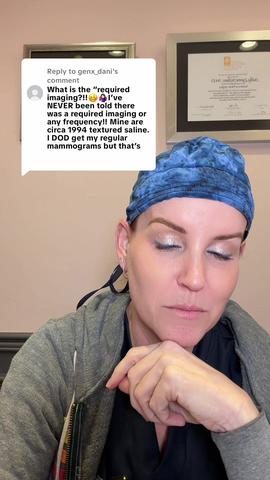
Breast Implant Imaging: What You Actually Need (and When)
October 23, 2025
Dr. Killeen breaks down the imaging recommendations for breast implants — why saline implants don't need routine monitoring, when and how often silicone implants should be imaged (MRI vs. ultrasound), why mammograms don't cover it, and what textured-implant patients need to watch for.

Do Saline Implants Need Imaging Like Silicone Implants?
December 8, 2025
Dr. Killeen explains why saline implants don't require routine imaging but still need regular follow-up — especially older implants placed through high-risk incisions.