Breast Augmentation in Beverly Hills
Empower Your Confidence, Enhance Your Silhouette with Dr. Kelly Killeen
Schedule Consultation
Have you envisioned fuller, beautifully proportioned breasts that align with your inner confidence and outer beauty? Breast augmentation is a powerful choice, designed to enhance your natural curves, rejuvenate your appearance, and empower you to live confidently in your own skin.
At Dr. Kelly Killeen's Beverly Hills practice, we recognize breast augmentation as an intensely personal journey. With surgical expertise, advanced techniques, and an artistic vision, Dr. Killeen crafts natural-looking outcomes tailored specifically to your unique goals and anatomy.
Dr. Killeen is double board-certified (American Board of Surgery and American Board of Plastic Surgery), specializing in complex breast procedures, with a focus on precision, safety, and natural-looking results.
Breast Augmentation Serving Beverly Hills & Los Angeles
Dr. Killeen's practice is located in the heart of Beverly Hills, with breast augmentation patients traveling in from across the greater Los Angeles area, including West Hollywood, Santa Monica, Brentwood, Bel Air, Pacific Palisades, Hollywood, Pasadena, Calabasas, and Sherman Oaks. As a double board-certified female plastic surgeon, she performs both first-time augmentations and revision cases.
Every breast augmentation is performed at an accredited facility, either the Quad A (AAAASF) accredited surgery center in Dr. Killeen's Beverly Hills office or Cedars-Sinai, with board-certified anesthesiologists. Patients who stay overnight after surgery at the center recover at a partner recovery facility. For patients traveling from outside the LA area, the team helps coordinate scheduling, recommended recovery accommodations nearby, and post-operative follow-up so the experience feels seamless from consultation through final result.
Understanding Breast Augmentation Surgery
Breast augmentation enhances the size, shape, and symmetry of your breasts using implants or fat transfer. Whether you're restoring volume after pregnancy or weight fluctuations, correcting asymmetry, or seeking aesthetic enhancement, the procedure is customized to deliver results that look and feel authentically yours.
Implants give the most predictable change in size and shape. Fat transfer can add a more modest amount of volume, generally about half a cup to a full cup per procedure, and works best for patients who already like their breast shape. Either way, the goal is a natural-looking result that complements your anatomy and lifestyle.
For modest, natural-looking increases, Dr. Killeen also offers Preservé™ by Motiva, a tissue-preserving technique in which a balloon opens the implant space instead of cutting it. She was one of the first U.S. surgeons trained in Preservé and now trains other plastic surgeons in the technique.
Benefits Beyond Beauty
Breast augmentation can bring both aesthetic enhancement and meaningful improvements in how you feel in your body.

Physical Benefits
- Enhanced Curves: Achieve fuller, balanced proportions that complement your frame.
- Symmetry Correction: Address size differences effectively for balanced appearance.
- Restored Volume: Reclaim youthful fullness lost through aging or motherhood.
- Fuller Shape: More fullness, especially in the upper breast. Implants add volume but do not lift sagging breasts.

Emotional and Lifestyle Benefits
- Boosted Confidence: Many patients feel more comfortable and confident in their bodies.
- Expanded Wardrobe: Greater freedom in clothing and swimwear choices.
- Active Lifestyle: Full exercise is typically back about a month after surgery, and contact sports are very unlikely to break an implant.
- Your Choice: Wanting a change is not a sign that something is wrong with you.
Loading before & after results...
Customizing Your Results
Choosing an implant comes down to a few decisions, made together at your consultation with sample implants in your hands:
Silicone Implants
Dr. Killeen uses silicone implants only; she no longer offers saline. Silicone looks and feels more natural and ripples less, and today's cohesive gel tends to stay inside the shell even if the implant ruptures. Because a silicone rupture is often silent, silicone implants are checked with imaging over time.
Smooth Surfaces and Shape
Dr. Killeen uses only smooth implants, including Motiva's SmoothSilk surface, and does not use macro-textured implants, which are linked to a rare lymphoma called BIA-ALCL. Today's silicone gel is cohesive (the "gummy bear" consistency people ask about) and comes in a range of firmness: firmer gels ripple less but feel firmer. Round implants hold a fuller, rounder shape, while Motiva's Ergonomix implants settle into a softer, more natural slope.
Learn why she uses smooth implants and how Round and Ergonomix implants compare.
Size and Profile
You choose the volume; the profile is then matched to your chest width. Higher-profile implants project more but take up less chest width, while lower-profile implants spread wider and project less.
Implants are measured in cc, and the cup size that results is essentially unpredictable, so Dr. Killeen does not promise one. As a rough average, about 150 cc is one cup. Sizers in the office, 3D imaging, and trying volumes at home all help you choose, and small implants can make a big difference. See how many cc make a cup size.
Over or Under the Muscle
For both cosmetic and reconstructive patients, Dr. Killeen has transitioned predominantly to over-the-muscle, or subfascial, placement: the implant sits on top of the chest muscle, beneath its thin covering of fascia. Like most plastic surgeons, she placed most implants partly under the muscle (dual plane) for years before making the switch.
Over the Muscle (Subfascial)
There is no animation deformity, the visible movement of the implant when the chest muscle flexes, and recovery is generally easier. The trade-off is that the implant edge can be a little more visible in thin patients. In her experience, patients are bothered less by a slightly more visible implant than by muscle movement.
Under the Muscle
The muscle adds a layer of coverage over the upper implant, which can help very thin patients hide edges and rippling. The recovery is more painful, the implant can move when the muscle flexes, and implants under the muscle tend to drift farther apart over time.
Thin Patients
There is no perfect solution; it comes down to which trade-off would bother you more. A small amount of fat grafting, as little as 10 to 20 cc per side, can soften implant edges and smooth the transition. More on placement when you have very little breast tissue.
Neither position prevents sagging over time. Learn more about subglandular, submuscular, dual plane, and subfascial placement.
Advanced Surgical Techniques
Dr. Killeen uses an incision in the crease under the breast for augmentation, and places every implant with a no-touch technique designed to lower the risk of infection and capsular contracture:
Inframammary Fold Incision
Concealed in the crease under the breast, this is Dr. Killeen's preferred incision. It gives direct access for precise placement, avoids cutting through breast tissue and milk ducts, and carries a lower risk of capsular contracture and infection than the alternatives.
Periareolar Incision
Made at the edge of the areola. Because it cuts through breast tissue, it is more likely to affect milk ducts, nipple sensation, and breastfeeding, and it carries a higher risk of capsular contracture and infection. Dr. Killeen does not recommend it for augmentation.
Transaxillary Incision
Made in the armpit, so there is no scar on the breast, but the scar can show in a sleeveless top, and this approach also carries a higher risk of capsular contracture and infection. It is not Dr. Killeen's preferred approach.
No-Touch Implant Placement
The nipples are covered, the pocket is rinsed with antiseptic solution, gloves are changed and the skin is prepped again right before the implant goes in, and the implant is placed with a Keller Funnel so it is never touched directly. Learn how infection risk is lowered in the operating room.
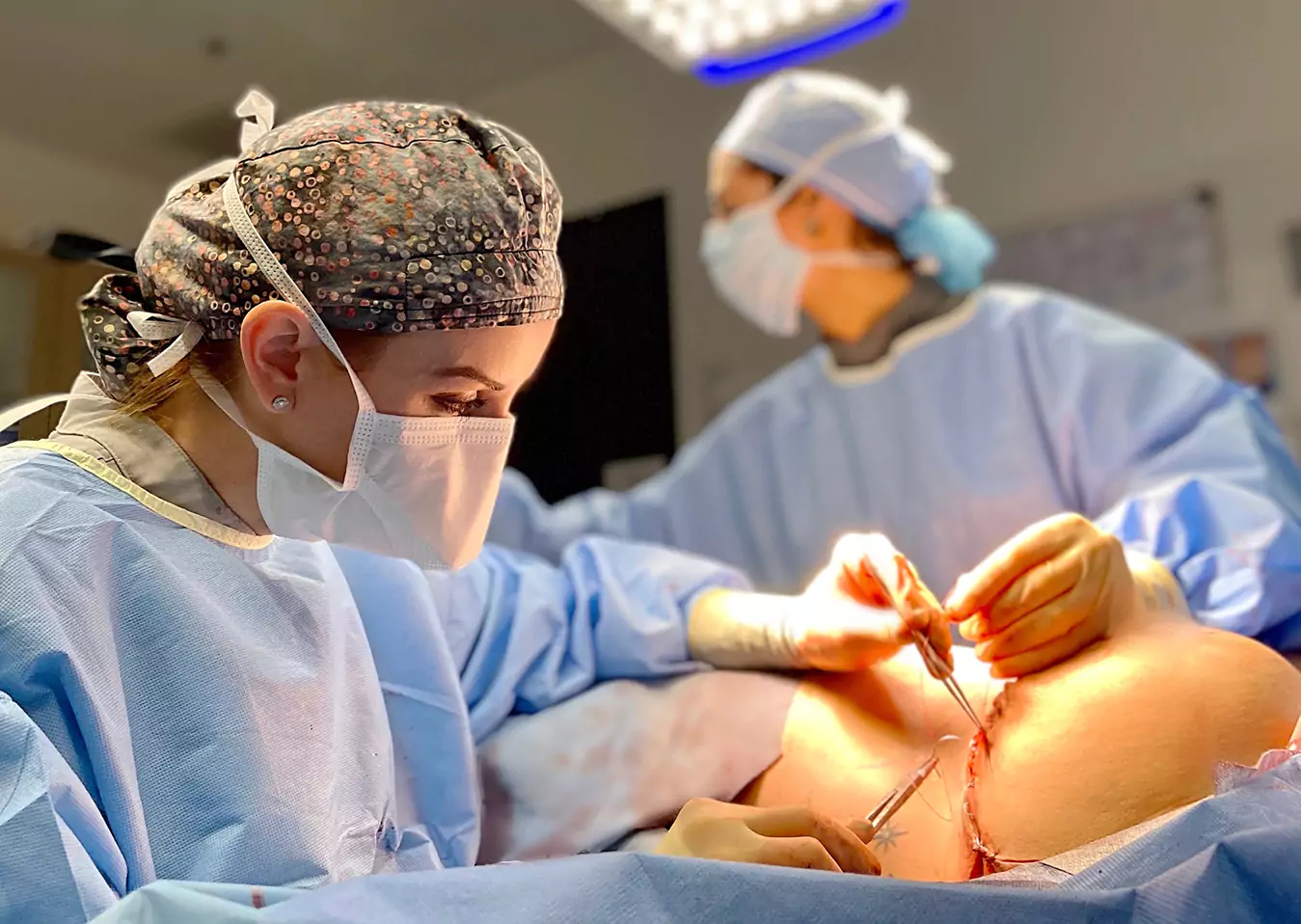
Dr. Killeen carefully assesses your anatomy to determine the optimal approach for your desired outcomes. Procedures are safely performed under general anesthesia in our accredited surgical center.
Are You a Candidate?
You might be an ideal candidate if you:
Aesthetic Goals
- Desire fuller, proportionate breasts
- Want to restore breast volume post-pregnancy
- Wish to correct breast asymmetry
- Seek enhanced curves and silhouette
Health Requirements
- Good overall physical and emotional health
- Stable body weight maintained
- Non-smoker or willing to quit before surgery
- Realistic expectations about outcomes
Personal Readiness
- Committed to the surgical process
- Understanding of recovery timeline
- Desire for long-term enhancement
- Understand that implants need monitoring and may need future surgery
Having a medical condition is usually a reason for a more careful conversation, not a reason to be told no. If your breasts have started to sag, an implant alone may not give you the shape you want, and a breast lift may be part of the plan.
Key Considerations
Breastfeeding
Women with implants breastfeed at rates similar to women without implants, though they tend to make less milk and are more likely to supplement with formula. The incision matters most: the crease incision minimizes disruption of the milk ducts, while an incision around the areola is the one most associated with breastfeeding trouble. Learn how incision choice affects breastfeeding.
Breast Health
Implants do not raise your risk of ordinary breast cancer, and you should keep up with routine screening. Implants can make mammograms less sensitive, so tell the technician you have implants and ask for displacement views, which move the implant out of the way to image more breast tissue. A mammogram checks the breast tissue, not the implant itself. See mammograms with implants.
Implant Longevity
Implants are not lifetime devices, but there is no set expiration date. The old advice to replace them every 10 years came from older implants, and with today's implants Dr. Killeen favors monitoring over routine replacement. Silicone implants should be checked with ultrasound or MRI starting about five years after surgery and every other year after that. Learn whether implants need replacing at 10 years.
Your Journey to Enhanced Beauty
Performed at our accredited Beverly Hills surgery center or Cedars-Sinai, your procedure emphasizes safety, comfort, and meticulous care:

Pre-Operative
Personalized surgical planning, medical clearance, and detailed preparation.Surgery
Typically 1-2 hours under general anesthesia, with long-acting numbing medication and non-opioid pain relievers to keep you comfortable.Initial Healing
The first week is the hardest. Most patients with desk jobs are back at work in about three days, exercise resumes at two weeks, and full exercise and sleeping on your side at one month. Implants often sit high and feel firm at first, and early swelling makes them look larger than they will at six months.Full Results
Implants settle and soften over the following months. Most are about as soft as they will get by six months, and some keep softening for up to a year (how long implants take to soften).
Risks of Breast Augmentation
Breast augmentation is a safe operation, but safe does not mean problem-free. Risks include:
Possible Risks
- Rippling or visible implant edges, most often in thin patients
- Implants that sit too high, drop too low, or drift apart over time (see breast revision)
- Capsular contracture, a tightening of the scar tissue around the implant
- Rupture, which is often silent with silicone implants
- Infection, bleeding, or a hematoma (a collection of blood around the implant)
- Changes in nipple or breast sensation
- Stretch marks, which are permanent but fade with time
- Rare implant-associated cancers: BIA-ALCL, linked to textured implants, and the even rarer BIA-SCC
- Future surgery: implants are not lifetime devices, and many patients will have another operation at some point, such as a revision or implant removal
When to Call
Normal swelling and soreness improve day by day. Swelling, pain, or redness that gets worse, or one breast suddenly becoming larger than the other, should be checked right away.
Frequently Asked Questions
Schedule Your Beverly Hills Breast Augmentation Consultation
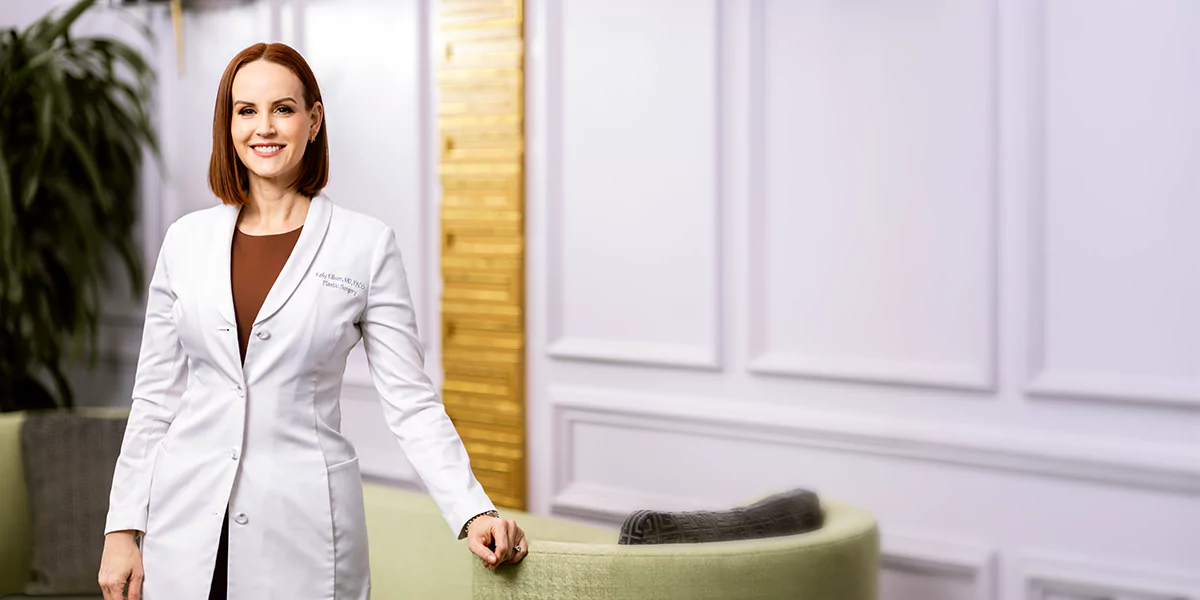
Transform Your Confidence
Choosing breast augmentation is an empowering decision, and we honor that trust at every step. Dr. Killeen and her team support you from consultation through complete recovery.
With surgical expertise, advanced techniques, and an artistic vision, Dr. Killeen crafts natural-looking outcomes designed around your frame and your goals.
Discover how breast augmentation can empower your journey to renewed confidence.
Schedule Your ConsultationTransform Your Confidence
Choosing breast augmentation is an empowering decision, and we honor that trust at every step. Dr. Killeen and her team support you from consultation through complete recovery.
With surgical expertise, advanced techniques, and an artistic vision, Dr. Killeen crafts natural-looking outcomes designed around your frame and your goals.
Discover how breast augmentation can empower your journey to renewed confidence.
Schedule Your Consultation