Subglandular, Submuscular, Dual Plane, Subfascial — Implant Placements Explained
The four placements — subglandular, submuscular, dual plane, and subfascial — really come down to which layer of your chest the implant sits behind, and whether the muscle gets released. Each has trade-offs.
Subglandular, Submuscular, Dual Plane, Subfascial — What Do They Actually Mean?
When you start researching breast augmentation, you quickly run into a wall of jargon. "Half under the muscle, half over the muscle" — what does that even mean? And what about subfascial? Let's break down the four most common implant placements in plain English.
The Cast of Characters
Every implant placement involves three main layers of your chest:
- Breast tissue (glandular tissue) — sits on top
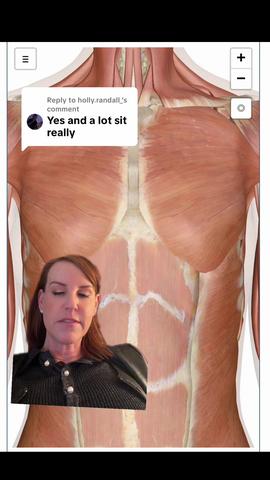
- Muscle (pectoralis major) — sits under the breast tissue
- Fascia — the thin, fibrous "coating" on top of the muscle
The implant goes somewhere in this stack. The differences are about which layer it sits behind.
1. Subglandular — Under the Gland Only
"Sub" = under, "glandular" = breast gland. So this means under the breast tissue, but on top of the muscle.
Picture it from the side:
- Breast tissue (top)
- Implant
- Muscle (untouched, sitting on the chest wall)
- Chest wall
The muscle is left completely alone — no detachment, no release.
2. Submuscular — Fully Under the Muscle
"Sub" = under, "muscular" = muscle. The implant sits under the entire pectoralis muscle, which covers the implant from top to bottom.
From the side:
- Breast tissue (top)
- Muscle (fully covers the implant)
- Implant
- Chest wall
The muscle is the front "blanket" of the implant. This is the most heavily covered placement.
3. Dual Plane — Half Under, Half Over
This is what most plastic surgeons (myself included) used as our default for the last 15 or so years.
The implant is:
- Under the breast tissue
- Partially under the muscle at the top
- Not under the muscle at the bottom
To make this work, we disconnect a portion of the muscle from where it attaches at the rib cage — and sometimes a little along the sternum as well. That release allows the lower half of the implant to drop into a more natural position while the top half still has muscle coverage.
The Trade-Off: Animation Deformity
The cost of releasing the muscle is muscle flex / animation deformity — that weird movement you sometimes see where the breast distorts when the patient flexes their chest. The more muscle you release, the more risk you run of this. Too aggressive a release is where you really start to see it.
This is why a lot of patients are opting to have their implants moved from under to over the muscle — it eliminates animation deformity. There's also a way to tell which placement you currently have if you're not sure.
4. Subfascial — A Newer Take
"Sub" = under, "fascial" = the fascia, the thin coating on top of the muscle.
Subfascial is essentially a relative of subglandular with one important addition. Instead of putting the implant directly under the breast tissue, we lift the fascia (the top coating of the muscle) off the muscle and put the implant between the fascia and the muscle.
From the side:
- Breast tissue (top)
- Fascia (now lifted up)
- Implant
- Muscle (untouched)
- Chest wall
So your muscle stays down — there's no animation deformity — but the fascia goes up and provides an extra layer of coverage on top of the implant.
Why It's Getting More Popular
The thinking behind subfascial is:
- That extra fascial coating acts as a barrier between the implant and the breast tissue
- The breast tissue is where we believe biofilm comes from — bacterial colonization of the implant surface that causes long-term problems
- An extra layer between the implant and that source theoretically reduces the risk of biofilm-driven complications
For patients interested in muscle-sparing techniques that still offer some biological coverage on top of the implant, subfascial is a really nice middle-ground option. (For a detailed look at one of those techniques, here's a writeup on Preservé vs. traditional over-the-muscle augmentation.)
Quick Comparison Table
| Placement | Implant Location | Muscle Released? | Animation Risk |
|---|---|---|---|
| Subglandular | Under breast tissue, on top of muscle | No | None |
| Subfascial | Under fascia, on top of muscle | No | None |
| Dual plane | Half under muscle, half over | Partial | Mild–moderate |
| Submuscular | Fully under muscle | Yes (more) | Higher |
Which One Is Right for You?
There's no universal "best" — every placement has trade-offs. The right choice depends on:
- Your tissue thickness (thinner tissue often benefits from more coverage on top of the implant)
- Your activity level (athletes who use their pecs heavily often want to avoid muscle release)
- Your aesthetic goals (how much upper-pole fullness you want)
- Your concerns about animation deformity
- Your concerns about biofilm/long-term complications
- What kind of implant you're using
The Bottom Line
The four main implant placements — subglandular, submuscular, dual plane, and subfascial — are essentially a discussion about which layer of your chest the implant sits behind, and whether the muscle gets released.
- Subglandular and subfascial = no muscle disturbance, no animation deformity
- Dual plane = the workhorse of the last 15 years, with partial muscle release
- Submuscular = the most coverage, but the most muscle disruption
- Subfascial = newer, popular alternative with an extra biological layer between the implant and breast tissue
If you're consulting for an augmentation or considering a revision, ask which placement your surgeon recommends and why — the reasoning matters as much as the placement itself.
Your Journey to Renewed Confidence

Transform Your Life
Every person deserves to feel comfortable and confident in their own body. Our procedures aren't just about physical change. They're about reclaiming your life, your comfort, and your self-assurance.
Dr. Killeen and her team support you every step of the way, from your first consultation through recovery.
Take the first step toward the life you deserve.
Schedule Your ConsultationTransform Your Life
Every person deserves to feel comfortable and confident in their own body. Our procedures aren't just about physical change. They're about reclaiming your life, your comfort, and your self-assurance.
Dr. Killeen and her team support you every step of the way, from your first consultation through recovery.
Take the first step toward the life you deserve.
Schedule Your ConsultationRelated Articles

My Thoughts on Over-the-Muscle Breast Augmentation (and How They've Changed)
September 23, 2025
Dr. Killeen explains why she's transitioned the majority of her breast augmentation and reconstruction patients to over-the-muscle placement — what changed in the data, why patients prefer it, what trade-offs (rippling, edge visibility) come with it, and how Motiva implants have helped.
Do Submuscular Breast Implants Drift Apart Over Time? Yes — Here's Why
October 10, 2025
Dr. Killeen breaks down why submuscular breast implants tend to drift farther apart over time — the fixed sternal muscle attachment, repeated muscle force pushing the implant down and out, and the water-hammer effect of saline implants — and why it's a real but not universal risk.

How to Tell If Your Implants Are Over or Under the Muscle
January 20, 2026
Dr. Killeen shares a simple at-home test to determine whether your breast implants are over or under the pectoralis muscle.