Hematomas After Breast Surgery: How They're Managed and the One Scenario That's Genuinely Urgent
Most post-op bleeding pops off a vessel, you bleed a little, and it stops. The dangerous version is an expanding hematoma — bleeding that just keeps going, your breast getting bigger and bigger. That's a genuine emergency. Contact your surgeon immediately or go to the ER.
Hematomas After Breast Surgery: How They're Managed and the One Scenario That's Genuinely Urgent
A great question came in about hematomas after breast surgery — bleeding into the breast tissue after an operation. Let me walk through what hematomas are, the four ways we can manage them, and the one specific scenario (an expanding hematoma) that's a genuine emergency.
This is information every breast surgery patient should have, because recognizing a hematoma early changes everything about how it's managed.
What a Hematoma Actually Is
Bleeding after surgery is a standard complication of essentially every procedure — you'll see it listed on every consent form you ever sign. In breast surgery specifically, the bleeding rate is around 5% or less of patients, but it does happen.
There's an important distinction between two related things:
Bruising
- Diffuse blood spread through the tissue
- Causes the visible discoloration of the skin you're used to seeing
- Common after breast surgery
- Resolves on its own over weeks
- Not the same as a hematoma
Hematoma
- A localized collection of blood — like a little reservoir, not a diffuse spread
- Often deeper in the tissue, so you may not see skin discoloration
- The hallmark sign: that side of the chest is bigger than the other side
- Sometimes feels firm, sometimes swollen, often tender
- Requires active management — most don't just resolve on their own the way bruising does
Why Hematomas Are Hard to Just "Drain"
When you bleed after surgery, the blood clots within minutes to hours. That clot has a thick, gelatinous consistency — almost like jelly.
This matters because:
- You can't just put a needle in and aspirate the hematoma
- The clot is too thick to come out through a needle
- Removing it usually requires either surgery or waiting for the clot to liquefy
This is one of the reasons hematomas are managed differently than seromas, which are usually thin fluid that can be drained with a needle right away.
The Four Management Options for a Hematoma
There's no single right answer for every hematoma. The right approach depends on the size, the timing, the type of breast surgery you had, and whether there's an implant involved.
Option 1: Return to the Operating Room
For a sizable hematoma, returning to the operating room to evacuate the clot is often the right call.
This doesn't have to happen emergently. As long as the bleeding has happened and stopped, you can typically wait:
- A day or two is fine
- Sometimes even longer
- The main constraint is how it's affecting your result
The main risk of waiting too long: the hematoma can stretch your tissue, distort your healing, and potentially alter your long-term result.
For a meaningful hematoma, surgical evacuation is usually the cleanest answer.
Option 2: Wait for Liquefaction, Then Aspirate
If you want to avoid the operating room and the hematoma is small enough, another option is:
- Wait several days to a couple of weeks for your body to start dissolving the clot
- The clot liquefies as it breaks down
- The liquid blood can then be aspirated with a needle and syringe
- Sometimes a tiny drain is placed for a few days to allow continued drainage
This is only appropriate for smaller hematomas. For larger ones, waiting carries too much risk of distorted healing or capsule problems (more on that below).
Option 3: Leave It Alone
For small hematomas in specific situations, just letting your body absorb it can be appropriate:
- Smaller volume
- No implant in place (this matters — see below)
- No concern about altered cosmetic result
- Patient is comfortable waiting
Your body will gradually reabsorb the blood over weeks to months, similar to how a bruise resolves but slower.
Option 4: Stop Aggressive Bleeding Emergently (Expanding Hematoma)
This is the one scenario that's genuinely time-critical, and I want to spend extra time on it because patients deserve to know what to watch for.
The Expanding Hematoma: A Genuine Emergency
Most post-op bleeding follows a predictable pattern:
- A small clot pops off a blood vessel somewhere
- Usually happens 4-8 hours after surgery, when your blood pressure is coming up from where anesthesia kept it
- You feel some pain or fullness, you bleed a little
- The bleeding stops on its own as a new clot forms
That's the typical course, and it's manageable.
When It Doesn't Stop
Occasionally — and this is the scary scenario — the bleeding doesn't stop. It just keeps going. This is called an expanding hematoma.
What it looks like from the patient side:
- Your breast keeps getting bigger and bigger and bigger
- You may notice it changing over minutes to hours, not days
- It often becomes painful as it expands
- It can become tense and firm
- You may feel dizzy, lightheaded, or unwell if the blood loss is significant
This is dangerous because:
- You're actively losing blood volume
- The expanding pressure can damage surrounding tissue
- In severe cases, it can lead to shock
- It will not stop on its own
What to Do
If you suspect an expanding hematoma:
- Contact your surgeon immediately — not the next day, not when the office opens
- If you can't reach them, go to the ER
- Don't wait to see if it gets better — it won't
- Expect to be taken back to the operating room
This is genuinely the scenario where time matters. Catching an expanding hematoma early and stopping the bleeding source surgically is dramatically safer than letting it continue.
The Special Case: Hematoma With an Implant In Place
I want to highlight this scenario because it changes the management dramatically.
If you have an implant and develop a hematoma, I almost always recommend removing the blood — and doing it relatively quickly.
The reason is something called hematoma-induced capsular contracture.
How Hematoma Can Cause Contracture
- Blood around an implant is inflammatory to the surrounding tissue
- As the blood breaks down and is reabsorbed, the inflammation can be intense
- That inflammation can drive abnormal capsule formation around the implant
- Result: a tight, distorted capsule — exactly what we call a capsular contracture
So even a relatively small hematoma around an implant carries the risk of producing a long-term capsule problem that's much harder to fix than the hematoma itself.
My Approach
For any patient with an implant who develops a hematoma:
- I recommend surgical evacuation
- I recommend doing it sooner rather than later
- We may also discuss biofilm rule-out at the same operation
- This is one of those situations where the easy management now prevents the hard problem later
The cost of one extra operation to remove the hematoma is worth avoiding a contracture revision down the road.
How to Tell If You Have a Hematoma
If you're post-op and wondering whether something is normal or concerning:
Likely Normal Bruising
- Diffuse skin discoloration spreading over the area
- Gradually changes colors as it heals
- Not associated with one side being significantly bigger
- Not associated with rapid change
Possible Hematoma
- One side noticeably larger than the other
- Firmness or fullness that wasn't there before
- Sometimes a change in skin temperature in the area
- May or may not have visible discoloration
Likely Expanding Hematoma
- Rapidly worsening size on one side
- Significant new pain
- Feeling unwell, lightheaded, or weak
- Visible change over minutes to hours
When in doubt, call your surgeon. We'd much rather get a call about a hematoma that turns out to be normal swelling than miss one that's actually expanding.
What to Ask Your Surgeon Pre-Op
If you want to be prepared in case of bleeding:
- "What does typical bleeding look like vs. an emergency in your patients?"
- "At what point should I call you vs. go to the ER?"
- "What's your protocol if I develop a hematoma — surgery, wait, or drain?"
- "Will you be reachable nights and weekends, or who do I call?"
Knowing this in advance prevents the panic of trying to figure it out at 2 AM with a swelling breast.
The Bottom Line
Hematomas after breast surgery are uncommon (~5% or less) but real. They are not the same as bruising — they're a collection of clotted blood that usually requires active management.
The four management options:
- Return to OR for surgical evacuation (best for sizable hematomas)
- Wait for liquefaction, then aspirate (only for small hematomas)
- Leave it alone (only for small hematomas without implants)
- Emergency surgical control (for expanding hematomas — time-critical)
If you have an implant, hematomas should be evacuated to prevent capsular contracture.
The one scenario that's a true emergency is the expanding hematoma — bleeding that doesn't stop, with rapid swelling. If you suspect this, contact your surgeon immediately or go to the ER.
Recognizing what's happening and getting prompt care is the single biggest factor in how well a hematoma resolves. When in doubt, always call your surgeon.
Your Journey to Renewed Confidence

Transform Your Life
Every person deserves to feel comfortable and confident in their own body. Our procedures aren't just about physical change. They're about reclaiming your life, your comfort, and your self-assurance.
Dr. Killeen and her team support you every step of the way, from your first consultation through recovery.
Take the first step toward the life you deserve.
Schedule Your ConsultationTransform Your Life
Every person deserves to feel comfortable and confident in their own body. Our procedures aren't just about physical change. They're about reclaiming your life, your comfort, and your self-assurance.
Dr. Killeen and her team support you every step of the way, from your first consultation through recovery.
Take the first step toward the life you deserve.
Schedule Your ConsultationRelated Articles
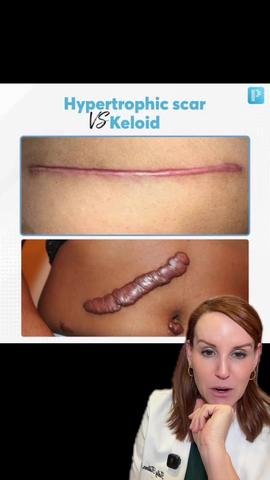
Hypertrophic vs. Keloid Scars — and How They Look on Darker Skin
November 10, 2025
Dr. Killeen explains the difference between hypertrophic scars and keloids, and how they can behave differently on darker skin — including pigmentation that often layers on top of the raised scar and how to treat both issues together.
Early Capsular Contracture: Why It Happens and What to Do
February 7, 2025
A capsular contracture that shows up weeks or months after surgery is a different animal than one that appears years later. Dr. Killeen explains why a ruptured implant is almost never the early cause, why hematomas are overrepresented and should be evacuated, the classic biofilm story she hears from patients, why non-surgical treatment rarely works, and what is worth trying during the couple of months you have to wait before surgery.
Capsular Contracture: Causes, Prevention, and Treatment
December 6, 2025
Dr. Killeen provides a comprehensive overview of capsular contracture — what causes it, how prevention has improved dramatically, and how modern treatment approaches are evolving.