Capsular Contracture Recurrence — How I Keep Mine Low, and the STANCE Trial
Current literature says 7 to 25% capsular contracture recurrence — but that depends entirely on how it's treated. With biofilm rule-out, complete capsulectomy, pulse lavage, new instruments, a new implant, and scaffolding, I keep mine well below that. And I'm a PI on the STANCE trial if you want to be part of the science.
Capsular Contracture Recurrence — How I Keep Mine Low, and the STANCE Trial
A great question came in: "If I fix a capsular contracture, how likely is it to come back?" And the honest answer depends almost entirely on how it gets treated.
This is something I'm genuinely passionate about. I'm currently a principal investigator on an FDA trial for contracture treatment (the STANCE trial, available on clinicaltrials.gov) — so if you have a contracture and you're interested, feel free to DM me.
Here's the full breakdown of why recurrence rates vary so much, what I do to keep mine low, and the things I'd skip.
The Recurrence Numbers
Old data on capsular contracture treatment was bleak — recurrence rates after surgical correction were genuinely very high.
Current literature has improved dramatically:
- Most recent studies cite recurrence rates between 7% and 25%
- A massive improvement over historical numbers
- Still higher than what I personally see in my practice
The reason recurrence rates have come down — and why my numbers are lower than published averages — is that we've figured out a lot more about what causes recurrence and are now using a stack of techniques designed to prevent it.
What I Do to Minimize Recurrence
When I take a patient back to the OR for a capsular contracture revision, here's the full protocol:
1. Rule Out Biofilm
Biofilm — a low-grade, sub-clinical bacterial colonization of the implant — is a major contributor to capsular contracture. It often doesn't grow on standard cultures because the bacteria are protected within the biofilm matrix.
To get around this:
- I check a PCR test at the time of surgery
- PCR can detect bacterial DNA even when the bacteria themselves don't culture
- This gives us a much better picture of whether biofilm is present
2. Treat With Antibiotics While Awaiting Results
Because PCR results don't come back immediately, I start patients on antibiotics intraoperatively that cover the most common pathogens I see causing contracture in my practice. Once the PCR results come back, we tailor the antibiotics to whatever the test identified (or de-escalate if it's negative).
3. Remove the Entire Capsule
This is where there's some legitimate controversy in the field. Some surgeons cite literature showing that neopocket creation, total capsulectomy, and anterior capsulectomy all have similar recurrence rates.
My honest take: the recurrence rates in those studies are higher than what I see in my practice. I take the entire capsule out, always. A few reasons:
- I'm good at the dissection — I do it all the time
- I'd rather remove all of the abnormal scar tissue than leave any behind
- The "you can't take it all out safely" warnings tend to come from surgeons who don't do this surgery as frequently
- My personal recurrence rates support this approach
That said, this is one of those areas where reasonable surgeons can disagree. The literature does show that other approaches can work — but in my hands, complete capsulectomy gives me the lowest recurrence rate.
4. Pulse Lavage
After the capsule is out, I do a pulse lavage — essentially a medical power wash of the surgical pocket. This further reduces bacterial count and helps clear any residual biofilm we couldn't see.
5. Change Gloves and Instruments Before Reconstructing
This is a small step that matters a lot:
- The gloves and instruments that touched the contaminated capsule may carry bacteria
- We change gloves, change instruments, and treat the next phase of the case essentially as a clean operation
6. Brand New Implant Always
The old implant is never reused:
- It almost certainly has biofilm on its surface
- Putting it back in defeats the whole purpose of the surgery
- A brand new implant is non-negotiable for me in contracture revisions
7. Liberal Use of Scaffolding
I'm a strong believer in scaffolding — either dermal matrix (like AlloDerm or Strattice) or dissolvable mesh (like TIGR or Galaflex).
- Both work well when used properly
- Helps reinforce the pocket so contracture doesn't recur
- Especially valuable when the native tissue has been through multiple surgeries already
- I use them liberally in contracture revision cases
Why I Don't "Just Leave It Alone"
You'll occasionally see people say that contractures don't need to be treated — that they'll just come back, so why bother?
I disagree, strongly. Here's why.
You Deserve to Feel Comfortable
A contracture isn't just a cosmetic issue. It's often:
- Painful
- Stiff
- Distorting
- Uncomfortable to hug, lay on your stomach, sleep certain ways
- A persistent, daily annoyance
You deserve soft, non-painful breasts. You deserve to feel comfortable in your own body. This is fixable, and I hate when patients are told to just live with it.
There Is a Small but Real Cancer Concern
Chronic contractures have been associated with a rare cancer called BIA-SCC (breast implant-associated squamous cell carcinoma). This is far less common than BIA-ALCL, but it's real.
The risk is small. But for that reason as well, I'd rather not let chronic contracture sit indefinitely if it can be fixed.
Insurance Often Covers It
This part is important and underappreciated. Even with cosmetically-placed implants, insurance will often cover a portion of contracture surgery:
- They typically will not replace the implant
- They typically will not cover the scaffolding
- But they will kick in for the implant removal and capsulectomy portions
That can meaningfully reduce your out-of-pocket cost. Ask your plastic surgeon's office about insurance options before assuming this is fully cash-pay.
Adjunctive Therapies I Don't Use (And Why)
A few therapies that get marketed for contracture treatment that I personally don't use in my practice:
Aspen Therapy (Ultrasound)
This is an external ultrasound treatment marketed for capsular contracture.
- No good evidence it works
- The photo evidence they show is, honestly, shenanigans
- Their typical photo pair shows things high and tight right after surgery, then softer and lower a few months later
- That "improvement" happens without Aspen as the implant naturally settles
- I roll my eyes every time they pitch it to me
- If I see a real, well-designed study showing benefit, I'll reconsider — but right now, I don't think it's worth the cost
Vitamin E and Singulair (Montelukast)
These are oral medications sometimes recommended for contracture prevention.
- I don't think there's great data that they do much of anything
- That said, I don't think they're wrong to try in the right patient
- They're relatively low-risk and inexpensive
- If you're really worried and want to try them, I don't object — just understand the evidence is limited
The STANCE Trial
If you have a current capsular contracture and you're thinking about treatment, there's an FDA trial I'm a principal investigator on called the STANCE trial.
- Information available on clinicaltrials.gov (search "STANCE")
- I'm happy to discuss eligibility by DM
- This is part of the ongoing effort to bring better evidence-based treatments to contracture management
What "Blinded" Means in a Surgical Trial
One thing patients ask me about on trial days: my STANCE patients are blinded to the procedure they have. I am not. Here's why that isn't a shortcut.
You've probably heard the term double-blinded. In a double-blinded trial, neither the clinician nor the patient knows which treatment was given, and that gives you the best possible assessment of whether a treatment actually works. It's the design behind the strongest drug studies, like the pivotal trial for the non-opioid pain medication Journavx.
With a surgical trial, that's obviously not possible. Somebody has to do the operation, and that somebody is going to know what they did. So I'm not blinded, but my patient is — which is how surgical trials protect the results from being colored by what the patient expects.
What to Ask Your Surgeon About Your Contracture Surgery
If you're going in for a contracture revision, here are specific questions worth asking:
- "Are you doing a complete capsulectomy?"
- "What is your approach to ruling out biofilm — PCR? Culture? Both?"
- "What antibiotics will I get intraoperatively?"
- "Do you use pulse lavage?"
- "Will you change gloves and instruments before reconstruction?"
- "Will I get a new implant?"
- "Do you use scaffolding — and if so, which kind?"
- "What's your personal recurrence rate?"
Surgeons with low recurrence rates will be specific and confident in their answers. Surgeons with high recurrence rates often skip several of these steps.
The Bottom Line
Capsular contracture recurrence rates depend almost entirely on how the contracture is treated. Current literature suggests 7–25% recurrence, but with a comprehensive approach — biofilm workup, complete capsulectomy, pulse lavage, instrument change, new implant, and liberal scaffolding — those numbers can come down significantly.
You deserve to have a contracture treated. The "just leave it alone" advice is outdated and ignores both your daily comfort and the small but real cancer risk of leaving chronic contracture in place.
And if you're interested in being part of the science on this — DM me about the STANCE trial.
Your Journey to Renewed Confidence

Transform Your Life
Every person deserves to feel comfortable and confident in their own body. Our procedures aren't just about physical change. They're about reclaiming your life, your comfort, and your self-assurance.
Dr. Killeen and her team support you every step of the way, from your first consultation through recovery.
Take the first step toward the life you deserve.
Schedule Your ConsultationTransform Your Life
Every person deserves to feel comfortable and confident in their own body. Our procedures aren't just about physical change. They're about reclaiming your life, your comfort, and your self-assurance.
Dr. Killeen and her team support you every step of the way, from your first consultation through recovery.
Take the first step toward the life you deserve.
Schedule Your ConsultationRelated Articles
Early Capsular Contracture: Why It Happens and What to Do
February 7, 2025
A capsular contracture that shows up weeks or months after surgery is a different animal than one that appears years later. Dr. Killeen explains why a ruptured implant is almost never the early cause, why hematomas are overrepresented and should be evacuated, the classic biofilm story she hears from patients, why non-surgical treatment rarely works, and what is worth trying during the couple of months you have to wait before surgery.
Capsular Contracture: Causes, Prevention, and Treatment
December 6, 2025
Dr. Killeen provides a comprehensive overview of capsular contracture — what causes it, how prevention has improved dramatically, and how modern treatment approaches are evolving.
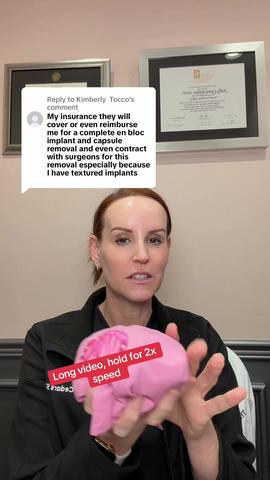
Implant Removal and Capsulectomy: Insurance, Procedure Types, and Why "En Bloc" Is Only for Capsule Cancer
May 7, 2026
Dr. Killeen breaks down the five types of implant removal and capsulectomy, why insurance often says "yes" while plastic surgeons say "cosmetic code only," and why an en bloc capsulectomy is only for a documented capsule cancer like BIA-ALCL.