Fat Grafting to the Breast in Beverly Hills
Using Your Own Fat to Add Volume and Refine Shape with Dr. Kelly Killeen
Schedule Consultation
Fat grafting to the breast, also called fat transfer, moves your own fat from an area where you have some to spare into the breast. The fat is collected with liposuction and placed to add a modest amount of volume or to smooth a contour.
In Dr. Kelly Killeen's practice, most breast fat grafting solves a specific problem: restoring shape after implant removal, refining a reconstruction, filling a dent after a lumpectomy, or fine-tuning another breast operation. She also offers fat-only breast augmentation, selectively, to women whose goals match what fat can do. Fat adds volume, but it cannot reshape the breast the way an implant can, so whether fat belongs in your plan depends on your anatomy and your goals.
Breast Fat Grafting at a Glance
- What it is
- Moving your own fat, collected with liposuction, into the breast to add modest volume or smooth a contour
- How much bigger
- About a half to one cup size per round for most women; some gain less and some more
- Where the fat comes from
- An area where you have fat to spare, chosen together at your consultation
- Facility
- For operating-room procedures, the Quad A (AAAASF) accredited surgery center in Dr. Killeen's Beverly Hills office or Cedars-Sinai, with board-certified anesthesiologists
- Recovery
- A compression garment over the donor area for about a month; the result is judged at about six months
- Insurance
- Usually covered as part of reconstruction after a mastectomy; cosmetic fat grafting is usually self-pay
- Often combined with
- A breast lift, implant removal, revision or reconstruction, at the same operation or later
Fat Grafting Serving Beverly Hills & Los Angeles
Dr. Killeen's practice is located in the heart of Beverly Hills, with fat grafting patients traveling in from across the greater Los Angeles area, including West Hollywood, Santa Monica, Brentwood, Bel Air, Pacific Palisades, Hollywood, Pasadena, Calabasas and Sherman Oaks, as well as from other states.
Every fat grafting procedure in the operating room is performed at an accredited facility, either the Quad A (AAAASF) accredited surgery center in Dr. Killeen's Beverly Hills office or Cedars-Sinai, with board-certified anesthesiologists. Patients who stay overnight after surgery at the center recover at a partner recovery facility.
How Fat Grafting Works
Collecting the Fat
The area the fat comes from is numbed with a dilute numbing fluid (tumescent solution), and the fat is removed with liposuction. Liposuction is limited in one day because too much at once raises the risk of complications, which can cap how much fat is available in a single round.Preparing It
Not everything liposuction removes is usable. Fluid, blood and broken fat cells are separated out, and only a fraction of what is removed becomes fat that can be grafted. Dr. Killeen uses tight grafting, removing as much of the fluid as possible so that mostly fat goes back in.Placing It
The fat goes in by hand through a thin, blunt-tipped tube, in very small amounts woven through the breast in many passes and at different depths, so each bit sits close to a blood supply. She places only as much as your tissue can support, because fat crowded into too small a space is more likely to be lost.Taking Hold
Grafted fat is a living graft, much like a skin graft. Over the first few days each bit has to pick up a new blood supply in its new home. The fat that does becomes a lasting part of your breast, and the fat that does not is gradually absorbed or, less often, leaves a lump.
Dr. Killeen recommends anesthesia based on how much fat is needed, what else is done at the same operation and your health history. A very small touch-up, such as filling a tethered scar, can sometimes be done in the office instead. Fat grafting can be done on its own, during another breast operation such as a lift or implant removal, or as a separate surgery later.
Benefits of Fat Grafting
Fat grafting is planned around your goals and your anatomy. Depending on your situation, the goals include:

Physical Benefits
- Your Own Tissue: Fat from your own body, with no implant placed
- No Implant to Maintain: No implant to monitor or replace later
- Your Shape, a Little Larger: Volume added to the breast shape you already have
- Smoother Contours: Hollows filled, implant edges softened or a smaller side evened out

Emotional Benefits
- A Change That Looks Like You: A modest increase rather than a dramatic one
- An Option Without an Implant: For women who would rather not have one
- A Plan Made for You: Fat is added only when it fits your anatomy and your goals
- Honest Expectations: A clear discussion of what fat can and cannot do
Fat Grafting vs. Breast Implants
Fat grafting is great, but you do not have the ability to change the structure of the breast the same way you do with an implant.
Fat and implants give different results, so the choice starts with the look you want. Most of a breast's shape comes from its firmer breast tissue. Fat is soft: it makes the breast you have larger, while an implant can change its shape.
| Feature | Fat grafting | Implant |
|---|---|---|
| How much bigger | About a half to one cup size per round for most women | The size you choose |
| Shape | Your own shape, made larger | A change in shape, usually rounder with more fullness up top |
| Upper fullness | A little at first, which softens and settles over about a year | The most consistent way to add fullness to the upper breast |
| Lift | Does not lift a drooping breast | Can give a slight lifting effect in a deflated breast |
| Number of surgeries | A second round is fairly common if you want more volume | The full volume is placed in one operation |
| Feel | Becomes your own soft tissue | A device with a firmer, set shape |
| What you need | Enough fat to spare | No donor fat |
| How long it lasts | Fat that survives the first months stays and behaves like your own fat | A medical device that may need upkeep or future surgery |
| Risks | Lumps, uneven survival and imaging changes, plus contour irregularity where the fat was taken | Device-related risks, such as capsular contracture or rupture |
| A good fit for | A modest increase in a breast whose shape you like | A specific size or a rounder shape |
If fullness in the upper breast is your main goal, the option Dr. Killeen points to is Preservé, a tissue-preserving augmentation that places a smaller implant higher on the chest, for women having their first augmentation. For a specific size or a rounder shape, see breast augmentation.
When Fat Grafting Helps
With a Breast Lift
Fat does not lift the breast, but it can fill the hollow upper chest that a lift alone cannot correct. With a simpler lift, fat grafting at the same time may be fine; with a more complex lift, Dr. Killeen may recommend doing it separately. See breast lift.
After Implant Removal
Fat can fill a hollow or uneven area where an implant used to sit and add a little volume. When the capsule is removed too, less fat can be grafted at the same time, so fat is sometimes done later. See breast implant removal and fat grafting with a lift or implant removal.
Visible Implant Edges
In thin patients, as little as 10 to 20 cc of fat per side can soften a visible implant edge, at the time of augmentation or later (hiding implant edges). For rippling and other implant problems, see breast revision.
After Reconstruction
Fat can thicken the thin tissue over a reconstruction implant to soften rippling and visible edges, and it can add volume at a later surgery. In Dr. Killeen's experience, one round is often enough to cover the implant. See breast reconstruction and adding volume after reconstruction, and for other changes, breast reconstruction revision.
After Radiation
Fat grafting can bring healthier tissue into an area treated with radiation. It is usually done months after radiation has finished, and Dr. Killeen plans its timing around any other surgery you need, such as capsular contracture treatment.
Uneven Breasts
For a mild size difference, fat can fill out the smaller side, sometimes with a little extra volume overall. After a breast operation, Dr. Killeen waits six months to a year before treating unevenness. More on how breast asymmetry is corrected.
Tuberous Breasts
Combined with a lift or reduction and release of the tight tissue, fat helps widen the base of the breast. Fat alone usually is not enough. See tuberous breast correction.
After a Breast Reduction
If a reduction left you smaller or less even than you wanted and only a modest change is needed, Dr. Killeen generally prefers fat to an implant. More on adjustments after a breast reduction.
After a Lumpectomy
Fat can fill a dent or uneven area left by a lumpectomy.
Tethered Scars
When an areola scar pulls inward after implant removal or augmentation, a small amount of fat can fill the dip, sometimes as a small procedure in the office. More on tethered areola scars.
Fat-Only Breast Augmentation
Fat-only breast augmentation uses fat grafting alone, with no implant. Dr. Killeen offers it selectively, because fat cannot replace an implant or give the same result.
- Who it suits: A woman who wants a modest increase, likes the shape of her breasts and has enough fat to spare.
- How much: For most women, one round adds about a half to one cup size. Some gain less and some gain more.
- What it cannot do: Fat makes the breast you have larger. It will not lift the breast or create a rounder shape.
- Small breasts: A very small breast has little room for fat, so a large increase from a small starting size usually is not realistic.
- More rounds: How much fat survives varies, and one side can keep more than the other, so a second round is fairly common, especially for women who want more volume.
If you want a specific size, a rounder shape or fullness up top that lasts, an implant is usually the better match. Injected fillers, PRP injected on its own and donor-fat products are not a substitute for breast augmentation, and Dr. Killeen does not recommend them for that purpose.
The right patient is someone who understands its limitations.
Who Is a Good Candidate?
- Enough fat to spare: Taking fat from an area without much extra can leave lumps or dents where it was removed.
- Enough breast tissue to receive it: Putting in more fat than the breast can support raises the risk of complications.
- A stable, healthy weight you plan to keep: Dr. Killeen does not ask patients to gain weight first. Weight gained before surgery enlarges the fat cells you already have rather than adding new ones, so the extra volume shrinks when your weight returns to normal.
- Good general health: Any medical conditions should be well controlled, with regular check-ups with your doctor.
- Realistic expectations: A good candidate understands what fat can and cannot do.
If you take a weight-loss medication, tell Dr. Killeen. Some plastic surgeons have reported less fat survival in patients taking them, so she will talk with you about timing. Tell her too if you smoke, vape or use any nicotine product. The fat must be your own: fat from another person would be rejected, much like a transplant. An autoimmune condition does not rule out fat grafting on its own, though less of the fat may survive, and tissue that has had radiation never holds fat as well as untreated tissue.
How Much Fat Survives
Some of the fat placed is always lost, because each bit has to find a new blood supply and not all of it does. The rest stays as your own living tissue.
How It Is Placed
How much survives depends on how the fat is prepared and placed, and on the tissue it goes into. Dr. Killeen uses tight grafting, places the fat in small amounts and puts in only as much as the breast can support.
A Front Wall and a Back Wall
Grafted fat survives best between a front wall and a back wall: your skin in front, and the chest wall, or an implant's capsule, behind. Fat placed against a fresh raw surface, such as tissue cut during a lift or the space where a capsule was just removed, does not take as well. That is why fat is sometimes done as a separate operation (why grafted fat needs a front wall and a back wall).
What Lowers Survival
Tissue that has had radiation never holds fat as well as untreated tissue, and women with autoimmune conditions may keep a little less. Gaining weight just before surgery can lower how much fat takes, too.
When You See the Result
Right after surgery the breasts look fuller because of swelling. The size you keep shows at about six months, once the swelling has settled and any fat that did not survive has been absorbed, and closer to a year after a larger graft. Dr. Killeen measures the change with 3D imaging before surgery and at follow-up.
How Long It Lasts
The fat that survives stays, and it behaves like the rest of the fat in your breast. Because it is ordinary fat, your breasts can still change size as your weight changes, so staying at a stable, healthy weight protects your result.
Another Round
How well fat takes varies from person to person, and sometimes from one side to the other, so a second round is fairly common, especially for a bigger change. If you need one, Dr. Killeen will advise when to plan it, once the first round has fully settled. If you have very little fat to spare, you may only have one good round, so timing matters.
Dr. Killeen will give you a realistic estimate for your own breasts at your consultation, based on how she grafts and what she has measured in her own patients.
Loading before & after results...
Recovery After Fat Grafting

First Days
The breasts are quite swollen and often bruised, and they can look blotchy and red. They may feel heavy and full. This is normal and it settles. Follow your post-operative instructions closely while the fat establishes its new blood supply. Call the office if you have a fever, and call 911 for shortness of breath or chest pain.First Weeks
The area the fat was taken from is sore, more so for some people than others. You wear a compression garment over it for about a month. Remember that the size you see now is mostly swelling.One to Three Months
As the swelling goes down, check your breasts and tell the office about any firm spot early. Small lumps are easier to treat when they are caught early.About Six Months
The result is judged once the swelling has settled and the fat that did not survive has been absorbed, or closer to a year after a larger graft.
When you can return to work, drive and exercise depends on how much liposuction was done and whether fat grafting was combined with other surgery, and Dr. Killeen gives you your own timeline, including how to sleep and which bra to wear. If your timing is flexible, a cooler, less busy time of year makes the month in a compression garment easier.
Mammograms and Breast Screening
Fat grafting can leave small calcifications or lumps that show up on breast imaging. Based on the studies Dr. Killeen follows, there is no evidence that they hide breast cancer, and as far as current studies show, fat grafting does not make imaging harder to read.
- Calcifications from fat grafting usually look different from the kind linked to early breast cancer, and radiologists can usually tell them apart.
- Occasionally a finding needs a closer look, so some women have a biopsy to be sure.
- Changes on imaging are more common than lumps you can feel, and they can stay long term.
- Keep up your regular breast screening, and tell your imaging team that you have had fat grafting to the breast.
- After a mastectomy, the rebuilt side no longer has screening mammograms (keep screening any remaining breast), but calcifications can still show up on other kinds of imaging, so mention your fat grafting there too.
Lumps, Oil Cysts and Fat Necrosis
In the best case, your body quietly absorbs the fat that did not survive. If it cannot, the leftover fat can be walled off into a small lump, called fat necrosis. The lump may be solid, or it may be a fluid-filled pocket called an oil cyst.
What to Expect
Some fat is lost in every graft, so every grafted breast has a little fat necrosis. What matters is the less common case where it stays behind as a lump you can feel. These lumps usually appear one to three months after surgery as the swelling goes down, later still after a very large graft. A lump from fat necrosis usually feels firm and can be tender while the area is inflamed. The risk is lower with smaller amounts of fat and higher with large grafts, reconstruction and radiated tissue.
Fat Necrosis or Infection?
As the body reacts to dead fat, the skin over it can turn red, warm and tender, which can look a lot like an infection. Infection after fat grafting is rare. Fever and shortness of breath are not typical of fat necrosis: call your surgeon right away for a fever, and call 911 for shortness of breath or chest pain. Redness from fat necrosis comes from inflammation rather than bacteria. When there is a pocket of fluid, a sample taken under sterile conditions can be tested for bacteria to help tell the two apart, and a clear infection is best drained rather than only treated with antibiotics.
How Long It Lasts
Small lumps often soften and fade on their own over six months to a year. Larger ones usually shrink but may not disappear completely. More on how long fat necrosis takes to go away.
Treatment
Many small areas fade with time, so the first step is usually patience and gentle massage, and an ultrasound can show whether a lump is solid or filled with fluid. If a lump does not go away on its own, there are several ways to treat it, from draining a fluid-filled cyst with a needle to minimally invasive removal, with surgery kept for lumps that do not respond. Dr. Killeen will talk you through the options that fit your situation.
Have Any New Lump Checked
Fat-Only Reconstruction After Mastectomy
A breast can be rebuilt with fat alone after a mastectomy, but it takes more time and more operations than most women expect.
- Grafting does not start during the mastectomy. The remaining skin depends on a delicate blood supply, so you heal for a couple of months first.
- Each round can add only as much fat as the thin tissue can support, so it takes several rounds, usually at least three to four months apart. The tissue thickens as you go, so later rounds can hold more.
- Mastectomy skin tends to tighten as it heals, which can work against the slow build-up of fat.
- A breast made only of fat is soft, and it tends not to have the rounded shape that breast tissue gives.
- Many rounds raise the chance of oil cysts, firm lumps and calcifications, and findings that need a closer look can be stressful after breast cancer.
More often, fat is used to finish an implant reconstruction, and flap reconstruction is another way to use your own tissue. See breast reconstruction for the options.
Cost and Insurance
Cost
The cost depends on how much fat is needed, how many areas the fat is taken from, and whether fat grafting is combined with another operation, along with anesthesia and facility fees. Several rounds cost more than one, which is one reason to plan carefully. Dr. Killeen provides a personalized quote at your consultation.
Insurance
Fat grafting is usually covered when it is part of breast reconstruction after a mastectomy. Under the federal Women's Health and Cancer Rights Act, most plans that cover mastectomy must also cover all stages of reconstruction. It is sometimes covered for a chest deformity from an earlier operation, an injury or a difference you were born with, such as tuberous breasts, depending on your plan. Fat grafting to change size or shape, including restoring the breast after cosmetic implants are removed, is considered cosmetic and is self-pay.
When Your Insurer Says It's Covered
A phone answer that a procedure is covered is usually a general one, not a decision that you meet the plan's criteria. It is easier to get approval before surgery than after, and Dr. Killeen's billing team submits pre-authorizations. Covered still means your deductible and coinsurance apply.
Risks of Fat Grafting
Fat grafting is well studied and its risks are well understood. They are different from an implant's risks, not absent. Risks include:
- Firm lumps from fat that did not survive (fat necrosis), or fluid-filled oil cysts
- Small calcifications that show up on imaging and occasionally lead to a biopsy
- Less fat surviving than hoped, or more on one side than the other, which can mean another round
- Lumpy or uneven areas, or a fluid collection (seroma), where the fat was taken
- Redness and swelling that can look like an infection; infection itself is rare
- Asymmetry, since no two breasts match exactly before or after surgery
- General risks of any operation, including bleeding, infection and injury to nearby tissue
- Problems that appear later than with most operations, often one to three months after surgery
Frequently Asked Questions
Schedule Your Beverly Hills Fat Grafting Consultation
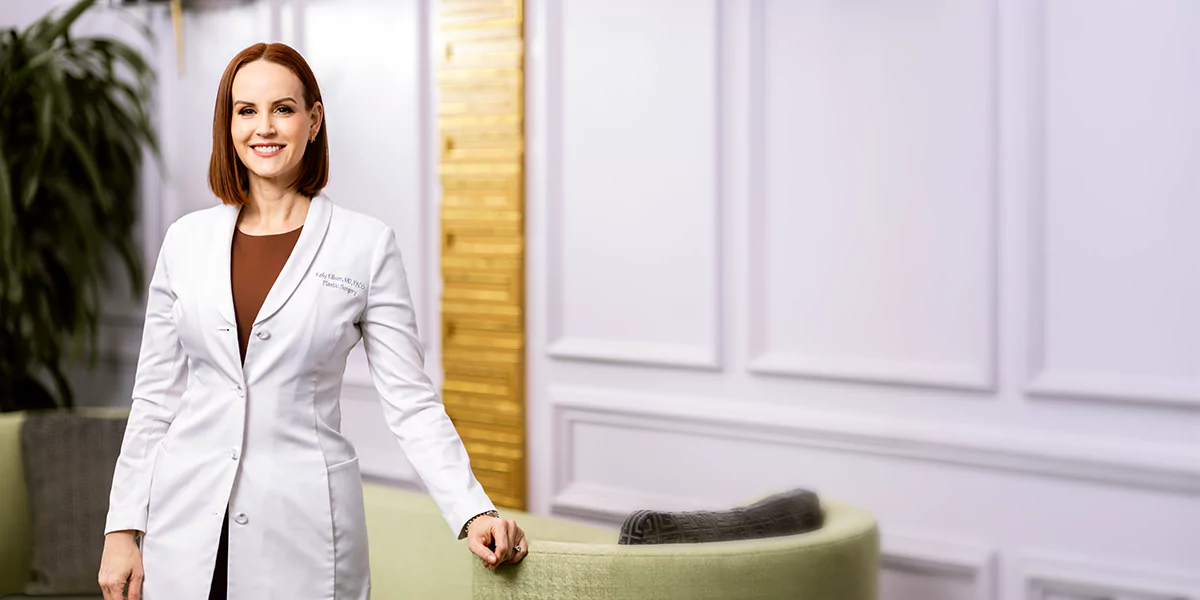
A Plan Made for You
Whether you are considering fat grafting on its own or alongside another breast operation, a consultation with Dr. Kelly Killeen starts with your goals, your anatomy and your health.
She will explain what fat can and cannot do for you, and give you a realistic estimate for your own breasts.
Book your fat grafting consultation.
Schedule Your ConsultationA Plan Made for You
Whether you are considering fat grafting on its own or alongside another breast operation, a consultation with Dr. Kelly Killeen starts with your goals, your anatomy and your health.
She will explain what fat can and cannot do for you, and give you a realistic estimate for your own breasts.
Book your fat grafting consultation.
Schedule Your Consultation