How to Hide Implant Edges If You're Thin
It really doesn't take a lot of fat grafting to hide edges of the implant — you can often do this with as little as 10 to 20 cc's per side.
How to Hide Implant Edges If You're Thin
One of the most common concerns for thin patients considering breast augmentation is that the edges of the implant will be too visible. When there's very little tissue covering the implant, you can sometimes see or feel a "step-off" where the implant ends — especially along the sides and upper pole.
Here's what you can do about it.
Option 1: Fat Grafting
The first option is using your own fat to cover the edges of the implant (fat grafting), and it doesn't take much. As little as 10–20 cc's of fat per side can successfully hide the implant edges and create a smoother transition.
Fat grafting can be done at the same time as your augmentation, making it a convenient add-on for thin patients.
Option 2: Fat Substitutes
Products like Alloclae or Renuva can be used in small amounts to camouflage the edge of the implant. These are fat substitutes that add a layer of soft tissue coverage where you need it most.
One thing to know: these products are often more expensive than fat grafting, despite serving a similar purpose.
Strategies That Don't Require Extras
There are also decisions you can make about your implant selection to minimize visibility without adding fat grafting:
Choose a Modest Size and Lower Profile
A smaller implant with a lower profile creates less of a step-off at the edges. There's simply less implant to hide, which makes a big difference in thin patients.
Consider Implant Shape
Talk to your surgeon about implants that don't have as much roundness in the upper pole — ones that drop into a more natural, teardrop-like shape. This can help reduce visible edges at the top of the breast.
The trade-off: implants designed to drop more naturally tend to be softer, which can introduce rippling. In plastic surgery, there's often a give-and-take — no single implant is perfect for every situation.
Under-the-Muscle Placement
If you truly have very little tissue, placing the implant under the muscle adds an extra layer of coverage that can reduce visibility. However, this comes with its own trade-off: if you have very thin tissue over the muscle, muscle movement (animation) can be more noticeable.
The Bottom Line
There's no single perfect solution for every thin patient — but there are multiple tools your surgeon can use to minimize implant visibility. The right approach depends on your anatomy, your goals, and which trade-offs you're most comfortable with. A thorough conversation with your plastic surgeon about the pros and cons of each option will help you find the best plan for your body.
Your Journey to Renewed Confidence

Transform Your Life
Every person deserves to feel comfortable and confident in their own body. Our procedures aren't just about physical change. They're about reclaiming your life, your comfort, and your self-assurance.
Dr. Killeen and her team support you every step of the way, from your first consultation through recovery.
Take the first step toward the life you deserve.
Schedule Your ConsultationTransform Your Life
Every person deserves to feel comfortable and confident in their own body. Our procedures aren't just about physical change. They're about reclaiming your life, your comfort, and your self-assurance.
Dr. Killeen and her team support you every step of the way, from your first consultation through recovery.
Take the first step toward the life you deserve.
Schedule Your ConsultationRelated Articles
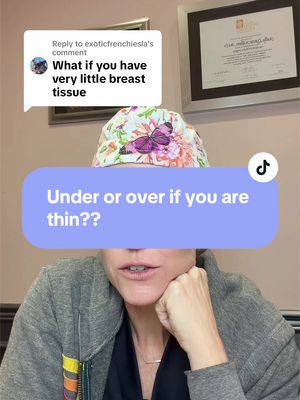
Very Little Tissue and Considering a Breast Augmentation: Under or Over the Muscle?
June 15, 2026
Dr. Killeen breaks down the under-vs-over-the-muscle decision for thin breast augmentation patients — the traditional pinch test, why modern cohesive implants and fat grafting have changed the old rules, and the overlooked trade-off: thin patients see the implant more under the muscle, but they also see the muscle move more.
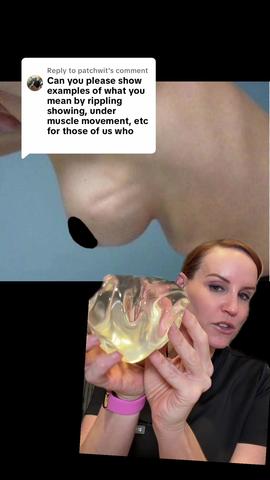
Breast Implant Rippling: What Causes It and How to Fix It
October 9, 2025
Dr. Killeen breaks down the three types of breast implant rippling — standard edge folds, bending-forward rippling, and traction rippling — and the realistic fixes including fat grafting, switching to a more cohesive implant, moving under the muscle, and why dermal matrix usually isn't the answer.

My Thoughts on Over-the-Muscle Breast Augmentation (and How They've Changed)
September 23, 2025
Dr. Killeen explains why she's transitioned the majority of her breast augmentation and reconstruction patients to over-the-muscle placement — what changed in the data, why patients prefer it, what trade-offs (rippling, edge visibility) come with it, and how Motiva implants have helped.