Tethered Areola Scars: Causes and Treatment Options
This is such a nuisance to both surgeons and patients.
What Is a Tethered Areola Scar?
A tethered areola scar happens when the incision underneath the areola doesn't heal smoothly. Instead of a flat, even surface, the skin sinks inward. This is a decently common issue, and it can occur whether you still have an implant in place or after an explant.
Why Does It Happen?
When a surgeon goes through the periareolar incision, there are several layers involved: the skin, fatty tissue and breast tissue, the capsule, and the muscle. What often goes wrong is that the fatty tissue and breast tissue don't heal well together, and the skin tethers down to the capsule beneath it.
With an implant still in place, you might not notice the tethering because the implant rounds everything out and stretches the tissue thin. But over years, the breast tissue and fat can actually retract and pull apart. Once the implant comes out, the tethering becomes really obvious. The tissue thickness drops significantly right at the incision line, creating a visible indentation.
How to Fix a Tethered Areola Scar
During Surgery
In the operating room, surgeons try to advance the tissue and close the area smoothly, but depending on the situation, this can be difficult or even impossible. Another option during surgery is fat grafting. It's hard to do through the areola incision itself, but if a different incision is being used (like an IMF incision), fat grafting at the time of surgery can often make the area better.
After Surgery: Cupping
If tethering develops after surgery, the first step is usually cupping. The firmest scar tissue forms in the first six weeks, so there's not much benefit in starting earlier. Once the scar tissue begins to remodel and soften, cupping devices can be used to pull on the area, stretch it, and try to prevent it from tethering back down.
This is especially important for patients who had long-standing tethering with an implant in place: the tissue can have a "memory" and try to go back to its tethered position even after a good surgical repair.
Fat Grafting and Filler
When cupping isn't enough, the next option is adding tissue to the area. Fat grafting can be done in the office without a full surgery for a small area like this, and it has the potential for a permanent result.
Filler is another option, but keep in mind that fillers aren't permanent, so you'll need to redo them over time. Dr. Killeen does not recommend Sculptra for the breast area because it's unclear how it affects mammography, and you always want to consider how any treatment will impact your future breast cancer screening.
Surgical Options
For cases that don't respond to conservative treatments, some surgeons place small pieces of dissolvable mesh or dermal matrix under the skin. The incision is opened, the material is tucked underneath, and then everything is closed back up. This adds a little tissue and may help prevent re-tethering, though it can feel like a small lump, and a lot of patients are bothered by it.
The Bottom Line
Tethered areola scars are a nuisance for both surgeons and patients. The good news is there are multiple options for treatment, from simple cupping to fat grafting to surgical correction. If you're dealing with this issue after a breast augmentation or explant, talk to your surgeon about which approach makes the most sense for your situation.
A note on incisions: This is one of the reasons many surgeons, including Dr. Killeen, prefer not to use the periareolar incision for breast augmentation. The inframammary fold (IMF) incision keeps the scar away from the areola.
Your Journey to Renewed Confidence
Transform Your Life
Every person deserves to feel comfortable and confident in their own body. Our procedures aren't just about physical change. They're about reclaiming your life, your comfort, and your self-assurance.
Dr. Killeen and her team support you every step of the way, from your first consultation through recovery.
Take the first step toward the life you deserve.
Schedule Your ConsultationTransform Your Life
Every person deserves to feel comfortable and confident in their own body. Our procedures aren't just about physical change. They're about reclaiming your life, your comfort, and your self-assurance.
Dr. Killeen and her team support you every step of the way, from your first consultation through recovery.
Take the first step toward the life you deserve.
Schedule Your ConsultationRelated Articles
Breast Augmentation Incisions: Transaxillary, Periareolar, Inframammary, TUBA
October 15, 2025
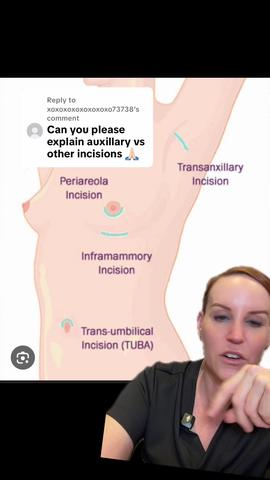
Dr. Killeen walks through the four common incision options for breast augmentation — armpit, around the areola, breast crease, and belly button — including the pros, cons, and infection/contracture risks of each, plus why the inframammary is her preferred choice.
Can You Do Fat Grafting With a Breast Lift or Explant?
November 25, 2025
Dr. Killeen explains when fat grafting can be combined with a breast lift or implant removal, and when it's better to wait and do it as a separate procedure.

Why I Hate the Donut Lift and the Crescent Lift (And Why the Bigger-Scar Lift Is Worth It)
June 10, 2026
Dr. Killeen explains why she avoids the donut (Benelli) lift and the crescent lift — the donut spreads the areola no matter what you sew it with (even Gore-Tex), and the crescent ovals out the areola and destroys the superior pedicle for future surgery. Plus why the traditional bigger-scar lift is the trade worth making.