Can You Breastfeed With Breast Implants? Yes — and the Incision Matters More Than the Pocket
Almost every patient I see who has trouble breastfeeding after augmentation had a periareolar incision. The literature doesn't strongly support that — but it's what I see in real life. If you want to breastfeed in the future, the incision choice matters more than the pocket.
Can You Breastfeed With Breast Implants? Yes — and the Incision Matters More Than the Pocket.
A question came in about breastfeeding after a breast augmentation, and I want to expand on it because the practical answer is meaningfully different from what the academic literature suggests.
Short version: yes, you can absolutely breastfeed with implants. I did myself — 18 months with each of my two kids, no trouble. But how the implant is placed can affect your ability, and the incision choice matters far more than my colleagues tend to discuss.
What the Literature Says
The academic literature on breastfeeding after breast augmentation focuses on two main variables:
Implant Placement (Under vs. Over the Muscle)
Studies seem to suggest that:
- Patients with under-the-muscle (submuscular or dual plane) implants have a slightly easier time breastfeeding
- The mechanism is presumed to be that the implant doesn't sit directly behind the breast tissue, so the ductal system is less compressed
Incision Choice
The literature is less strong on the role of incision choice. There are studies suggesting it matters, and studies suggesting it doesn't.
What I See in Real Life
Here's where my clinical experience diverges from the academic story.
Implant Placement: Doesn't Seem to Matter as Much as Studies Suggest
In my own practice, I don't see a meaningful difference in breastfeeding success between under-the-muscle and over-the-muscle augmentation patients. Both groups can usually breastfeed without significant difficulty.
I respect the published data on this — but in real-world practice, the under-vs-over question isn't the main driver of who can and can't breastfeed.
Incision Choice: Matters More Than the Literature Suggests
Here's what I actually see:
Almost every patient I encounter who has had trouble breastfeeding had a periareolar incision.
That's a striking observation, and it lines up with anatomic reasoning.
Why the Incision Matters
To understand this, you need to know what each common augmentation incision does to the breast tissue.
Periareolar Incision (Around the Areola)
- The incision is made along the lower border of the areola
- To get the implant into the pocket, the surgeon cuts directly through the breast tissue
- That dissection passes through:
- Milk ducts — disrupted during the dissection
- Glandular tissue — where milk is produced
- The connections between the milk-producing tissue and the nipple
The breast's "milk delivery infrastructure" is directly damaged by the surgical path. Even with careful technique, you're cutting through the system that breastfeeding relies on.
Inframammary (Crease) Incision
- The incision is in the inframammary fold — the crease under the breast
- The dissection comes up from underneath the breast
- It does not cut through the breast tissue
- The milk ducts and glandular tissue are preserved
- The nipple connections stay intact
The inframammary approach completely avoids the surgical path that disrupts breastfeeding anatomy.
Transaxillary and TUBA
These approaches also don't go through the breast tissue itself — they approach the pocket from outside the breast (armpit or belly button). So theoretically, they should preserve breastfeeding similarly to inframammary.
My Practical Recommendation
If you're planning to breastfeed in the future and you're having a breast augmentation, my advice is:
1. Strongly Consider an Inframammary Incision
The incision choice is the most important variable for protecting your future breastfeeding ability, based on what I see in my patients. The inframammary incision is also my preferred for many other reasons — lower contracture risk, easier revision access, hidden scar when healed.
2. Don't Stress as Much About the Implant Placement
While the literature gives a small edge to under-the-muscle for breastfeeding, in my experience the difference isn't practically meaningful. Choose your placement based on the other factors that matter — aesthetic goals, animation deformity, lifestyle, tissue thickness — rather than letting breastfeeding drive it.
3. Have the Conversation at Consultation
Tell your surgeon up front:
"I want to breastfeed in the future. What incision do you recommend for me, and how does it affect breastfeeding ability?"
A good surgeon will:
- Discuss the incision's breastfeeding implications
- Be honest about why they're recommending a specific incision for you
- Adjust the plan if breastfeeding preservation moves up your priority list
If you get vague reassurance ("it'll be fine") rather than specifics, push for a real answer.
My Personal Experience
For full transparency: I have breast implants myself. I breastfed both of my children — 18 months each, no trouble at all.
That's an n of 1, but it lines up with what I see in my patients: with the right surgical plan, breastfeeding after augmentation is generally very achievable.
What If You Already Had a Periareolar Incision?
If you're reading this and you already had a periareolar incision and you're worried about future breastfeeding:
- Most patients with periareolar incisions still successfully breastfeed. It's not a guaranteed problem.
- The risk is higher, but it's a risk, not a certainty.
- Some patients have partial difficulty — they can breastfeed but produce less milk, or struggle with letdown.
- Lactation consultants can be enormously helpful in maximizing your milk supply if you encounter difficulty.
The best thing you can do is plan ahead with lactation support and a willingness to adapt if needed. Don't panic prophylactically.
What If You're Already Done Having Kids?
If you're past childbearing and breastfeeding is no longer relevant to your decision-making, you have more flexibility to choose an incision based on aesthetics, scar visibility, and surgeon preference. The breastfeeding consideration drops off the priority list.
The Bottom Line
Yes, you can absolutely breastfeed with breast implants. I did, 18 months per kid, without difficulty.
What matters most for protecting your breastfeeding ability:
- Incision choice — strongly favor the inframammary (crease) incision over the periareolar
- Implant placement is a smaller factor than the literature suggests in my practice — choose based on other priorities
- Tell your surgeon at consultation that breastfeeding matters, so they can plan accordingly
The published academic literature understates the role of incision choice in my experience. If you're planning to breastfeed, lean toward the inframammary approach — it preserves the anatomy that matters most for nursing.
Your Journey to Renewed Confidence

Transform Your Life
Every person deserves to feel comfortable and confident in their own body. Our procedures aren't just about physical change. They're about reclaiming your life, your comfort, and your self-assurance.
Dr. Killeen and her team support you every step of the way, from your first consultation through recovery.
Take the first step toward the life you deserve.
Schedule Your ConsultationTransform Your Life
Every person deserves to feel comfortable and confident in their own body. Our procedures aren't just about physical change. They're about reclaiming your life, your comfort, and your self-assurance.
Dr. Killeen and her team support you every step of the way, from your first consultation through recovery.
Take the first step toward the life you deserve.
Schedule Your ConsultationRelated Articles
Will a Breast Augmentation Affect My Ability to Breastfeed?
September 27, 2025
Dr. Killeen explains how breast augmentation affects breastfeeding — why the implant placement (under vs. over the muscle) matters less than people think, and why the incision location, especially periareolar, makes the biggest difference in your ability to nurse.

Can You Breastfeed After Breast Augmentation?
November 27, 2025
Dr. Killeen explains how breast augmentation affects breastfeeding, why the incision location matters more than implant placement, and shares her own experience breastfeeding with implants.
Breast Augmentation Incisions: Transaxillary, Periareolar, Inframammary, TUBA
October 15, 2025
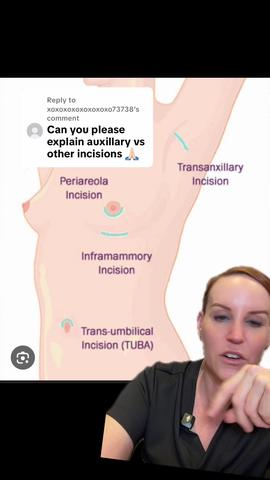
Dr. Killeen walks through the four common incision options for breast augmentation — armpit, around the areola, breast crease, and belly button — including the pros, cons, and infection/contracture risks of each, plus why the inframammary is her preferred choice.