My Thoughts on Over-the-Muscle Breast Augmentation (and How They've Changed)
Patients don't like under-the-muscle augmentations as much as we admit in the plastics community. The muscle movement bothers people. With modern implants and OR techniques, over the muscle is now safe — and patients are happier.
My Thoughts on Over-the-Muscle Breast Augmentation (and How They've Changed)
This is one of the rare areas where my own practice has meaningfully evolved over the last 10 years. I want to walk you through it honestly — what we used to do, why we did it, why I've changed, and where I've landed for both cosmetic and reconstructive patients.
A Quick History of How We Got Here
For decades, the dominant approach in breast augmentation was over the muscle (subglandular).
Then the data shifted.
- The best research available at the time showed higher rates of capsular contracture and other complications when implants were placed over the muscle
- Plastic surgeons collectively migrated to under the muscle (and especially dual plane) augmentation
- That data drove training, drove board review, and drove practice patterns
For my first roughly 10 years out of training, I did pretty much all dual plane augmentations. I wasn't doing it out of habit — I was doing it because the data told me that's how to minimize complications for my patients. That's what good evidence-based practice is supposed to look like.
What I Started Noticing in My Own Patients
But here's what I observed over those 10 years:
Patients really don't like under-the-muscle augmentations.
The biggest issue is animation deformity — the muscle movement that happens when you flex your chest, even when the muscle is technically released only the "right amount" with no over-release or double bubble.
The Honest Truth About Animation Deformity
In the plastics community, we sometimes underplay how much animation deformity bothers patients. The reality:
- It's not normal to see your chest move like that every time you move your arms
- It looks odd, even when it's technically "mild"
- Patients notice it constantly — in mirrors, in workout videos, in photos
- The more body-aware the patient (yoga, Pilates, weight training, dance), the more it bothers them
- Even patients who can intellectually understand it don't love seeing it
Add in patients who don't like the feeling of an implant tucked under their pec — especially when they exercise — and you have a real, persistent dissatisfaction signal.
What's Changed in the Last 5–6 Years
Two things shifted at the same time, which together opened the door for many of us to move back to over-the-muscle augmentation:
1. Patients Started Speaking Up
The last 5–6 years have seen a real, patient-driven push back to over-the-muscle augmentation in both:
- Cosmetic breast augmentation
- Breast reconstruction (direct-to-implant and prepectoral)
The driver isn't a new study or a new technique. It's patients telling us they want a different trade-off.
2. We Got Better at Preventing Complications
The historical higher complication rate of over-the-muscle augmentations was real — but we've learned a lot about what was driving it.
In 2025-era practice, we now know that complication rates can be brought down significantly with:
- Smart incision placement (inframammary over periareolar)
- Effective irrigation solutions (hypochlorous acid, betadine)
- Keller Funnels for no-touch implant insertion
- Nipple shields / Tegaderms to contain ductal bacteria
- Glove changes before handling the implant
- Re-prepping the skin before placement
- Modern, more cohesive, more durable implants
When you stack all of these together, you can safely place implants over the muscle and keep complication rates similar to under-the-muscle placements. That's a genuine shift from where we were 15 years ago — and it's why so many of us in plastic surgery have transitioned back.
Where I've Landed: Over-the-Muscle for Most of My Patients
For both my cosmetic augmentation patients and my breast cancer reconstruction patients, I've transitioned predominantly to over-the-muscle (or subfascial) placement.
A few honest disclosures:
Personal Disclosure
I have breast implants myself. I've had them placed under the muscle and over the muscle at different points. Personally, I like them so much better over the muscle. That's an n of 1, but the difference is real.
My Patients Are Happier
Across my practice, patients consistently report higher satisfaction with over-the-muscle results — even when there are some compromises (which I'll get to next).
The Trade-Off: What You Give Up Going Over the Muscle
It's not a free win. There are real downsides to over-the-muscle placement that need to be discussed with patients.
1. More Visible Implant Edge
Without the muscle covering the top of the implant, you may see the implant edge more — especially if you're thin with minimal native tissue.
I've written separately about strategies for hiding implant edges in thin patients (fat grafting, careful implant selection, etc.).
2. More Potential for Rippling
All implants ripple — 100% of them. Whether you actually see it depends on:
- The shape of your chest wall
- How thin or thick your tissue is
- How tight or loose your capsule is
- How cohesive the implant is
Without muscle on top, more of those folds can transmit through to the surface, especially in thin patients.
Motiva Has Significantly Helped
Worth flagging: the Motiva implants that have come into the U.S. market have dramatically reduced rippling visibility in my patients. Knock on wood, I genuinely don't see rippling like I used to in thin over-the-muscle patients. The implant technology has gotten that much better.
The Trade-Off Patients Tend to Prefer
Here's what I've found from talking to my patients about it:
"Most patients would rather have a slightly more visible implant edge or some rippling — than animation deformity every time they raise their arms."
That's the trade. And for most patients, it's the trade they'd choose if both options were laid out clearly.
When I Still Recommend Under the Muscle
To be clear: I haven't completely abandoned dual plane. There are still patients for whom under-the-muscle (or dual plane) makes the most sense:
- Very thin patients with minimal tissue and high concern about implant visibility
- Patients who specifically don't mind animation deformity and want maximum tissue coverage
- Patients with specific anatomic features that favor it
But these are now a minority of my augmentation patients, where they used to be essentially everyone.
What This Means If You're Considering Augmentation
When you go in for your consultation, ask your surgeon directly where they tend to place implants and why.
Reasonable answers might include:
- "I've transitioned to over the muscle because patient satisfaction is meaningfully higher."
- "I primarily do dual plane in patients with minimal soft tissue."
- "I tailor placement to the individual patient based on tissue, anatomy, and goals."
Less reasonable answers:
- "I always do under the muscle because that's what we do."
- "Over the muscle is dangerous." (We covered why this kind of absolutist fear-mongering is misleading.)
The Bottom Line
In 2025, with modern implants, modern OR techniques, and 15 years of accumulated learnings, over-the-muscle breast augmentation is safer and more predictable than it used to be — and patients consistently prefer it because it eliminates animation deformity.
I've transitioned the majority of my cosmetic and reconstruction patients to over-the-muscle placement. The trade-offs (slightly more visible edge, slightly more rippling potential) are real, but most patients would rather accept those than deal with chest movement and the under-muscle "implant feel."
If you're early in your augmentation research, this is a worth having on your radar — and worth asking your surgeon about directly.
Your Journey to Renewed Confidence

Transform Your Life
Every person deserves to feel comfortable and confident in their own body. Our procedures aren't just about physical change. They're about reclaiming your life, your comfort, and your self-assurance.
Dr. Killeen and her team support you every step of the way, from your first consultation through recovery.
Take the first step toward the life you deserve.
Schedule Your ConsultationTransform Your Life
Every person deserves to feel comfortable and confident in their own body. Our procedures aren't just about physical change. They're about reclaiming your life, your comfort, and your self-assurance.
Dr. Killeen and her team support you every step of the way, from your first consultation through recovery.
Take the first step toward the life you deserve.
Schedule Your ConsultationRelated Articles
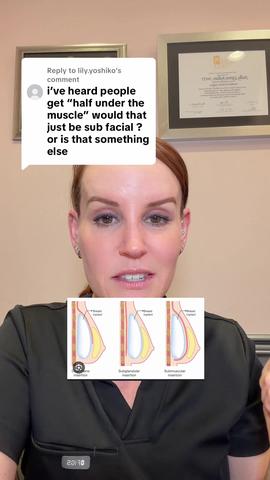
Subglandular, Submuscular, Dual Plane, Subfascial — Implant Placements Explained
October 21, 2025
Dr. Killeen breaks down the four most common breast implant placements — subglandular, submuscular, dual plane, and subfascial — what each one means anatomically, what the trade-offs are with animation deformity and biofilm, and how to think about which is right for you.
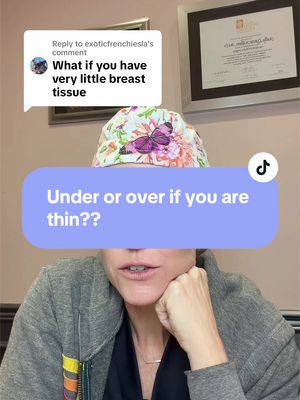
Very Little Tissue and Considering a Breast Augmentation: Under or Over the Muscle?
June 15, 2026
Dr. Killeen breaks down the under-vs-over-the-muscle decision for thin breast augmentation patients — the traditional pinch test, why modern cohesive implants and fat grafting have changed the old rules, and the overlooked trade-off: thin patients see the implant more under the muscle, but they also see the muscle move more.
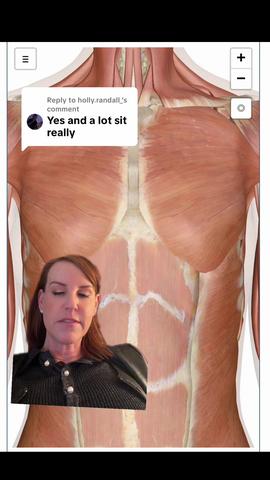
Do Submuscular Breast Implants Drift Apart Over Time? Yes — Here's Why
October 10, 2025
Dr. Killeen breaks down why submuscular breast implants tend to drift farther apart over time — the fixed sternal muscle attachment, repeated muscle force pushing the implant down and out, and the water-hammer effect of saline implants — and why it's a real but not universal risk.