Will a Breast Augmentation Affect My Ability to Breastfeed?
In my patient population, the incision actually matters more than where the implant's located. Areolar incisions tend to cause more breastfeeding trouble — they cut through milk ducts. I had a breast augmentation and breastfed both of my kids for 18 months each.
Will a Breast Augmentation Affect My Ability to Breastfeed?
A super common question I get from patients considering a breast augmentation, especially women who haven't had children yet: "will I be able to breastfeed after I have my implants?"
The short answer is: in most cases, yes — but the type of incision you choose matters more than where the implant is placed.
Let me walk through the actual data and what I see in my own practice.
Does Under vs. Over the Muscle Affect Breastfeeding?
In general — no, not meaningfully.
Some early research suggested under-the-muscle placements might have slightly less impact on breastfeeding than over-the-muscle. But honestly:
- That research is not high quality
- The differences are small if they exist at all
- In real-world practice, I don't see a significant difference between submuscular, subglandular, dual plane, or subfascial patients in their ability to breastfeed
So if you're trying to choose between under and over the muscle, breastfeeding is unlikely to be the deciding variable.
What Actually Matters: The Incision Location
This is the part most patients don't know — but it's probably the single biggest factor in how a breast augmentation might affect breastfeeding.
Periareolar Incision: The One That Tends to Cause Trouble
A periareolar incision is made along the lower border of the areola. To get the implant into the pocket, the surgeon has to cut directly through the breast tissue itself.
That tissue includes:
- Milk ducts (the channels that move milk from the gland to the nipple)
- Glandular tissue (where milk is actually produced)
- The connections between the milk-producing tissue and the nipple
So a periareolar incision essentially disconnects parts of the breast's milk delivery system. In my own patient population, I see more breastfeeding difficulties in patients with periareolar incisions than with any other approach.
Inframammary Incision: My Preferred for Many Reasons
The inframammary incision (in the breast crease) doesn't cut through breast tissue — it goes underneath it to access the implant pocket. Because of this:
- Breast ducts and glandular tissue are preserved
- Nipple connections stay intact
- Breastfeeding ability is far less likely to be impacted
This is one of many reasons it's my preferred incision for most augmentations.
Transaxillary and TUBA
The transaxillary (armpit) and TUBA (belly button) incisions also don't go through the breast itself, so theoretically they should preserve breastfeeding ability similarly to inframammary. (Both have other significant downsides, which is why I'm generally not a fan — see the full breakdown of incision options here.)
A Personal Anecdote
For what it's worth: I have breast implants myself. I breastfed both of my children for 18 months each with no trouble at all.
This isn't to say every patient's outcome will mirror mine — but it's worth knowing that a well-planned augmentation, done with the right incision, doesn't typically prevent breastfeeding.
A Note for All Breast Surgery Patients
The bigger general principle is worth stating: any breast surgery has the potential to affect breastfeeding. That includes:
- Breast augmentation
- Breast lift
- Breast reduction (this one has a meaningfully higher impact, since we move significantly more tissue)
- Breast revision
- Mastopexy
If you're planning to have children and plan to breastfeed, mention this to your surgeon at consultation. A good surgeon will:
- Discuss how each option might affect breastfeeding
- Help you choose the incision and technique most likely to preserve your ability
- Be honest about the level of risk vs. preservation associated with each plan
Most augmentation patients can breastfeed afterward. But every patient is different, and the choice of incision genuinely matters.
What to Ask at Consultation
If breastfeeding is important to you, here are a few questions worth asking:
- "What incision do you recommend for me, and how does it affect breastfeeding ability?"
- "Is there a reason you're recommending a periareolar incision? Could we use an inframammary instead?"
- "What's your experience with patients breastfeeding after augmentation?"
- "Are there any choices I can make in this surgery to maximize my chance of breastfeeding successfully?"
A good surgeon will welcome these questions and give you specific, individualized answers — not vague reassurance.
The Bottom Line
A breast augmentation should not, in most cases, prevent you from breastfeeding. The placement of the implant (under or over the muscle) doesn't make much practical difference.
What does make a difference is the incision. Periareolar incisions cut through breast tissue and tend to cause more breastfeeding issues than inframammary, transaxillary, or TUBA approaches. If breastfeeding is on your future radar, that's worth raising at your consultation.
If you have specific concerns about your case, talk through them with your surgeon — and don't accept "it'll probably be fine" as the only answer. You deserve specifics.
Your Journey to Renewed Confidence

Transform Your Life
Every person deserves to feel comfortable and confident in their own body. Our procedures aren't just about physical change. They're about reclaiming your life, your comfort, and your self-assurance.
Dr. Killeen and her team support you every step of the way, from your first consultation through recovery.
Take the first step toward the life you deserve.
Schedule Your ConsultationTransform Your Life
Every person deserves to feel comfortable and confident in their own body. Our procedures aren't just about physical change. They're about reclaiming your life, your comfort, and your self-assurance.
Dr. Killeen and her team support you every step of the way, from your first consultation through recovery.
Take the first step toward the life you deserve.
Schedule Your ConsultationRelated Articles
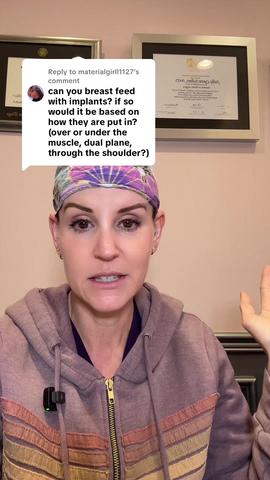
Can You Breastfeed With Breast Implants? Yes — and the Incision Matters More Than the Pocket
July 9, 2025
Dr. Killeen explains why she sees a real-world difference between periareolar and inframammary incisions for breastfeeding success after augmentation — even though the literature is less strong on this point. Plus why implant placement (under vs. over the muscle) is a smaller factor than studies suggest.

Can You Breastfeed After Breast Augmentation?
November 27, 2025
Dr. Killeen explains how breast augmentation affects breastfeeding, why the incision location matters more than implant placement, and shares her own experience breastfeeding with implants.
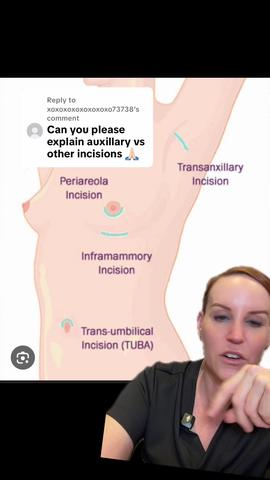
Breast Augmentation Incisions: Transaxillary, Periareolar, Inframammary, TUBA
October 15, 2025
Dr. Killeen walks through the four common incision options for breast augmentation — armpit, around the areola, breast crease, and belly button — including the pros, cons, and infection/contracture risks of each, plus why the inframammary is her preferred choice.