China's New "Influencer Law": Should Credentials Be Required to Post About Medicine?
People make good decisions when they have good information. Requiring credentials to be posted for people discussing sensitive topics like medicine, law, education, and finance is a really interesting idea.
China's New "Influencer Law" — An Interesting Idea
China has passed a new law that's being called the "Influencer Law." In short:
If you want to post on social media about certain sensitive topics, you have to have a relevant degree or credential in that area.
The designated sensitive topics are:
- Medicine
- Law
- Education
- Finance
As you'd expect, there are people who are thrilled about this — and people who are deeply upset. Here's where I land on it.
Why This Law Is Interesting
I've always believed that people make good decisions when they have good information. The flip side is also true: when the information is wrong, the decisions are wrong, and in some fields, those wrong decisions can ruin lives.
Misinformation in These Fields Is Genuinely Dangerous
In medicine, law, education, and finance, bad information doesn't just inconvenience you. It can:
- Cost you your retirement
- Cost you your case
- Cost you a year of your kid's education
- Cost you your health — or your life
So I understand the instinct to put some guardrails around who is allowed to speak authoritatively in these domains on a platform that reaches tens of millions of people.
What the Medical Research Actually Shows
In my own field, there have been studies examining the accuracy of medical content on social media, and — predictably — they find:
- The most accurate information comes from medical professionals
- There's a lot of inaccurate information posted by laypeople
Some of those laypeople have enormous reach. You may remember the concept of the "Disinformation Dozen" — 12 individuals who were identified as being responsible for a disproportionate share of anti-vax content spreading online. Robert F. Kennedy Jr. was one of them.
Requiring a credential to post in these lanes would, at minimum, limit the megaphones of the highest-impact misinformation accounts.
How China Plans to Actually Enforce It
One of the more interesting pieces: this isn't just "please post your credentials."
- Influencers will be required to post their credentials
- Social media platforms (including the Chinese version of TikTok, Douyin) will be responsible for verifying those credentials
That's a real enforcement mechanism, not an honor-system policy.
Where This Law Has Real Limitations
To be clear, I don't think this solves everything. A few reasons:
1. Credentials Don't Guarantee Accuracy
Having a medical degree doesn't mean everything you say is correct. There are very credentialed, very misinformed physicians out there — including some of the more absurd anti-vax doctors who have gone viral (I'm thinking of the one who claimed vaccines made metal stick to your head).
A credential is a floor, not a ceiling.
2. Government Overreach Is a Legitimate Concern
Any time the government is in the position of:
- Deciding who is allowed to speak
- Controlling the narrative
- Restricting the free flow of ideas
...it's worth being nervous about it. In theory, "free sharing of ideas" is exactly what a healthy society should want. In reality, as we've seen, unchecked misinformation in these specific fields actively harms people. That tension is real and doesn't go away just because one side of it is uncomfortable.
3. The Line for "Sensitive Topic" Is Fuzzy
Medicine is clearly sensitive. But what about wellness? Nutrition? Parenting? Home remedies? The scope of what counts as "sensitive" is something governments will inevitably expand over time, which is part of why these laws make people uneasy.
My Personal Take
I think the concept — requiring people discussing sensitive, high-stakes topics to post their credentials — is a really interesting and potentially useful idea.
I don't think we'd ever adopt something as restrictive as China's version in the United States, and I'm not sure we should. But I could absolutely see the value in:
- Verified credential badges on social platforms for people posting in medicine, law, education, and finance
- Higher visibility for verified experts in those areas
- Transparent labeling when someone speaking authoritatively on a topic has no training in it
That's a much lighter-touch approach than a full-blown restriction, and it still gives viewers the information they need to evaluate what they're seeing.
The Bottom Line
China's Influencer Law is an interesting test case for one of the defining issues of our time: what do we do about high-impact misinformation in fields where bad information can wreck people's lives?
Fully restricting who can speak is a heavy hammer and comes with real tradeoffs around free expression. But simply requiring transparent credentials for anyone speaking authoritatively on medicine, law, education, or finance? That's an idea I'd be in favor of exploring here.
Good decisions come from good information. And on a platform that reaches hundreds of millions of people, the bar for "information" in high-stakes areas probably should be higher than it is today.
Your Journey to Renewed Confidence
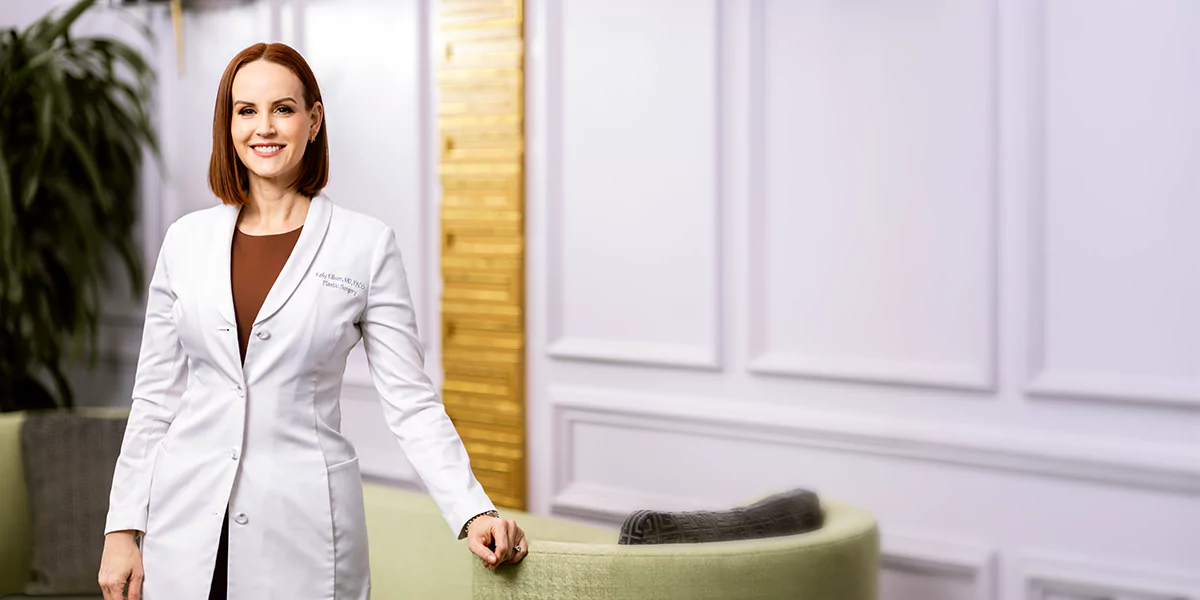
Transform Your Life
Every person deserves to feel comfortable and confident in their own body. Our procedures aren't just about physical change. They're about reclaiming your life, your comfort, and your self-assurance.
Dr. Killeen and her team support you every step of the way, from your first consultation through recovery.
Take the first step toward the life you deserve.
Schedule Your ConsultationTransform Your Life
Every person deserves to feel comfortable and confident in their own body. Our procedures aren't just about physical change. They're about reclaiming your life, your comfort, and your self-assurance.
Dr. Killeen and her team support you every step of the way, from your first consultation through recovery.
Take the first step toward the life you deserve.
Schedule Your ConsultationRelated Articles
Why Doctors Don't Give Free Medical Advice on Social Media
October 20, 2025
Dr. Killeen responds to a common comment — "it's ironic that doctors argue on TikTok but won't give you free medical advice" — and explains why no responsible physician can safely give individualized medical advice through DMs, why it's a real legal liability, and what helpful use of medical content actually looks like.
When a Patient Targets Their Physician Online: A Hard Conversation Without an Easy Answer
August 8, 2025
Dr. Killeen reflects on a viral situation where a patient is publicly accusing her treating physician on social media — and the broader phenomenon of unwell patients targeting physicians online with essentially no recourse, while also recognizing that the patient doing the harm is often someone in genuine crisis.
When a Physician Influencer Spreads Anti-Mammogram Misinformation: A Response
September 15, 2025
Dr. Killeen calls out a family-medicine physician spreading anti-mammogram content on TikTok — including the "expert" list backing her claims (a hypnotist, a health coach, and a physician selling unvalidated screenings) — and explains why this kind of physician-influencer misinformation is so dangerous heading into Breast Cancer Awareness Month.