Why Don't I Have Cleavage After Breast Implants?
There are so many different variables with anatomy and breast augmentation. It's not as simple as just slipping an implant in.
Is It Normal to Not Have Cleavage After Implants?
In general, no — but it certainly can happen. The first thing to consider if you're having a breast augmentation is: what does your natural anatomy look like? What does your chest wall look like, and what do your breasts look like?
Chest Wall Anatomy Matters
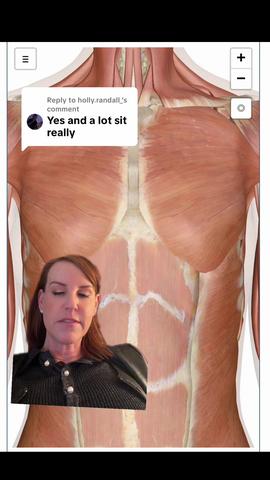
When it comes to chest wall anatomy, it's important to look at the center of your chest and also how your chest wall is tilted.
Sternum shape:
- Pectus excavatum (sunken sternum) — These patients get more cleavage than expected. Because the sternum is sunken in, it doesn't take much volume or projection for them to have deeper cleavage.
- Flat sternum — A neutral starting point.
- Pectus carinatum (protruding sternum) — The opposite effect. It takes more projection and volume for these patients to see cleavage.
Chest wall tilt: If your rib cage is tilted outward rather than flat, you often won't get as much cleavage as you'd want — even with larger implant placement.
Your Breast Tissue Plays a Role
Everybody has their own unique mix of breast tissue and fatty tissue. Women with more dense breast tissue tend to have more projection — the breast sticks out more. Women with fattier breasts tend to have less projection, where the breast sits closer to the chest.
So if your breast tissue is more dense, you'll usually get more cleavage even with smaller implants than a patient who has fattier breasts.
"Can't You Just Move the Implants Closer Together?"
This is the question that comes next, every time, and the answer is the most useful thing on this page.
In general with an augmentation, your implant should sit right in the middle of your chest, and the middle of your chest should be right in the middle of the implant. So if you're someone whose breasts are narrower and farther apart, a properly placed implant will also sit farther apart, and that leaves the cleavage a little wider.
Can we move the implant inward to narrow that gap? We certainly can. Here's the problem:
Remember, this part of your chest is not moving.
We can move the implant. We cannot move your sternum or the footprint of your breast. So when the implant slides toward the center and everything else stays put, the result reads as wrong:
- Move the implants inward to close a gap, and it looks like the breasts are looking off to the side
- Move them outward because things are too close, and it looks like they're looking in at each other
Patients can always tell something is off even when they can't name it. That's what they're seeing.
The Same Logic Runs Vertically
This isn't only a left-to-right problem. If the implant is placed too high, it makes the nipple look low. If it's placed too low, it makes the nipple look high.
Nothing about the nipple changed. The implant behind it moved. Which is why having the implant in the proper location is really important, and why implant position problems show up as complaints about parts of the breast that were never touched.
One Caveat: Under the Muscle
So in general, your cleavage will remain about the same after a breast augmentation.
The exception is placement. With a submuscular augmentation, the muscle sometimes forces the implant over a little more than we'd like, based on how it's attached in your body. With over the muscle, subfascial, or subglandular placement, we don't have this problem as much.
Have an Honest Conversation With Your Surgeon
When you're going into an augmentation, it's really important to relay your goals to your surgeon. Almost every augmentation patient wants better cleavage — and you need to have a frank, honest discussion about what your anatomy looks like and what they think your outcome is going to be.
The Trade-Off With Higher Profile Implants
If you decide you want to use a higher profile implant — say you have pectus carinatum or a tilted chest wall — it's really important to understand what that means. The implant we're going to place will be larger in order to fit your chest wall. And that might give you a new problem: you might have the cleavage you like, but you could end up top heavy and too big to fit in your clothing.
The Bottom Line
Always talk about these things with your surgeon. There are so many different variables with anatomy and breast augmentation. It's not as simple as just slipping an implant in.
And one reassurance, because this is where a lot of consultation anxiety lives: don't be scared of having a big gap. If everything looks good right now, chances are it's going to look gorgeous after.
Your Journey to Renewed Confidence

Transform Your Life
Every person deserves to feel comfortable and confident in their own body. Our procedures aren't just about physical change. They're about reclaiming your life, your comfort, and your self-assurance.
Dr. Killeen and her team support you every step of the way, from your first consultation through recovery.
Take the first step toward the life you deserve.
Schedule Your ConsultationTransform Your Life
Every person deserves to feel comfortable and confident in their own body. Our procedures aren't just about physical change. They're about reclaiming your life, your comfort, and your self-assurance.
Dr. Killeen and her team support you every step of the way, from your first consultation through recovery.
Take the first step toward the life you deserve.
Schedule Your Consultation