Do I Need a Breast Lift? How I Actually Decide.
Grade 3 ptosis — nipple pointing south — pretty much always needs a lift. Grade 2, almost always. Grade 1, maybe — depends on what you want your breasts to look like. And pseudoptosis is a whole other animal that deserves its own post.
Do I Need a Breast Lift? Here's How I Actually Decide.
This is one of the most common consultation conversations I have: a patient comes in for breast augmentation or revision and we have to figure out whether she needs a lift in addition to (or instead of) what she's thinking about.
There's no single answer that fits every patient — but here's the framework I actually use to figure it out.
Step 1: Determine the Degree of Ptosis
Ptosis is the medical term for breast droop. We grade it based on where the nipple sits relative to the inframammary crease (the fold under your breast).
No Ptosis
- Your nipple is above the crease, where it should be
- Breast position is youthful
- No lift indicated for ptosis reasons
Grade 1 Ptosis (Mild)
- Nipple is at the level of the crease
- The breast is starting to descend, but only mildly
- This is the gray zone — sometimes a lift, sometimes not
Grade 2 Ptosis (Moderate)
- Nipple is below the crease
- But still not on the bottom portion of the breast
- A clear indication for a lift in most cases
Grade 3 Ptosis (Severe)
- Nipple is pointing straight down
- "South-facing" is the technical (and visually accurate) way I describe this
- Almost always needs a lift to restore reasonable breast shape
Step 2: Check for Pseudoptosis
This is the tricky one, and it's often what trips patients (and inexperienced surgeons) up.
Pseudoptosis is when the nipple is still in roughly the right position — but the breast tissue itself has dropped, sliding down below the nipple level.
So at a quick glance, the nipple looks fine. But the breast tissue is under it, hanging below the inframammary crease.
Pseudoptosis is a completely different surgical problem from true ptosis, and it requires a different surgical approach. (I'm going to do a dedicated post on pseudoptosis because it really deserves its own walkthrough — what causes it, how it differs from real ptosis, and how we fix it surgically.)
For now, the key point: the nipple's position alone doesn't tell you whether you need a lift. You also have to look at where the breast tissue is sitting.
Step 3: Ask About Volume Goals
After understanding the ptosis picture, the next question is: do you want more breast volume?
This matters because adding volume to the breast can "cheat" a lift in some cases. It doesn't truly lift anything — but adding well-positioned upper-pole volume can:
- Distribute some volume up higher on the chest
- Make the breast look more lifted even though the underlying tissue hasn't moved
- Avoid the additional incisions of a formal lift
This works best for mild ptosis (grade 1) and pseudoptosis-like situations where the issue is more about visual distribution than true position. It does not work for grade 2 or grade 3 ptosis — those patients genuinely need the tissue rearranged.
So if you're borderline on needing a lift and you also want more volume, an augmentation alone might give you a result that looks lifted enough without requiring the lift incisions. That's a real option worth discussing with your surgeon.
Step 4: Ask About Your Aesthetic Preferences
This is the part that gets underweighted in some surgical conversations: what does you want your breasts to look like?
I always ask my patients about this directly, because:
Some Patients Tolerate Zero Droop
- They want a very lifted, perky look
- Even borderline grade 1 ptosis bothers them
- For these patients, I'm more likely to recommend a lift even if they're technically optional
Other Patients Like Some Natural Droop
- They're going for a softer, more natural aesthetic
- A little bit of natural droop reads as age-appropriate and authentic to them
- For these patients, I'm less likely to push a lift even if their grade suggests one is reasonable
This isn't about technical correctness. It's about understanding what the patient actually wants her body to look like.
My Decision Framework (Without Patient Preferences)
If we set aside your individual aesthetic preferences and just go by anatomy:
| Ptosis Grade | Typical Recommendation |
|---|---|
| No ptosis | No lift indicated |
| Grade 1 | Maybe — depends on patient preference and goals |
| Grade 2 | Almost always a lift |
| Grade 3 | Always a lift |
| Pseudoptosis | Different surgery entirely — and a topic for a dedicated post |
Then we layer your preferences and volume goals on top of that anatomic framework.
Other Factors That Come Into the Conversation
A few additional things that influence the conversation:
Tissue Quality and Skin Elasticity
Good-quality skin with intact elasticity can sometimes recover better from augmentation alone. Poor-quality skin (lots of stretch marks, sun damage, post-significant-weight-changes) is less likely to "snap back" with a simple augmentation and may benefit more from a lift.
Pregnancy and Breastfeeding History
Multiple pregnancies and breastfeeding often shift breast tissue in ways that produce pseudoptosis or contribute to true ptosis. The history matters.
Weight Changes
Significant weight gain and loss stretches the supporting tissue. Patients who have lost significant weight often need a lift even at relatively mild ptosis grades because the tissue won't hold up otherwise.
Where Your Nipple Will Need to Sit
For grade 2 and 3 patients, the nipple needs to be moved up — and there are real considerations around how high to place it (with too-high being much harder to correct than too-low, as I've written about).
The Type of Lift Incision
Once we've decided you need a lift, there are still choices about incision pattern:
- Periareolar (donut) — minimal scarring, limited lift
- Lollipop (vertical) — for moderate lift needs
- Anchor / inverted-T — for more significant lifts, also adds an inframammary scar
Each one has trade-offs, and the right choice depends on how much lift you need and how comfortable you are with the resulting scar pattern.
Pseudoptosis Is Coming in Its Own Post
I want to flag this again because it really deserves its own walkthrough: pseudoptosis is a different beast from true ptosis. The surgical approach is different. The trade-offs are different. The aesthetic outcomes look different.
I'll be doing a dedicated post on pseudoptosis. For now, just know that if your nipple looks "fine" but your breast tissue is hanging below it — you may have pseudoptosis, and that's a real diagnosis worth raising with your surgeon.
What to Bring to Your Consultation
If you're trying to figure out whether you need a lift, here's what to think about before your consult:
- Look at your nipple position — is it above, at, or below the crease?
- Look at your breast tissue position — is the tissue sitting below the crease even if the nipple isn't?
- Think about your aesthetic — do you want lifted-and-perky, or natural-with-some-droop?
- Think about your volume goals — are you wanting bigger, smaller, or the same?
- Bring photos of breasts you find aesthetically appealing — this helps your surgeon understand what you're actually picturing
A good surgeon will use all of those inputs to come up with a recommendation that fits your specific anatomy and goals.
The Bottom Line
Deciding whether you need a breast lift comes down to:
- Degree of ptosis — grade 1 (maybe), grade 2 (usually), grade 3 (almost always)
- Pseudoptosis — a separate question, different surgical approach
- Volume goals — sometimes added volume can "cheat" a small lift
- Your aesthetic preferences — natural droop vs. lifted-and-perky
- Your tissue quality and history
The anatomy gives the framework. You decide what the right answer is within that framework. A good surgeon makes sure you understand both pieces before signing anything.
Your Journey to Renewed Confidence

Transform Your Life
Every person deserves to feel comfortable and confident in their own body. Our procedures aren't just about physical change. They're about reclaiming your life, your comfort, and your self-assurance.
Dr. Killeen and her team support you every step of the way, from your first consultation through recovery.
Take the first step toward the life you deserve.
Schedule Your ConsultationTransform Your Life
Every person deserves to feel comfortable and confident in their own body. Our procedures aren't just about physical change. They're about reclaiming your life, your comfort, and your self-assurance.
Dr. Killeen and her team support you every step of the way, from your first consultation through recovery.
Take the first step toward the life you deserve.
Schedule Your ConsultationRelated Articles
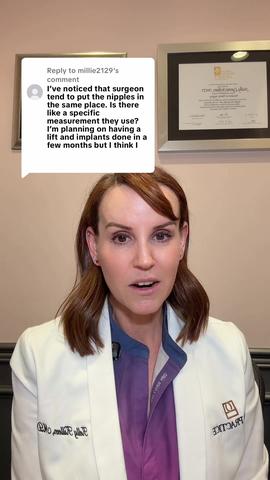
How Surgeons Decide Where to Put the Nipple in a Breast Lift or Reduction
October 22, 2025
Dr. Killeen breaks down the three main tools surgeons use to decide NAC placement in a breast lift or reduction — sternal notch measurements, the mid-humerus landmark, and Pitanguy's point — plus why placing the nipple too high is far more problematic than placing it too low.
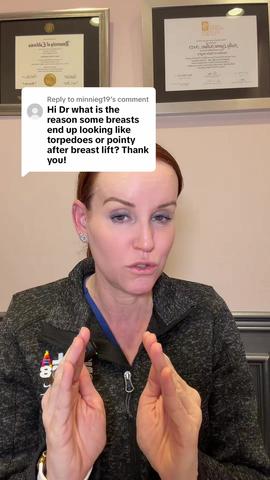
Why Do Breasts Look Like a Torpedo After a Breast Lift?
January 21, 2026
Dr. Killeen explains the reasons breasts can look torpedo-shaped after a breast lift — from implant choice and tissue stretching to tuberous breast anatomy.
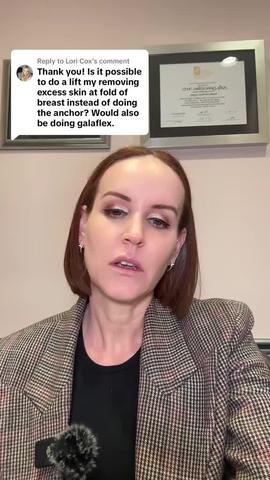
The Crease Incision Breast Lift: Why It's Not Always the Best Choice
December 7, 2025
Dr. Killeen explains why the crease incision breast lift often produces a boxy shape, doesn't fix bottomed-out implants long-term, and when auto-augmentation is a better use of the technique.