Hospital Privileges: Why They Matter When Choosing a Surgeon
The best person to manage your complications is always going to be the surgeon who did your operation.
What Are Hospital Privileges and Why Do They Matter?
Not every doctor works in a hospital. Some have a totally outpatient practice, others only work in the hospital, and then there are people like myself who work both outpatient and in the hospital.
How Hospital Privileges Work
If I want to work at a hospital, I submit an application with all of my educational background and certifications. Their medical staff office reviews my education and experience and decides whether or not I'm allowed to work there — and if so, what exactly I'm allowed to do.
As a surgeon, there's a very specific set of procedures I'm allowed to perform. I can't just go in and do any type of surgery possible. I'm limited to what is within my specialty.
Outpatient Surgery Is Safe
A very large percentage of procedures across many surgical specialties are now done as outpatient — meaning you come in, have the procedure, and go home the same day. This is safe and well-studied. With many complications, rates are actually lower with outpatient surgery.
Why Your Surgeon's Privileges Matter to You
It's important to talk with your surgeon about where they have hospital privileges. Here's why: if you have a complication and need to be admitted, you want your surgeon to go with you.
The best person to manage your complications is always going to be the surgeon who did your operation. They know you, they know what they did in the operating room, they know what technique they used. They are the best person to manage complications.
So make sure your surgeon can follow you to the hospital if needed. It's rare, but you want them there with you.
Privileges Can Change Over Time
Any surgeon can't get privileges at any hospital, and things change throughout our careers. For example, I worked at Kaiser for a couple of years when I was just out of residency. I wouldn't be able to work at Kaiser anymore because it's a closed system — you can only work there if you're a Kaiser doctor.
Cedars-Sinai is different. You can work there as a private practice doctor like myself. So I relinquished my privileges at Kaiser and obtained new privileges at Cedars-Sinai, which is my home hospital.
For patients, it's important that your doctor has privileges at a hospital near where the surgery center is and where they practice — so that if you develop complications, you can be followed to the inpatient facility.
Why This Matters With Cosmetic Surgeons
This comes up a lot with cosmetic surgeons who aren't properly trained in plastic surgery and aren't boarded by an American Board of Medical Specialties board. They are frequently not allowed to be on staff at hospitals to practice plastic surgery. They may have privileges in whatever their actual specialty is — emergency medicine, general surgery — but not plastic surgery.
You always want to make sure that the surgeon operating on you:
- Is properly trained in the type of surgery they're doing
- Can follow you to the hospital if complications arise
- Can perform those procedures at the hospital as well
What the American Board of Plastic Surgery Requires
The American Board of Plastic Surgery requires that we:
- Have admitting privileges at a hospital in our specialty
- Perform surgery only in accredited surgery centers
All of these things overlap, but in general: you want a surgeon who's properly trained, works at well-accredited facilities, and is able to take care of you if you have complications.
Your Journey to Renewed Confidence
Transform Your Life
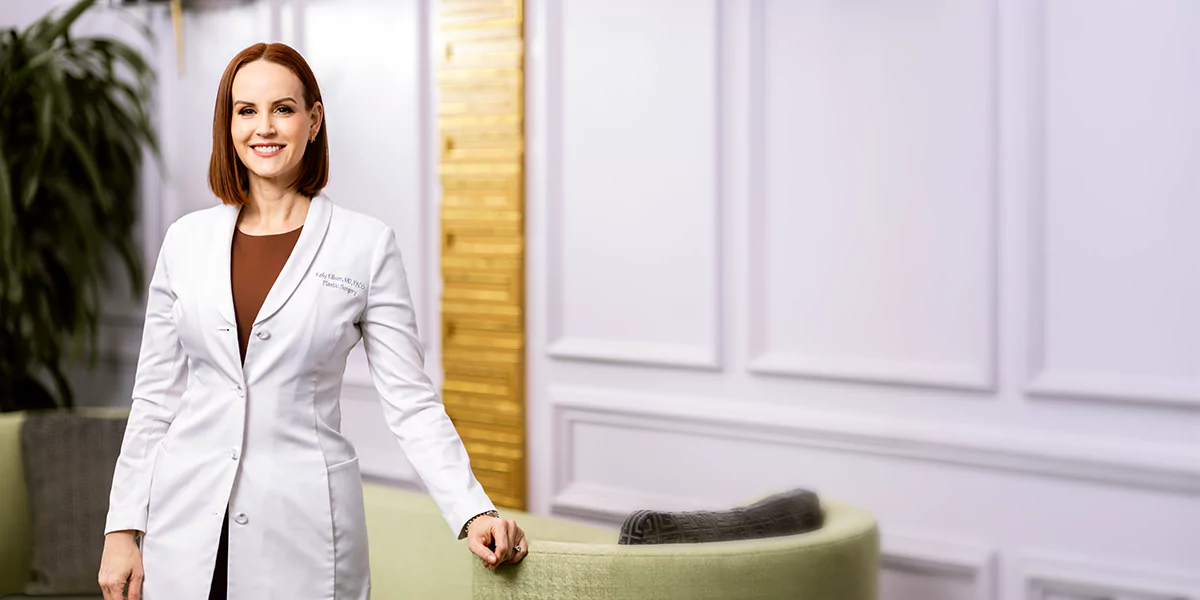
Every person deserves to feel comfortable and confident in their own body. Our procedures aren't just about physical change. They're about reclaiming your life, your comfort, and your self-assurance.
Dr. Killeen and her team support you every step of the way, from your first consultation through recovery.
Take the first step toward the life you deserve.
Schedule Your ConsultationTransform Your Life
Every person deserves to feel comfortable and confident in their own body. Our procedures aren't just about physical change. They're about reclaiming your life, your comfort, and your self-assurance.
Dr. Killeen and her team support you every step of the way, from your first consultation through recovery.
Take the first step toward the life you deserve.
Schedule Your ConsultationRelated Articles
Plastic Surgery "Chop Shops": Why They're Dangerous and How to Protect Yourself
October 13, 2025
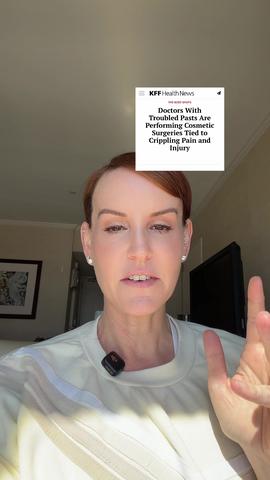
Dr. Killeen breaks down a recent investigative article on plastic surgery chop shops like Goals Plastic Surgery and Sono Bello — including their hiring of disciplined surgeons, fake "3-month plastic surgery fellowships," consultant-led surgical decisions, and lack of after-hours care.

"I Learned Liposuction on YouTube": Why This Should Terrify You
May 6, 2025
Dr. Killeen responds to a provider who admitted online that she learned liposuction from YouTube, mentors, CME courses, and textbooks — with only a one-year transitional residency, no surgical training, no hospital privileges, and no malpractice insurance. Why "different paths to the same proficiency" is false, why liposuction is core to plastic surgery training, and how to make sure you are seeing a genuinely qualified expert.
A Patient Died After Surgery in a Queens House: How to Actually Vet a Surgeon
April 7, 2025
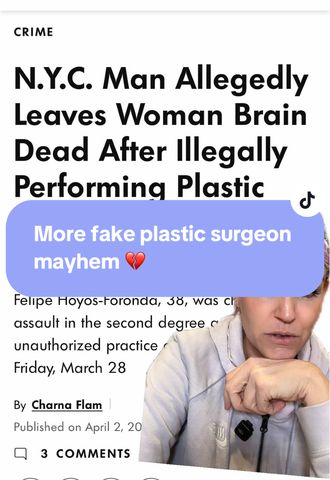
An unlicensed man performed surgery on a woman inside his Queens house, called 911 when she became unresponsive, then fled and was apprehended at JFK trying to leave the country. She could not be saved. Dr. Killeen uses the case to walk through the checks that would have prevented it: verifying state licensure and American Board of Plastic Surgery certification, confirming hospital privileges so a surgeon can follow you on transfer, checking facility accreditation, and asking where your surgery will actually be performed.