How to Fix a Breast Implant That Sits Too Low
It's like sewing snot to moonbeams. You can't really sew something that's really wimpy and thin and expect it to hold up.
When One Implant Drops Too Low
If one of your implants ends up sitting lower than expected after surgery, the fix depends on how quickly you catch it and how far the implant has shifted.
Early Detection: The Underwire Bra Fix
If you notice the problem early, within the first two weeks, there is some evidence that wearing an underwire bra consistently for a couple of weeks can actually correct mild malposition. It works by supporting the implant and helping scar tissue form along the crease so it heals in a better position.
The key is starting quickly. If you're in that window, it's worth a shot before considering anything surgical.
When Surgery Becomes Necessary
If you didn't catch it early or the malposition is more significant, this becomes a surgical problem and part of breast revision. There are three main approaches:
1. Popcorn Capsulorrhaphy
This involves using a cautery device to burn the capsule tissue in the lower portion where the implant sits. The goal is to tighten things up and encourage the implant to sit higher. Honestly, this is not my favorite method by itself, because I don't think it works well as a standalone fix.
2. Suture Capsulorrhaphy
Instead of just burning the capsule, we suture (sew) the capsule to tighten it. I think this is a better method, and when I perform this procedure, I actually combine both techniques: I'll cauterize the capsule to create a raw surface and then oversew it with heavy-duty stitches.
An important note on suture material: I strongly prefer absorbable stitches around implants. Permanent stitches are a biofilm magnet, and I don't recommend them near implant surfaces.
3. Surgical Mesh or Scaffolding
When the capsule is thin, my usual approach is to add mesh or surgical scaffolding. I like the brands TIGR Matrix and GalaFLEX. These products are used off-label in the breast, but plastic surgeons use them often. You could also use dermal matrix, though it tends to stretch and isn't as consistent.
Why Mesh Helps With a Thin Capsule
The reason comes down to biology. Many patients with implant malposition simply make thinner capsule tissue than their body needs to support the implant. Trying to suture thin, wimpy capsule is like "sewing snot to moonbeams." It just won't hold.
Augmenting that weak capsule with a surgical scaffold gives it the structural support it needs.
When Capsulorrhaphy Alone Makes Sense
If you're someone with normal capsule thickness, for example someone whose crease was lowered during the original surgery (which sets things up to drop, because a surgically created crease is never as strong as a natural one), then capsulorrhaphy without mesh can be a reasonable first approach.
The Bottom Line
- Caught early (within 2 weeks)? Try an underwire bra first
- Mild malposition with normal capsule? Suture capsulorrhaphy may work
- Significant drop or thin capsule? Mesh scaffolding is usually my approach
- Always use absorbable sutures around implants to reduce biofilm risk
Your Journey to Renewed Confidence

Transform Your Life
Every person deserves to feel comfortable and confident in their own body. Our procedures aren't just about physical change. They're about reclaiming your life, your comfort, and your self-assurance.
Dr. Killeen and her team support you every step of the way, from your first consultation through recovery.
Take the first step toward the life you deserve.
Schedule Your ConsultationTransform Your Life
Every person deserves to feel comfortable and confident in their own body. Our procedures aren't just about physical change. They're about reclaiming your life, your comfort, and your self-assurance.
Dr. Killeen and her team support you every step of the way, from your first consultation through recovery.
Take the first step toward the life you deserve.
Schedule Your ConsultationRelated Articles
Capsular Contracture Recurrence — How I Keep Mine Low, and the STANCE Trial
August 8, 2025
Dr. Killeen walks through the full protocol she uses to minimize capsular contracture recurrence — biofilm rule-out with PCR, intraoperative antibiotics, complete capsulectomy, pulse lavage, glove and instrument change, new implant, and liberal scaffolding — plus what to ask your surgeon and information on the STANCE trial.
Why Breast Implants End Up in Different Positions and How to Fix It
January 22, 2026
Dr. Killeen explains why breast implants can settle unevenly — from capsular contracture to tight muscles — and the treatments that help, including time, massage, Botox, and revision surgery.
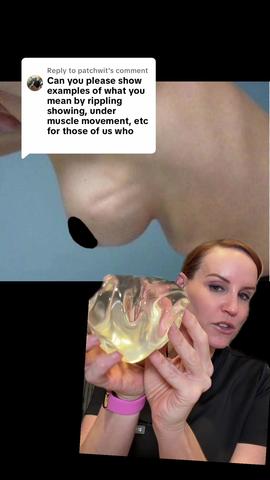
Breast Implant Rippling: What Causes It and How to Fix It
October 9, 2025
Dr. Killeen breaks down the three types of breast implant rippling — standard edge folds, bending-forward rippling, and traction rippling — and the realistic fixes including fat grafting, switching to a more cohesive implant, moving under the muscle, and why dermal matrix usually isn't the answer.