How to Treat Post-Inflammatory Hyperpigmentation (PIH) After Scars and Injuries
Be really careful with your sun exposure — any investment you're making in topicals, lasers, or microneedling is wasted if you're not protecting your skin from UV.
What Is Post-Inflammatory Hyperpigmentation (PIH)?
Post-inflammatory hyperpigmentation, or PIH, is the darkening of skin that develops after an injury, a surgery, or any other trigger of inflammation. It's relatively common after both traumatic injuries and surgical scars — and the good news is that we have a lot of effective treatments for it.
Here's a quick rundown of how we actually treat it.
In a perfect world, scars heal the same color as the surrounding skin, which makes them much harder to see. Sometimes they go dark instead. That can happen to people of any skin tone, but it's certainly more common with darker skin.
Prevention: The Two Things You Actually Control
Before we get to treatment, the best thing you can do as a patient is try to avoid pigmentation in the first place. Two levers:
- Avoid sun exposure. Good sun protection matters most in the first year or two, while the scar is still maturing. (More on this in Step 4, because it's non-negotiable during treatment too.)
- Avoid anything that rubs or causes inflammation. If your scar is on your abdomen where your pants sit, be really careful about the clothing you choose so it isn't rubbing the area. Friction causes inflammation, and inflammation drives pigment.
Start With a Good Silicone Scar Gel
As a plastic surgeon, I always like to start with the simplest thing that works, and for scars that's a silicone scar gel. It's easy, it's well tolerated, and it's inexpensive. The brand I like is Skinuva.
You can also consider silicone sheeting, which is essentially a tape with silicone on it. It can be harder to keep in place on certain areas of the body, so ask your surgeon what they recommend for your specific scar.
That's the foundation. Sun protection, no friction, silicone. If the scar still goes dark, that's when we escalate.
Step 1: Topical Agents
The first line of treatment is almost always a topical agent. There are several options, but the two most common active ingredients are:
Tranexamic Acid (TXA)
TXA works by interrupting the signaling between skin cells that drives pigment production. It's well tolerated and effective, and it's increasingly the go-to for many dermatologic and plastic surgery patients.
Hydroquinone
Hydroquinone is the long-established gold standard for lightening hyperpigmented skin. It's a skin-lightening agent that works by inhibiting melanin production.
What to Expect
Your physician will help you choose between them and walk you through how to use the product safely. A few realistic expectations:
- These creams do not fade pigmentation in 24 hours
- They typically take several months to show meaningful improvement
- Consistent, daily use is essential
To put a real number on it: in my practice, four to six months is the honest window for these topicals to do their job. Once you start, don't get frustrated and quit at week three. Consistency is the whole game.
Step 2: Add a Treatment Modality
If topicals alone aren't enough — or you want to accelerate your results — pairing them with a procedural treatment can be very effective. Two of the most common additions:
- Laser treatments targeting pigment
- Microneedling
Combining a topical agent with one of these treatments often works better than either alone.
Why I Usually Start With Microneedling
Between the two, I most often start with microneedling, for two reasons:
- Lasers can be a little problematic with darker skin tones — and darker skin is exactly the population most likely to be dealing with pigmentation after a scar in the first place
- Microneedling used alongside the topicals helps the topicals work better
For a lot of my patients, microneedling plus topicals is genuinely effective and we never need to go further. Sometimes I do need to move to lasers, and there are a million different options depending on what I'm looking at. Your surgeon will have their favorites for treating pigmented scars.
Step 3: Oral TXA for Stubborn Pigmentation
Tranexamic acid also comes in an oral prescription form. For patients with:
- Very stubborn pigmentation
- Widespread PIH
- Poor response to topical TXA
...we can consider oral TXA in addition to topical therapy. It's not a first-line option for everyone, but it can be genuinely helpful for the toughest cases.
Step 4: Protect Your Skin From the Sun
This step is non-negotiable. Sun exposure makes PIH significantly worse — it's the single fastest way to undo whatever progress you've made with treatment.
If you already have PIH or you know you're prone to it:
- Wear sunscreen daily (SPF 30+ minimum, ideally mineral)
- Reapply every couple of hours when outdoors
- Cover the affected area with clothing when possible
- Avoid peak-UV hours when you can
Any investment you're making in topicals, lasers, or microneedling is wasted if you're not protecting your skin from UV.
Step 5: Surgical Excision, the Last Resort
Say you've tried the topicals, you've tried the treatments, and the scar still is dark and not behaving. The last step is usually surgical excision: we cut out the problematic area and start from scratch.
It works, but there's a catch that I want every patient to hear before they choose it:
Remember that you are the type of person who developed pigmentation.
If sun exposure, clothing rubbing, or anything else contributed the first time, you have to be really, really careful the second time around. And tell your surgeon very early if you see any sign of the pigment coming back, so we can get ahead of it instead of repeating the whole cycle.
The Bottom Line
PIH after surgery or injury is common, but very treatable. The roadmap is:
- Start with a topical — TXA or hydroquinone
- Add a treatment like laser or microneedling if needed
- Consider oral TXA for the most stubborn pigmentation
- Wear sunscreen religiously no matter which option you're using
- Consider surgical excision only when everything else has failed, and go into it knowing you're someone who pigments
Be patient — meaningful fading takes months, not days — and don't skip the sun protection. That's the step that lets the rest of the plan actually work.
Your Journey to Renewed Confidence

Transform Your Life
Every person deserves to feel comfortable and confident in their own body. Our procedures aren't just about physical change. They're about reclaiming your life, your comfort, and your self-assurance.
Dr. Killeen and her team support you every step of the way, from your first consultation through recovery.
Take the first step toward the life you deserve.
Schedule Your ConsultationTransform Your Life
Every person deserves to feel comfortable and confident in their own body. Our procedures aren't just about physical change. They're about reclaiming your life, your comfort, and your self-assurance.
Dr. Killeen and her team support you every step of the way, from your first consultation through recovery.
Take the first step toward the life you deserve.
Schedule Your ConsultationRelated Articles
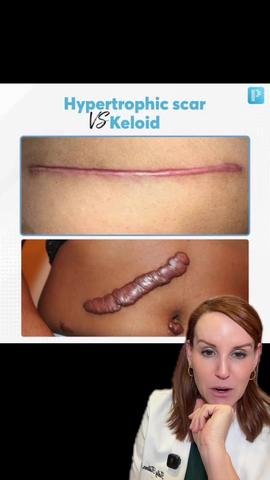
Hypertrophic vs. Keloid Scars — and How They Look on Darker Skin
November 10, 2025
Dr. Killeen explains the difference between hypertrophic scars and keloids, and how they can behave differently on darker skin — including pigmentation that often layers on top of the raised scar and how to treat both issues together.

Please Don't Do Your Own TCA Peel at Home: A Plea About the Worst TikTok Trend
June 3, 2026
Dr. Killeen responds to a viral video of a young man with darker skin doing a 30% TCA peel on himself at home. Why DIY chemical peels are genuinely dangerous, what professional clinicians do that he didn't, and what you're actually paying for at a real aesthetic appointment.

Understanding Scars After Breast Reduction Surgery
July 18, 2025
Dr. Killeen explains what to expect from scarring after breast reduction surgery and how scars can be improved.