In-Office Revisions After a Breast Reduction: Dog Ears and Nipple Inversion
Believe it or not, a nipple piercing actually works very well to fix nipple inversion after a reduction — and in my experience, piercing patients are less likely to have recurrence than surgical revision patients. The lower-tech solution is often the more durable one.
In-Office Revisions After a Breast Reduction: Dog Ears and Nipple Inversion
A great question came in about two of the most common revisions we see after a breast reduction: dog ears and nipple inversion. Both are usually minor, both often improve on their own, and both can be addressed with simple in-office procedures if they don't.
Let me walk through what causes each one, what we do about them, and an important consideration if you want to breastfeed in the future.
First — Why These Happen at All
A breast reduction involves removing a lot of tissue and putting things back together. When you're reshaping the breast and repositioning the nipple, two things can happen at the edges of the work:
- The different lengths of incision may not match up perfectly, creating a ruffle or bunch at the end (a dog ear)
- The weight of the repositioned tissue can pull on the relocated nipple and tug it inward (nipple inversion)
Neither of these is a sign that something went wrong. They're common, expected variations in healing — and the good news is that most of them get better on their own.
Dog Ears
What a Dog Ear Is
A dog ear is a small bit of tissue at the end of your incision that sticks up and doesn't lay flat. It happens because:
- We try to minimize the length of your incision (shorter scar = better, generally)
- When the two sides of the incision are different lengths, the excess has to go somewhere
- The result can be a little puckered bunch at the end of the scar, usually near the crease or toward the side of the chest
Most Dog Ears Improve on Their Own
Here's the reassuring part: most dog ears get better with time — especially with compression.
- Swelling sits on that tissue plane right at the crease early on, making the dog ear look more prominent than it actually is
- As swelling resolves over the first six months, the dog ear often shrinks up on its own
- Compression speeds this along — wearing a supportive bra or a pad that squishes the area down helps flatten it
So the first-line treatment for a dog ear is honestly patience and compression. Many resolve completely without any intervention.
In-Office Options If It Persists
If the dog ear is still bothering you after the swelling has settled, the treatment depends on its size:
Small Dog Ear: Kybella Injection
For a tiny bit of extra fatty tissue and a little skin, sometimes a small injection of Kybella (deoxycholic acid — a medication that dissolves fat) is enough:
- A tiny injection into the dog ear
- The fatty component dissolves, and the whole thing shrinks up
- Can be repeated if needed
- Works great in the right patient (mostly fatty dog ears, not skin-heavy ones)
Larger Dog Ear: In-Office Excision
If Kybella isn't enough, or the dog ear is more skin than fat, we do a small in-office revision:
- Numb the area with local anesthesia
- Open the incision at the end
- Remove a little more tissue
- Extend the incision slightly to lay everything flat
Patients tolerate this really well. If you're nervous, we can give you a "happy pill" (oral sedation) to make it easier — you'd just need a ride home afterward. It's a quick procedure that solves the problem.
Nipple Inversion
Why It Happens
Nipple inversion after a reduction happens because of the mechanics of repositioning the nipple:
- As we move tissue around and swing the nipple up to its new position
- The weight of the tissue pulls on the newly positioned areola and nipple
- That pulling tugs on the milk ducts
- The ducts pull the nipple inward, creating inversion
It Usually Gets Better With Time Too
Just like dog ears, nipple inversion typically improves as you heal:
- Early on, swelling and tissue tension can cause significant inversion
- As the swelling goes down, the pulling decreases
- I've had patients with a lot of inversion early on whose inversion resolved completely as they healed
So again — the first step is usually waiting. Give it about six months before deciding it's a persistent problem.
Fix #1: Nipple Piercing (Yes, Really)
If you've waited six months, the swelling is gone, and the inversion is still bothering you — here's a solution that surprises people:
A nipple piercing actually works very well to correct inversion.
Here's how it works:
- The piercing physically holds the nipple out in its everted position
- You leave it in for a couple of months while the tissue heals in the corrected position
- You can take it out later — you don't have to keep it forever
- In many patients, this permanently fixes the problem
A practical note: some piercers are hesitant to pierce a post-surgical inverted nipple because they don't fully understand the anatomy and worry about it. But it genuinely works well. I have excellent piercers in my area who are great at helping reduction patients with exactly this. If your surgeon does breast reductions regularly, they may be able to refer you to a piercer who understands the situation.
Fix #2: In-Office Surgical Revision
If the piercing doesn't do the trick, we can do a small in-office surgical correction:
- Numb the area
- Make a small incision
- Cut the ducts that are pulling the nipple inward
- Allow the nipple to come up to a normal position
- Suture it in the corrected location
This is easy to do in clinic and typically solves the problem.
An Interesting Observation
Here's something that surprises a lot of people — and surprised me a bit too:
My piercing patients are actually less likely to have recurrence than my surgical revision patients.
With the surgical approach, the inversion can recur even after cutting the ducts. With the piercing approach, the recurrence rate seems to be lower in my experience. So the "lower-tech" solution may actually be the more durable one for many patients.
The Breastfeeding Consideration
This is genuinely important and worth a careful read if you might want to breastfeed in the future.
Surgery Has Already Affected Your Ducts
A breast reduction itself can affect breastfeeding because we move tissue and ducts around during the procedure. So you may already have some impact on your breastfeeding ability just from the reduction.
Any Inversion Revision Can Add to That Risk
If you then do a revision to correct nipple inversion, you can further affect your breastfeeding ability — because the inversion correction involves working around (or cutting) the very ducts that carry milk.
My Recommendations for Patients Who Want to Breastfeed
If you want to maximize your chance of breastfeeding in the future:
Option A: Leave It Alone
The most breastfeeding-protective choice is to leave everything alone. Any revision you do could potentially cause additional issues with breastfeeding, and you've already potentially affected it with the reduction itself. If the inversion isn't bothering you too much, this may be the right call.
Option B: Try a Piercing First
If you want to do something but still preserve breastfeeding potential as much as possible:
- Start with a piercing — it's less likely to cause trouble with breastfeeding than the surgical correction
- The piercing doesn't cut the ducts, so it's the gentler option
Option C: Surgical Correction (Highest Breastfeeding Risk)
The surgical inversion correction is the most likely to cause breastfeeding issues — even with duct-sparing technique. So if breastfeeding matters to you, this should be the last resort, not the first option.
The hierarchy, from most breastfeeding-protective to least:
- Leave it alone (most protective)
- Piercing (gentle, less duct disruption)
- Surgical correction (most likely to affect breastfeeding, even duct-sparing)
What to Discuss With Your Surgeon
If you have a dog ear or nipple inversion after your reduction:
- "How long should I wait before considering a revision?" (Usually ~6 months for swelling to fully settle)
- "Is my dog ear mostly fat or skin?" (Determines whether Kybella is an option)
- "Do you have a piercer you trust for nipple inversion correction?"
- "If I want to breastfeed in the future, what's my safest option?"
- "What's the recurrence rate of each approach in your hands?"
A surgeon experienced with reduction revisions will have clear answers and a thoughtful approach matched to your goals.
The Bottom Line
Two of the most common revisions after a breast reduction — dog ears and nipple inversion — are usually minor and often resolve on their own with time and compression over the first six months.
If they persist:
- Dog ears → Kybella for small fatty ones, in-office excision for larger ones
- Nipple inversion → a nipple piercing (surprisingly effective and durable) or in-office surgical correction
The most important caveat: if you want to breastfeed in the future, be conservative. Leave it alone if you can, try a piercing if you want to do something, and reserve surgical correction (which carries the highest breastfeeding risk even with duct-sparing technique) for last.
These are very fixable problems, and they're a normal part of the reduction journey for some patients. Talk to your surgeon about the right approach for your specific situation and goals.
Your Journey to Renewed Confidence
Transform Your Life
Every person deserves to feel comfortable and confident in their own body. Our procedures aren't just about physical change. They're about reclaiming your life, your comfort, and your self-assurance.
Dr. Killeen and her team support you every step of the way, from your first consultation through recovery.
Take the first step toward the life you deserve.
Schedule Your ConsultationTransform Your Life
Every person deserves to feel comfortable and confident in their own body. Our procedures aren't just about physical change. They're about reclaiming your life, your comfort, and your self-assurance.
Dr. Killeen and her team support you every step of the way, from your first consultation through recovery.
Take the first step toward the life you deserve.
Schedule Your ConsultationRelated Articles
What Are Dog Ears After Surgery and How Are They Fixed?
January 16, 2026
Dr. Killeen explains what dog ears are, why they happen after surgeries like tummy tucks and breast reductions, and the options for fixing them — from Kybella to in-office revisions.

Dog Ears After Mastectomy Reconstruction: Why They Happen and the Fix
September 14, 2023
Dog ears after mastectomy reconstruction usually come from an incision across the front of the breast, often where the nipple was removed. Dr. Killeen explains why they happen with either implants or flaps, why they often improve as the tissue stretches, the incision she prefers, and how "chasing the dog ear" fixes the ones that stay.
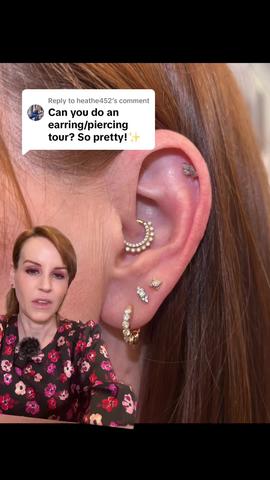
Dr. Killeen's Ear Piercing Tour: Current Setup and Favorite Pieces
November 18, 2025
Dr. Killeen shares her current ear piercing setup — Maria Tash and BVLA pieces across both ears, mixed metals in white and rose gold, and the piercers she trusts at Oak and Poppy.