A 66-Year-Old, A Secret Surrogate, and a Zoom Hearing She Faked — A Wild IVF Story
We can't just have crimes committed with relation to the creation of life, and then just give them exactly what they wanted under that criminal conduct. "Can we?" and "should we?" are not the same question.
A Wild Story, and the Ethics Behind It
A New York Times article published over the weekend is one of the most extraordinary medical/ethical/legal stories I've read in a long time. It's long, but absolutely worth the read. Here's the rundown — and my take on the ethics of pursuing IVF pregnancies at extreme ages.
Meet Mary Beth
Mary Beth is a military wife. She and her husband had five daughters together and bounced around the country, as military families often do. When her husband retired, they settled in Texas.
By her early 40s, her kids were growing up, she was struggling with empty nest syndrome — and she decided she wanted more children.
First Round of IVF (Early 40s)
- She and her husband had trouble conceiving
- They saw a reproductive endocrinologist
- The first assisted pregnancy was traumatic, but subsequent pregnancies went smoothly
- 2012: She gave birth to twin boys — her 9th and 10th children
It looked like that might be the end of her family-building. It wasn't.
Second Round of IVF (Age 55)
After a serious health concern involving one of her children, Mary Beth decided she wanted to keep having children "to share her love with as many children as possible."
- At 55, they were out of their original embryos
- She and her husband used donor eggs and donor sperm
- 2016: She gave birth to her 11th and 12th children from donor embryos
2019 — The Wheels Start Coming Off
In 2019, at Easter dinner, Mary Beth — now 62 years old — announced to the family that she was pregnant again.
Multiple of her children were upset. They went to her husband, who had no idea. It turns out:
- She had gone behind his back
- She had used two more of the remaining donor embryos
- She had gotten pregnant on her own
2023 — Things Get Wild
By 2022, there were two donor embryos left. Because of her Catholic faith, Mary Beth didn't want to discard them. But there was a serious medical problem:
- She'd had six prior C-sections
- Her uterus was described as "paper thin"
- She'd been strongly advised not to pursue another pregnancy
Her solution? Hire a surrogate — without telling her husband.
The Zoom Hearing
In the state where the surrogacy was happening, a court has to issue a parentage order. Mary Beth needed to go through the courts to make this work. So she scheduled the Zoom hearing while her husband was out of town, and:
- Logged on as herself on one device
- Logged on as her husband on a second device, camera off
- Grunted responses as "her husband" during the hearing
I genuinely don't know what she thought was going to happen next.
The Judge Gets Suspicious
The babies were due in eight weeks. The judge was uneasy about a couple in their mid-60s taking home newborn twins, so he ordered a home visit as part of the process.
The Unraveling
Here's where it all falls apart:
- Mary Beth had always had paperwork sent to a P.O. box to hide things from her husband
- But the court sent the home visit order to their actual home address
- Her husband was home. He opened the letter. He called her and asked what the hell she had done.
They had a major blowup — apparently in front of the home-visit investigators. They eventually reconciled, but by then:
- The courts knew she had committed fraud
- She had signed her husband's signature
- She had impersonated him in a legal proceeding
The Courts Step In
A quote from social services lawyer Scott Fierro stuck with me:
"We can't just have crimes committed with relation to the creation of life, and then just give them exactly what they wanted under that criminal conduct."
The state was not going to give these babies to the family under those circumstances.
- The babies were placed in foster care
- Mary Beth was also arrested for attempted kidnapping when the twins were born
- She's 68 years old now, and the children are two
- She is still fighting to get them back
The Ethics of Advanced-Age IVF
Setting aside the fraud and criminal issues for a moment, the broader question the article raises is a real one:
What are the ethics of pursuing IVF pregnancies at extreme ages?
The concerns are legitimate:
- Parental longevity. A parent in their mid-to-late 60s may not be alive — or healthy enough to parent — while the child is still a minor
- Physical capacity. Caring for twin toddlers is hard in your 30s. It is a different kind of hard in your late 60s
- Medical risk to the mother. A paper-thin uterus after six C-sections is not a theoretical risk — it's a setup for catastrophic complications
- The child's interests. Who is advocating for the future 8-year-old who may lose a parent at an age when most of their peers still have theirs?
These aren't new questions, but this story brings them into sharp focus.
My Personal Take
I don't know Mary Beth, and I'm not her clinician. But reading the arc of this story — the secrecy, the escalating boundary violations, the impersonation, the attempted kidnapping — I don't believe she is well.
And separately, even in the absence of any of that, I struggle with the ethics of helping someone carry or parent a newborn at 66.
As a doctor, I think the reproductive endocrinology and surrogacy fields are going to have to wrestle harder with where the upper bounds are. "Can we?" and "should we?" are not the same question.
What Do You Think?
I'd love to hear your take. Should Mary Beth regain custody of these twins? Should they stay in foster care — or be placed for adoption? And what are your thoughts on the ethics of IVF pregnancies at advanced maternal age?
The link to the full NYT article is in my bulletin board — I shared a gift link so you can read it for free. It's a wild, sad, and genuinely thought-provoking read.
Your Journey to Renewed Confidence
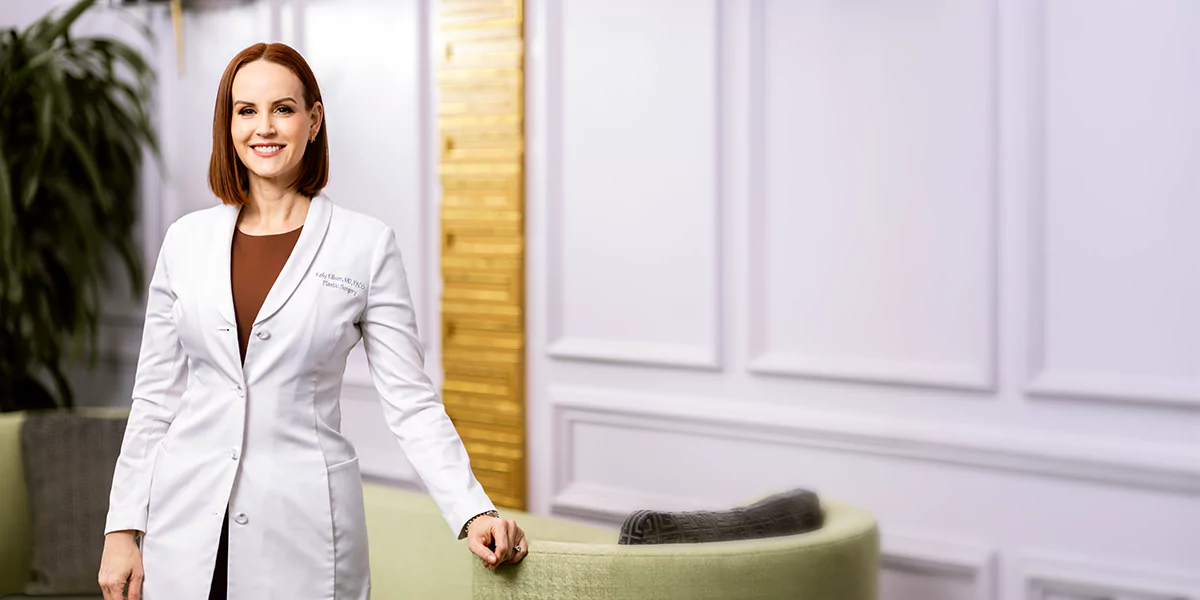
Transform Your Life
Every person deserves to feel comfortable and confident in their own body. Our procedures aren't just about physical change. They're about reclaiming your life, your comfort, and your self-assurance.
Dr. Killeen and her team support you every step of the way, from your first consultation through recovery.
Take the first step toward the life you deserve.
Schedule Your ConsultationTransform Your Life
Every person deserves to feel comfortable and confident in their own body. Our procedures aren't just about physical change. They're about reclaiming your life, your comfort, and your self-assurance.
Dr. Killeen and her team support you every step of the way, from your first consultation through recovery.
Take the first step toward the life you deserve.
Schedule Your ConsultationRelated Articles
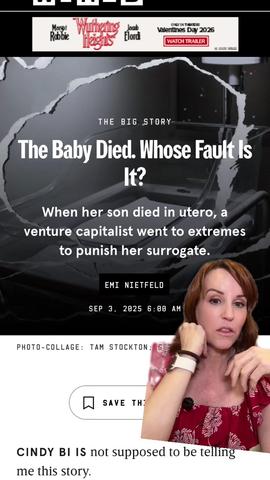
A Wired Long-Form Article About Surrogacy That Should Be Required Reading
September 4, 2025
Dr. Killeen breaks down a Wired long-form piece about a Silicon Valley intended parent whose escalating behavior toward two surrogates — including one who lost her uterus and another whose pregnancy ended in stillbirth — has produced a cautionary tale about the structural power imbalances in modern surrogacy.
After a Single Mastectomy, Why the Two Sides Settle Differently
September 4, 2026
Yes, you can have surgery on the non-cancerous breast for symmetry, and it is typically covered by insurance as a symmetry procedure. Dr. Killeen explains the options for that side (nothing, a lift, a lift with a small implant, an implant, or a reduction), why the two sides usually do not look even right away (the mastectomy side has already settled while the symmetry side has never been operated on), why coming out larger is safe according to data she and her partner published, what adding fat grafting really costs you in recovery, and why the two breasts will age differently over the years.
True or False: Breast Regrowth, Botox for Scars, and Age Limits
August 14, 2026
A rapid-fire round from Dr. Killeen. Can breasts grow back after a reduction? True, but only about 5 to 6% of the time, and less likely when your size and weight have been stable and you are years past puberty. Can Botox help scars? True in the right situation, there is data supporting it, though she does not use it often. Can you be too old for breast reconstruction? False, what matters is your overall health and whether you can tolerate surgery, not your age.