Is There a Minimally Invasive Breast Augmentation? The Honest Truth
Six-month follow-up is not enough. We need biopsy studies and we need to know what this stuff does in the human body.
Is There a Minimally Invasive Breast Augmentation? Here's the Honest Answer
What options do you have for a minimally invasive breast augmentation? The simple answer: zero good ones.
Everything we can do to increase breast size is going to be somewhat invasive. Some options are marketed as "minimally invasive," but let's walk through each one and why I have concerns.
PRP Injections — Don't Bother
PRP (platelet-rich plasma) injected into the breast is not going to do anything long-term. I think it's a waste of money and would not recommend it.
Filler and Biostimulators — A Very Bad Idea
You'll see people injecting filler or biostimulators for breast augmentation. Plastic surgeons in the UK are actually pushing to ban this practice. Here's why:
- The breast has a natural microbiome — injections can lead to infection
- They can cause issues with lymphatic drainage
- They can interfere with mammogram reads for breast cancer screening
Biostimulators may be less likely to get infected, but we haven't studied how they affect breast cancer screening. And breast cancer is common — this should always be top of mind.
Cadaver Fat Products — Better, But Still Problematic
Renuva
Has been around longer, but it's thinner, doesn't have as much substance, and it's expensive.
Allograft Fat (Alloclae)
Looks and behaves more like actual fat, but we have far less long-term data. We can't really tell you:
- How much of it survives long-term
- How it affects your mammograms
- What imaging looks like a year later
Alloclae has recently started suggesting you can just place the product under the skin. I don't think you can adequately augment a breast by putting some product under the skin. And six-month follow-up is not enough, in my opinion, especially with high-volume injectables. We need biopsy studies. We need to know what this does in the human body long-term.
The Cost Problem
A cup-size increase with Alloclae, including the product and surgeon's fees, is going to be nearly $50,000. That's a lot of money for a product where we don't even know if it'll still be there in a year. You can get fat grafting for a lot less than that.
Where I Stand
I know a lot of my colleagues are using these products. I just feel uncomfortable doing it for anything other than feathering edges around implants, because of everything I've mentioned. We don't have:
- Long-term results
- Imaging studies
- Biopsy studies
People will say they've got great results — but they don't have long-term results. And I don't know if it's worth that money.
The Bottom Line
I don't think there are good options for minimally invasive breast augmentation right now. If you want a reliable, well-studied increase in breast size, consider a traditional breast augmentation with implants.
Your Journey to Renewed Confidence

Transform Your Life
Every person deserves to feel comfortable and confident in their own body. Our procedures aren't just about physical change. They're about reclaiming your life, your comfort, and your self-assurance.
Dr. Killeen and her team support you every step of the way, from your first consultation through recovery.
Take the first step toward the life you deserve.
Schedule Your ConsultationTransform Your Life
Every person deserves to feel comfortable and confident in their own body. Our procedures aren't just about physical change. They're about reclaiming your life, your comfort, and your self-assurance.
Dr. Killeen and her team support you every step of the way, from your first consultation through recovery.
Take the first step toward the life you deserve.
Schedule Your ConsultationRelated Articles
A Minimally Invasive, Tissue-Preserving Future for Breast Augmentation
July 21, 2025
Dr. Killeen shares what she learned at a recent minimally invasive breast conference in Paris — and what's coming next for breast augmentation. Smaller incisions, less tissue damage, and targeted implant placement that no longer has to fit the breast base.
Why Is Sculptra in a BBL Less Problematic Than Sculptra in the Breast?
July 1, 2026
Dr. Killeen explains why injecting Sculptra into the buttock for a BBL is less problematic than injecting it into the breast: the buttock is mostly fat with no ductal tissue and fewer lymphatics, and that fat rarely makes cancer so there is no screening to interfere with. The breast, by contrast, carries a 1-in-8 cancer risk and yearly mammograms, so anything placed there deserves far more scrutiny. She also notes she is not a big fan of a lot of Sculptra in the buttock either.
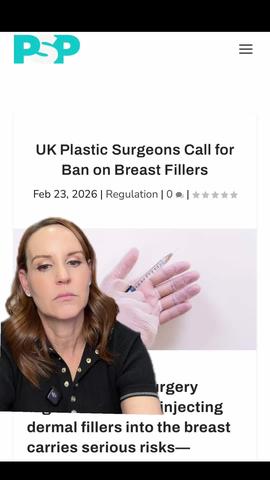
Why UK Plastic Surgeons Are Calling for a Ban on Breast Filler
February 26, 2026
Dr. Killeen explains why injecting filler into breasts is dangerous — from cancer screening interference to infection risk and why most providers doing it aren't qualified.