New Jersey Hospitals Just Lost a Court Battle Over Charity Care — Here's What It Means
The right thing to do is to care for people who need care. But that costs money. If we keep loading hospitals with the obligation to care without compensating them adequately, we're going to keep losing the hospitals that need to be there most.
New Jersey Hospitals Just Lost a Court Battle Over Charity Care — and What It Means
I came across a story this week that doesn't get talked about enough but is going to matter to a lot of people: New Jersey hospitals lost a court battle challenging the state's charity care reimbursement system. This case may be heading to the Supreme Court, and the questions it raises affect every patient and every hospital in the country.
Let me walk through what's actually at stake.
A Quick Primer: EMTALA vs. State Charity Care
To understand the New Jersey case, you have to know the difference between EMTALA (federal) and a state charity care program (like New Jersey's).
EMTALA — The Federal Layer
EMTALA stands for the Emergency Medical Treatment and Active Labor Act. It's a federal law that requires:
- Any hospital that accepts Medicare (which is essentially all of them)
- Cannot turn anyone away from the emergency room
- Must stabilize anyone who comes in with an emergency
- This obligation is independent of the patient's ability to pay
It's the law that ensures someone having a heart attack gets seen, regardless of insurance. It's also a law that, on its own, comes with no funding. Hospitals that comply with EMTALA absorb the costs of uninsured emergency care directly.
New Jersey's State Charity Care Program
New Jersey layered a state-level program on top of EMTALA. The deal was supposed to be:
- A patient comes to the emergency room without insurance
- The hospital provides the legally-required care
- The state reimburses the hospital for at least some of that care via a charity care fund
So in theory, hospitals weren't entirely on the hook for uncompensated care.
Where the System Broke
In practice, the program has had two big problems:
1. Reimbursement Doesn't Cover Actual Costs
The state payments are frequently not enough to cover the patient's actual care. Hospitals provide hours of services, supplies, drugs, imaging, sometimes ICU stays — and receive a fraction of what it costs them to deliver.
2. Reimbursement Is Uneven Across Hospitals
This is the unusual part of New Jersey's system: the state doesn't reimburse every hospital equally for the same care.
- Hospitals with a high percentage of charity care patients tend to receive more of the visit covered
- Hospitals with a low percentage of charity care patients receive less of the visit covered
So depending on the patient mix at a given hospital, the same emergency room visit might be reimbursed at very different rates.
The Hospitals' Argument
The New Jersey hospitals took the state to court arguing that this system effectively seizes private resources without adequate compensation:
- The state is legally requiring hospitals to provide care
- That care uses real resources (staff time, supplies, drug costs, equipment)
- The state is not paying full cost for that care
- Especially in hospitals with low charity-care percentages, the gap is enormous
The argument is essentially: if you're going to require us to provide a service, the state owes us reasonable compensation for it. And that argument has some traction in a country where the Fifth Amendment prohibits the government from taking private property without just compensation.
The Court's Response
The judges in this case sided with the state. Their reasoning, summarized:
"We're not taking something from you. You're the one deciding what resources to give the patient."
I find this logic genuinely confusing. Yes, the hospital chooses which IV fluids, which antibiotics, which imaging studies. But the decision to provide care at all is required by law — under both EMTALA and the state charity care program.
You can't require a hospital to treat someone and then say "but we're not requiring you to use anything to treat them." That's a distinction without a difference. Stabilizing a critically ill patient inherently requires resources.
I'm not a constitutional lawyer, and the court has reasons that go beyond this surface read. But as a clinician, the practical impact is clear: hospitals are being required to provide care without adequate compensation, and a court has now formalized that arrangement.
Why This Matters Beyond New Jersey
Here's the part most people don't realize: most states don't even have a charity care reimbursement system as robust as New Jersey's.
In most of the country, hospitals are eating the cost of EMTALA-mandated care for uninsured patients with no state reimbursement at all. New Jersey was actually one of the better-set-up states from a hospital perspective.
So if even New Jersey's hospitals are losing in court — what does that say about the rest of the country?
What's Coming Down the Pipe
The bigger storm is the insurance landscape itself. We're heading into a period where:
- More people are likely to lose insurance (Medicaid eligibility changes, ACA subsidy adjustments, etc.)
- More people will rely on emergency rooms for care that should have been handled by primary care
- Hospitals will face more uncompensated care
- Emergency rooms will see sicker patients because their conditions weren't managed earlier
When you lose insurance, you typically:
- Stop seeing your primary care doctor
- Skip preventive care
- Let problems get larger and more severe
- End up in the ER for what should have been an outpatient issue
That's expensive for the patient, expensive for the system, and devastating for the hospital that has to absorb it. Sicker patient + uncompensated care + late presentation is the worst possible economic combination for a hospital.
The Hospitals Most at Risk
Here's the cruel irony: the hospitals with the highest percentage of charity care patients are usually the least well-funded — and the most likely to close.
These tend to be:
- Urban safety-net hospitals
- Rural hospitals in lower-income areas
- Community hospitals in under-resourced regions
When they close, the patients they served don't magically gain access to care somewhere else. They become even more underserved, with farther to travel for emergency care, longer ambulance rides, and often worse outcomes when they do present.
This is how hospital deserts get created. We're actively building more of them.
What the Medical Community Will Tell You
I think every clinician I know would say the same thing on this:
The right thing to do is to care for people who need care. That's not in question. We didn't go into medicine because we wanted to gatekeep based on insurance status. EMTALA exists because the alternative — hospitals turning away dying patients in the parking lot — is morally indefensible.
But caring for people costs money. Staff time, supplies, drugs, imaging, OR time, anesthesia, recovery — all real costs.
If we keep loading hospitals with the moral obligation to care without compensating them adequately, we're going to keep losing hospitals. Especially the ones that need to be there most.
Where I Land
I don't have a clean policy answer. But the questions are worth sitting with:
- If society wants hospitals to provide care to everyone, society needs to fund it. That funding can come from many places — Medicaid expansion, state charity care reimbursement, federal subsidies, single-payer financing — but it has to come from somewhere.
- Cutting insurance coverage doesn't reduce the need for care. It just shifts the cost from a payer (insurance company, government) to an unpaid actor (the hospital, which can't survive on this model long-term).
- Hospital closures are a downstream consequence of this math. If we want safety-net hospitals to survive, we have to fund them.
The New Jersey ruling — and the path it potentially takes to the Supreme Court — is going to shape how this conversation goes for the next decade.
The Bottom Line
New Jersey hospitals lost a court battle this week challenging the state's charity care reimbursement system. The court essentially ruled that requiring hospitals to provide unfunded care isn't a "taking" of private property — even though, in practice, that's what it functions as.
The bigger picture: most states don't even have New Jersey's level of reimbursement, and the trend in insurance coverage is going to put more uninsured patients into ERs. The hospitals most affected by this — the safety-net hospitals serving the highest-need populations — are the ones most likely to close.
We need to figure out how to fund care for people who need it, because the alternative is fewer hospitals, sicker populations, and bigger downstream costs for everyone. The current arrangement isn't sustainable, and the courts have just signaled that they're not going to fix it.
What do you think? Is requiring uncompensated care a "taking"? Should the federal government step in? Drop your thoughts in the comments.
Your Journey to Renewed Confidence

Transform Your Life
Every person deserves to feel comfortable and confident in their own body. Our procedures aren't just about physical change. They're about reclaiming your life, your comfort, and your self-assurance.
Dr. Killeen and her team support you every step of the way, from your first consultation through recovery.
Take the first step toward the life you deserve.
Schedule Your ConsultationTransform Your Life
Every person deserves to feel comfortable and confident in their own body. Our procedures aren't just about physical change. They're about reclaiming your life, your comfort, and your self-assurance.
Dr. Killeen and her team support you every step of the way, from your first consultation through recovery.
Take the first step toward the life you deserve.
Schedule Your ConsultationRelated Articles
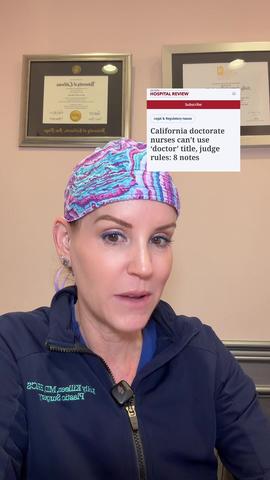
A Federal Judge Just Ruled Nurse Practitioners Can't Call Themselves "Doctor" in California
September 30, 2025
Dr. Killeen breaks down the new federal ruling against three California nurse practitioners who sued for the right to advertise themselves as "doctor" without clarification, the 39% of the public that believes a DNP is a physician, and why this is a patient safety issue rather than a turf battle.
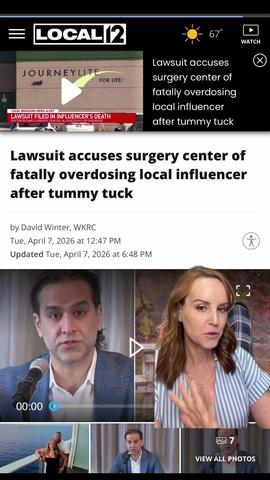
Surgeon Sues Surgery Center in Rachel Tussey Case: An Unusual Development
April 8, 2026
Dr. Killeen breaks down the unusual lawsuit filed by Dr. Tork against the surgery center and anesthesia group in the Rachel Tussey case, including both sides' claims.
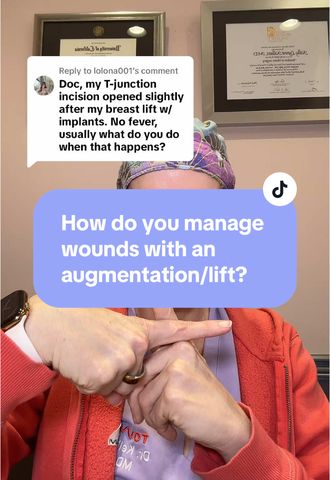
What to Do About a Wound Opening at the T-Junction After an Augmentation and Lift
May 13, 2025
Dr. Killeen explains why a wound opening after a breast augmentation plus lift almost always happens at the T-junction (where the vertical and horizontal anchor incisions meet, the spot with the most compromised blood supply), and how it is managed — from local wound care for superficial openings to surgical re-closure with a negative pressure device. She also covers why surgeons are more aggressive, and more likely to use antibiotics, when an implant is underneath.