Breast Revision: Should You Fix Just One Side or Both?
It's never a problem to just operate on the breast that is problematic, but they may not end up aging the same way, and then that can be problematic long term. We want them to age the same, and we also want them to look the same.
Should You Fix Just One Breast or Both During a Revision?
A really common question I get from patients: "One breast looks great, the other doesn't. Do I really need to operate on both sides?"
There's no clean, universal answer, but there are some real trade-offs worth understanding before you make the call.
The Two Reasonable Options
When one breast turns out problematic and the other looks beautiful, you have two reasonable paths:
- Operate only on the problematic side: leave the good one alone
- Operate on both sides: fix the issue and match the good side to whatever the new side looks like
Both are legitimate. Both have pros and cons.
Why Operating on Just the Bad Side Is Reasonable
This is what a lot of patients want, especially when one side already looks the way they like.
Pros
- Less expensive: it usually costs less than operating on both sides
- Less recovery: you only have one operated side to recover from
- No risk of complications on the side you like: we don't go "mucking around" in a breast that's already where we want it
- Preserves your good result: the side you love stays the way it is
Cons
- Aging asymmetry: the two breasts may not age the same way going forward. The operated side has been re-supported and may have new structural reinforcement, while the other side keeps aging the way breasts age. Over years, you can end up with new asymmetry that wasn't there at the end of surgery
- Harder to achieve symmetry: if I can only work on one side, it's much harder for me to make the two sides match
Why I Usually Prefer Operating on Both Sides
Honestly, this is where I land in most cases, and I think most surgeons feel the same. Here's why.
Pros
- Easier to match now: I can work on both sides and match them to each other
- More similar aging over time: both breasts have had similar surgical support, so they're more likely to age in parallel
Cons
- More expensive
- More recovery
- Risk of complications on the side that was fine: small but real
It's usually the cost that drives patients toward fixing just one side, not a disagreement with the logic.
When Only One Side Gets Mesh
Sometimes the problem side needs real support, for example an implant that has bottomed out and needs mesh to hold it up. If only that side is repaired, it's very possible the mesh will keep that side up longer than the other side, which keeps aging the way breasts age. Over the years, the two sides may stop matching.
That can still be the right call for someone, given their priorities, but the trade-off is real.
Why Aging Symmetry Matters
Once two breasts are aging on different "tracks," the difference can grow over time. When both sides are treated, they have similar support, so they're more likely to age in parallel.
This also matters if you have residual asymmetry from your original surgery: you're not just fixing today's problem, you're choosing how the two sides will change over the coming years.
Other Factors That Influence the Decision
A few other things that come into the conversation:
Cost
This is the single biggest reason patients choose single-side revisions. It's a legitimate concern, and we always understand that.
Risk Tolerance
Going into a breast that's fine carries a real (small but non-zero) risk of complications: infection, scarring, capsular contracture, rippling, nipple sensitivity changes, pain. If your good side is truly the way you want it, some patients understandably don't want to risk that.
How Big the Repair Is
If the problem side just needs a minor adjustment, a single-side revision may not disturb symmetry much. If the problem side needs a bigger repair (a bottomed-out implant, mesh, capsulorrhaphy, an implant exchange), the operated side may end up quite different from the untouched side, and matching becomes harder.
Whether Your Implant Will Be Replaced
If you're replacing the implant on one side, think about the age of the implant on the other side too. Implants don't last forever, and you're very unlikely to have one set of implants your whole life.
What I Tell My Own Patients
My preference is usually both sides, because it's easier for me to match them and they're more likely to age the same way. But operating on just the side with the problem is a reasonable choice, and I'll go over the trade-offs with you up front.
There's no morally correct answer here. There are just trade-offs, and you and your surgeon need to talk through which set of trade-offs you can live with.
The Bottom Line
If only one breast is problematic after surgery, both single-side and both-sides revisions are reasonable. Single-side costs less, means less recovery, and protects the good side from complications, but you risk aging asymmetry and symmetry is harder to achieve. Both-sides costs more and means more recovery, but it makes it easier to match the two sides now and over time.
Talk it out with your surgeon, understand what the long-term picture looks like for both options, and make the choice that fits your priorities, your budget, and your risk tolerance. Learn more about breast revision.
Your Journey to Renewed Confidence

Transform Your Life
Every person deserves to feel comfortable and confident in their own body. Our procedures aren't just about physical change. They're about reclaiming your life, your comfort, and your self-assurance.
Dr. Killeen and her team support you every step of the way, from your first consultation through recovery.
Take the first step toward the life you deserve.
Schedule Your ConsultationTransform Your Life
Every person deserves to feel comfortable and confident in their own body. Our procedures aren't just about physical change. They're about reclaiming your life, your comfort, and your self-assurance.
Dr. Killeen and her team support you every step of the way, from your first consultation through recovery.
Take the first step toward the life you deserve.
Schedule Your ConsultationRelated Articles

After a Single Mastectomy, Why the Two Sides Settle Differently
September 4, 2026
Yes, you can have an implant placed on the non-cancerous breast for volume symmetry, and it is typically covered by insurance as a symmetry procedure. Dr. Killeen explains why the two sides usually do not look even right away (the mastectomy side has already settled while the symmetry side has never been operated on), why coming out larger is safe according to data she and her partner published, what adding fat grafting really costs you in recovery, and why the two breasts will age differently over the years.

Radiated Side Firmer and Higher After Reconstruction? What Helps
July 7, 2023
After radiation, the treated side of a breast reconstruction is always a bit stiffer and sits higher than the other side. Dr. Killeen explains how to tell normal radiation stiffness from a capsular contracture, how fat grafting improves radiated tissue, and why working on both sides is often the best way to even things out.
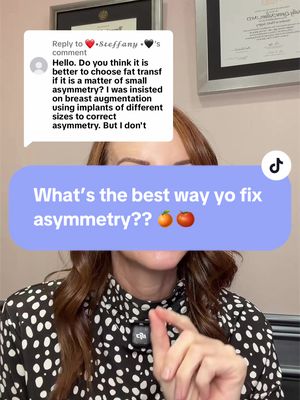
How Breast Asymmetry Is Corrected, and What to Tell Your Surgeon
September 17, 2026
There is no single fix for breast asymmetry, because asymmetry is not one thing: nipple position, areola size, crease height, volume, footprint, projection, and chest wall tilt are all different problems with different solutions. Dr. Killeen explains why what bothers you may differ from what your surgeon sees, when fat grafting works well, why position-dependent asymmetry cannot be operated for, and how to name what is actually bothering you before your consultation.