"Can't You Just Stitch It Up?" Why Re-Stitching a Wound After Breast Reduction Usually Doesn't Work
When a wound opens after a breast reduction, it's not because of a stitching failure — it's a blood supply failure. Re-stitching the same tissue with the same compromised perfusion just fails again. Blood supply recovers over 1 to 3 months, and after that, surgical closure becomes a reasonable option.
"Can't You Just Stitch It Up?" Why a Re-Stitched Wound After a Breast Reduction Usually Doesn't Work
A question came in from a previous video about wounds after breast reduction: "If I have a small wound at my incision, can't we just stitch it back together?"
It's an intuitive question. Simple answer: yes, technically — but it's very unlikely to actually work. Here's why, and the situations where re-stitching does make sense.
Why Wounds After Breast Reduction Open Up
The intuition behind "just stitch it" is that the wound opened because the sutures failed mechanically — they came untied, or they didn't hold. If that were the cause, then yes, re-stitching would solve the problem.
That's not usually what's happening.
When you get a wound at the incision after a breast reduction, it's typically not because the stitches failed. It's because the blood supply failed.
What's Actually Going On
During a breast reduction, we:
- Remove tissue
- Reshape what's left
- Move and lengthen the remaining tissue to create the new breast shape
That process inevitably alters the blood supply to the skin and tissue at the new incision edges. The areas at greatest risk are typically:
- The T-point where vertical and horizontal incisions meet
- Areas where tissue has been stretched or moved significant distances
- The lower flap if it was thinned aggressively
If the blood supply to a particular spot is inadequate for healing, the tissue right at the incision edge gets less oxygen and nutrients than it needs — and the closure doesn't take.
The wound opens not because of a stitching problem. It opens because there's not enough "food" in that specific area to support healing.
Why Re-Stitching Doesn't Fix It
Re-stitching is essentially trying the same solution that already failed.
- You're putting the same tissue back together
- The tissue still has the same compromised blood supply
- The result will be the same outcome — the wound will reopen
Sutures can't restore blood supply. They can hold tissue mechanically together for a few weeks, but if the tissue isn't biologically capable of healing across that gap, the wound is going to fail again as soon as the stitches dissolve or are removed.
What Actually Happens Over Time
Here's the encouraging part of this story: blood supply does recover.
After surgery, your body works to re-establish circulation to the operated area. New small vessels grow, existing vessels reroute, and over weeks to months, the blood supply normalizes.
This process takes a meaningfully long time though:
- Not weeks — months
- Typically 1–3 months before the area is well-perfused enough to support reliable healing
So if you have a wound at week 2, attempting to close it surgically isn't going to work — the underlying problem isn't fixed.
If you have the same wound at week 12, the math changes. By that point, the blood supply has likely beefed up enough that we can:
- Clean up the edges of the wound
- Surgically close the area
- Expect it to actually heal this time
Wounds After Breast Reduction Heal Slowly — That's Normal
I want to set realistic expectations here, because patients are often surprised by how long this takes.
A small wound on your leg or arm after a minor trauma would typically heal in 1–2 weeks.
A similar-sized wound at a breast reduction incision often takes:
- Several weeks to fully close
- Possibly months of slow healing for larger wounds
This is not because you're doing anything wrong. It's because the tissue is in a much more challenging environment for healing:
- The area is moving constantly with chest expansion, arm motion, daily activity
- The wound is under tension from the surrounding tissue
- The blood supply is compromised by the surgery
- The wound is in a warm, moist area (under the breast)
All of these factors slow healing. Patience is genuinely required.
When Re-Stitching Does Make Sense
There are a few specific situations where attempting to surgically close a wound after breast reduction can make sense:
1. After 2–3 Months Out
If the wound has been there for 2–3 months and isn't closing on its own, but the surrounding tissue has clearly re-established good blood supply:
- We can freshen up (debride) the edges
- Close the area surgically
- It's much more likely to heal now
2. When the Wound Is Healing in a Weird Configuration
Some wounds heal in shapes that leave a scar that won't mature well — folds, contracted edges, hypertrophic tissue. If that's happening at 2–3 months, surgical revision can be valuable to set up a better long-term scar.
3. When the Wound Is Specifically Mechanical (Rare)
Occasionally — though it's much less common than people assume — a wound opens because of a true mechanical issue like a suture knot coming undone or a specific suture pulling through tissue. In those rare situations, re-stitching early can work because the blood supply was fine all along. But this is the exception, not the rule.
What You Should Do If You Have a Wound After Breast Reduction
If you're looking at your post-op breast reduction and seeing a small wound at the incision:
Step 1: Don't Panic
These wounds are common and usually heal on their own with the right local care.
Step 2: Call Your Surgeon
Your surgeon should be evaluating you in person to see what's going on. They can:
- Confirm the wound is superficial and not extending deeper
- Assess the surrounding tissue for signs of infection
- Give you a local wound care plan (dressing changes, ointments, etc.)
- Set expectations for healing timeline
Step 3: Follow the Wound Care Plan
Most superficial breast reduction wounds heal with:
- Daily dressing changes with appropriate ointment (often bacitracin, mupirocin, or similar)
- Keeping the area clean and dry
- Avoiding tension on the surrounding tissue
- Time
It's slow, but it works.
Step 4: Don't Pick at It
This is a "hemoccult test empathy" moment — I know it's gross, I know you want to do something about it, but picking at the wound or trying to peel off the eschar early slows healing. Let it do its thing.
Step 5: Discuss Scar Revision at the Right Time
If the wound has healed and left a scar that bothers you, scar revision can be done 6–12 months out, when the scar is mature and the result is predictable.
When to Be More Worried
A wound that's genuinely concerning vs. just a healing-slowly wound looks like:
- Red, swollen, warm edges
- Discharge that's thick, yellow, or foul-smelling
- Fever or generally feeling unwell
- Rapid expansion of the wound
- Pain that's worsening rather than improving
Those signs suggest infection or other active problems — and you should call your surgeon immediately, not wait it out.
The Bottom Line
No, you don't want to stitch up a fresh post-op breast reduction wound. The reason wounds open after these surgeries is almost always a blood supply problem, not a stitching problem. Re-stitching the same tissue with the same compromised blood supply will simply fail again.
Blood supply does recover — it just takes 1–3 months. After that point, if the wound is still open, surgical closure becomes a reasonable option because the underlying tissue is now healthy enough to support it.
Until then: patience, dressing changes, and trust in your body's repair process. Wounds after breast reduction heal more slowly than wounds elsewhere — that's normal and not a sign that something is wrong.
Your Journey to Renewed Confidence

Transform Your Life
Every person deserves to feel comfortable and confident in their own body. Our procedures aren't just about physical change. They're about reclaiming your life, your comfort, and your self-assurance.
Dr. Killeen and her team support you every step of the way, from your first consultation through recovery.
Take the first step toward the life you deserve.
Schedule Your ConsultationTransform Your Life
Every person deserves to feel comfortable and confident in their own body. Our procedures aren't just about physical change. They're about reclaiming your life, your comfort, and your self-assurance.
Dr. Killeen and her team support you every step of the way, from your first consultation through recovery.
Take the first step toward the life you deserve.
Schedule Your ConsultationRelated Articles
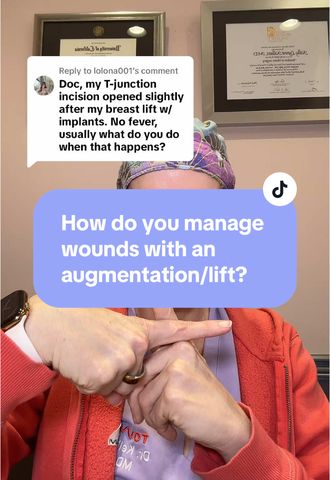
What to Do About a Wound Opening at the T-Junction After an Augmentation and Lift
May 13, 2025
Dr. Killeen explains why a wound opening after a breast augmentation plus lift almost always happens at the T-junction (where the vertical and horizontal anchor incisions meet, the spot with the most compromised blood supply), and how it is managed — from local wound care for superficial openings to surgical re-closure with a negative pressure device. She also covers why surgeons are more aggressive, and more likely to use antibiotics, when an implant is underneath.
I Just Did My First Hemoccult Test — and Now I Want to Apologize to Every Patient I've Ever Sent Home With Anything
August 19, 2025
Dr. Killeen reflects on the experience of being a patient handed a confusing, gross, multi-day at-home medical task — a hemoccult test — and how it changed her perspective on what she asks her own post-op patients to do at home. With surgical drains, wound care, and garment instructions in mind.
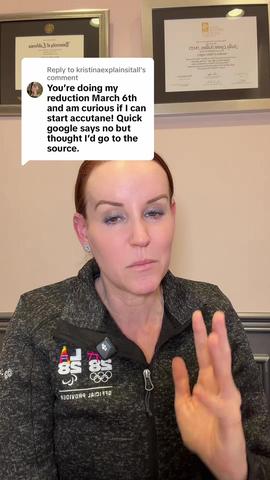
Can You Have a Breast Reduction While on Accutane?
January 19, 2026
Dr. Killeen explains the current evidence on Accutane and surgery — why the old rule of waiting six months may no longer apply for breast reduction patients.