Sharon Stone, Cancer, and What the Data Says About Divorce
When the female partner was the one with the serious illness or cancer, the chance of divorce was four times higher than when the male partner was the patient. If your relationship had strain before the diagnosis, talk to your partner, consider therapy, and build support — so you come through treatment together, stronger.
Sharon Stone, Cancer, and What the Data Says About Divorce
A couple of weeks ago, Sharon Stone shared something that stuck with me. She talked about the discord with her husband at the moment she was deciding whether to go forward with a bilateral mastectomy and reconstruction. Her takeaway was that he seemed upset about what was going to happen aesthetically — and he stormed out of the room. This was while she was processing genuinely life-altering medical information.
It's a heartbreaking story, and it raises a real, uncomfortable question: does a serious illness like breast cancer change the odds for a marriage? I went looking at what the research actually shows, and the answer is more nuanced — and more gendered — than you might expect.
The Uncomfortable Gender Gap
There's an older study of about 500 patients with serious medical illness, including solid organ tumors, that looked at divorce rates. Overall, the divorce rate was about the same as the general population — maybe even slightly lower.
Except when the patient was a woman.
When the female partner was the one with the serious illness or cancer, the chance of divorce was four times higher than when the male partner was the patient.
That's a striking and frankly sobering finding. The serious illness itself didn't move the needle much overall — but who was sick did.
What the Breast Cancer–Specific Data Shows
Now, an important caveat: there hasn't been a large population-based study in breast cancer patients specifically that has reproduced that same four-times effect. So I don't want to overstate it for breast cancer in particular.
What we do have is a meta-analysis of 15 different studies looking at divorce rates across cancer patients. That analysis found no difference from the general population — with one exception:
- Cervical cancer patients had higher divorce rates.
That one made me genuinely sad to read.
The Risk Factors That Strain a Marriage After Diagnosis
Digging into the data, a few specific factors show up again and again as associated with marital trouble after a new cancer diagnosis in women. If you recognize these in your own situation, it's worth paying attention to:
- Younger age at diagnosis — younger age is associated with higher divorce rates.
- Pre-existing problems in the relationship — as you'd expect, a serious diagnosis adds major stressors on top of strain that's already there, and can make it worse.
- Financial stress — cancer treatment is expensive, and that financial pressure adds significant strain to a relationship.
- A long time since the diagnosis — the stress appears to accumulate over time and can wear on a marriage the longer treatment and recovery go on.
Two More Findings Worth Knowing
A couple of other data points stood out to me, because they speak to what happens after treatment, too:
- Breast cancer survivors see about a 25% deficit in new marriage formation — and it's even lower for women who've had both breast and ovarian cancer.
- Men who've had cancer show no difference in new marriage formation compared to people who never had cancer.
So the gendered pattern isn't just about existing marriages — it appears to extend to forming new relationships afterward, too. It's a hard thing to sit with.
What I Want You to Take From This
I know that when you're going through treatment for a life-altering medical problem, the last thing you want to think about is the health of your relationship on top of everything else. That's completely understandable.
But here's my gentle encouragement: if your relationship had strain before the diagnosis, or you have any of the risk factors above, it's genuinely worth being proactive. That might mean:
- Talking openly with your partner about what's ahead
- Considering counseling or therapy — individually or together
- Building support before the hardest part, not after
The goal is to come through the diagnosis and treatment together — stronger and more stable, not blindsided. The medical decisions, like whether to do a single or double mastectomy, what your reconstruction will look like, and why immediate reconstruction is often the right call, are things your surgical team will help you navigate. But the emotional and relational side deserves the same intentional care — and it's an area where the right support up front makes a real difference. (It's also part of why I care so much about how news like a diagnosis is delivered in the first place.)
The Bottom Line
Sharon Stone's story isn't just a celebrity headline — it reflects a real, data-backed pattern. When a woman is the one facing serious illness, the relationship strain is measurably higher, and breast cancer survivors face headwinds even in forming new relationships afterward.
If you're newly diagnosed and your relationship has any of the risk factors — younger age, pre-existing problems, financial stress, or a long road ahead — please don't ignore the relational side of your health. Talk to your partner. Get support. Consider therapy. You deserve to go through this with someone in your corner, and being proactive gives you the best shot at coming out the other side together.
Your Journey to Renewed Confidence

Transform Your Life
Every person deserves to feel comfortable and confident in their own body. Our procedures aren't just about physical change. They're about reclaiming your life, your comfort, and your self-assurance.
Dr. Killeen and her team support you every step of the way, from your first consultation through recovery.
Take the first step toward the life you deserve.
Schedule Your ConsultationTransform Your Life
Every person deserves to feel comfortable and confident in their own body. Our procedures aren't just about physical change. They're about reclaiming your life, your comfort, and your self-assurance.
Dr. Killeen and her team support you every step of the way, from your first consultation through recovery.
Take the first step toward the life you deserve.
Schedule Your ConsultationRelated Articles

Filming a TikTok While Driving: What the Crash Data Actually Says
September 8, 2026
A nurse anesthetist who films videos while driving asked how it differs from talking to a passenger. Dr. Killeen answers with the literature: passenger conversation does raise crash risk, but phone use is associated with roughly a fourfold increase, passengers are protective because they share your situational awareness, hands-free does not fix it because the distraction is cognitive, and the most hazardous act of all is taking your eyes off the road.
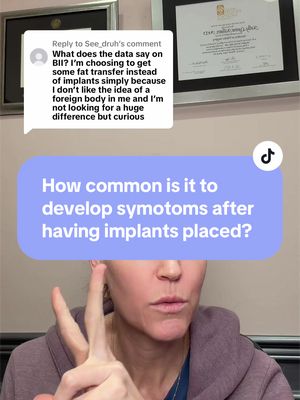
What Are the True Rates of Breast Implant Illness?
August 10, 2026
Dr. Killeen gives an honest answer to a common question: we do not know the true rate of breast implant illness, and anyone quoting a confident number is going beyond the evidence. She explains why — over 150 symptoms have been attributed to it, so it is not a definable diagnosis you can calculate a rate for — and what would actually be needed: a prospective study, defined diagnostic criteria, and a comparison group of women without implants. She also notes that retrospective comparisons have not shown a difference in the most common attributed symptoms.

Radiated Side Firmer and Higher After Reconstruction? What Helps
July 7, 2023
After radiation, the treated side of a breast reconstruction is always a bit stiffer and sits higher than the other side. Dr. Killeen explains how to tell normal radiation stiffness from a capsular contracture, how fat grafting improves radiated tissue, and why working on both sides is often the best way to even things out.