Mastectomy Reconstruction: Over vs. Under, Sensation, and Saving the Nipple
For most patients, we've transitioned to over-the-muscle reconstruction — animation deformity is much more obvious without breast tissue covering the muscle. Sensation never fully comes back, but resensation can rebuild a pathway to the nipple. And a prior staged breast lift doesn't take nipple-sparing mastectomy off the table.
Three Big Mastectomy Reconstruction Questions, Answered
A great commenter asked three excellent questions in a single comment about mastectomy reconstruction, and they're questions I get over and over from patients, so I'm putting all of the answers in one place. Here they are:
- For mastectomy reconstruction — over or under the muscle?
- Do you lose sensation after a mastectomy, and can you get it back?
- Can you save the nipple if you've had a prior breast lift or reduction?
Let's walk through each.
First, Though: Implants Are Not Your Only Option
Everything below is about implant reconstruction, because that's what was asked about. But I get a related question constantly, and it deserves an answer before we go further: are implants the only option for a breast reconstruction?
Absolutely not. There are really three different families of options:
- The world of implants. What the rest of this post covers.
- The world of flaps, meaning autologous reconstruction, where we use your own tissue brought in from somewhere else on your body.
- Something in the middle, where we use only the tissue already on your chest and don't bring anything in from elsewhere. This includes a SWIM flap (skin-sparing, Wise pattern, internal mammary perforator, which rearranges the skin and fat you already have into a smaller breast, with no distant donor site) and an aesthetic flat closure, a deliberately smooth, well-contoured flat chest rather than a reconstructed mound.
There are so many different options, and which one is right depends on your body, your goals, and your individual circumstances. The details of all three live on my breast reconstruction page.
The important part: talk to a surgeon who will put all of the options in front of you before you make your decision. If implants are the only thing you've been offered, that's a reason to ask what else exists.
Question 1: Over or Under the Muscle for Mastectomy Reconstruction?
There's really no single best answer in plastic surgery — only different options that are best for different patients. That said, most of us have transitioned to over-the-muscle (prepectoral) reconstruction in recent years, and there are good reasons why.
Why Most of Us Have Moved to Over-the-Muscle for Mastectomy Patients
1. Animation Deformity Is Particularly Bothersome After Mastectomy
It's not normal to see your chest move with your muscle when you raise your arms — and that weirdness is even more pronounced in mastectomy patients than in cosmetic augmentation patients. Why? Because in cosmetic augmentation, you still have your native breast tissue sitting on top of the muscle, helping to hide the movement.
In a mastectomy patient, the breast tissue is gone. The muscle is closer to the skin. The movement becomes much more obvious — even with normal range of muscle activity.
Patients with a mastectomy typically don't like the muscle movement, even when it's mild and there's no specific deformity present.
2. Some Patients Develop Bizarre, Persistent Movement Patterns
A subset of patients develop truly strange muscle movement post-reconstruction that drives them crazy day-to-day.
3. Some Patients Have Pain
There's also a meaningful subset of submuscular reconstruction patients who develop chest wall pain related to the implant being under and against the muscle. Avoiding muscle alteration sidesteps this risk.
4. Less Surgical Disruption
Anytime we can do a reconstruction without altering the muscle, that's a benefit — there's less to recover from, less long-term tissue disruption, and less potential for muscle-related complications down the road.
When Submuscular Still Makes Sense
Over-the-muscle isn't universal. There are still patients for whom under the muscle is the better choice:
- Deep tumors close to the muscle — putting the muscle on top of the implant gives a clearer barrier and makes exams and monitoring for recurrence easier
- Patients who already have submuscular implants going into the mastectomy — the muscle is already elevated, the patient is happy with the placement, no reason to disturb it
- Specific anatomic situations where coverage benefit outweighs the trade-offs
The Trade-Off of Over-the-Muscle
Without muscle on top of the implant, the upper edge of the implant can be more visible — particularly in thinner patients. This is essentially the same trade-off that comes up in over-the-muscle cosmetic augmentation, and it's typically managed by:
- Choosing the right implant profile
- Fat grafting at a later procedure to soften and camouflage the upper edge
- Selecting more cohesive, contour-friendly implants
So you're trading visible muscle movement (which patients generally hate) for potentially visible implant edge (which is fixable). Most patients consider this a worthwhile trade.
Question 2: Do You Lose Sensation After a Mastectomy?
The honest answer: yes, you do.
Why Sensation Goes Away
The nerves that supply sensation to your breast skin and nipple come up through the breast tissue to reach the skin. During a mastectomy, that breast tissue has to be removed — and the nerves traveling through it are unavoidably divided in the process.
The result is that, after a mastectomy, the entire chest skin and nipple area is numb.
Sensation Does Slowly Creep Back
Over time, the nerves around the edge of the operative area gradually send small branches into the numb tissue, and some sensation does come back — slowly, over months to years.
But here's the honest truth: it never goes back to normal. There will always be areas of altered or reduced sensation. That's not anyone's fault — it's an unavoidable consequence of the surgery.
What You as the Patient Can Influence
There's not a lot a patient can directly do to maximize sensory return. The two things you have control over:
1. Be the Healthiest Version of You
Healthier patients heal better. Better healing supports better nerve regrowth.
2. Choose a Good General Surgeon Who Respects the Anatomy
This one is huge. If your general surgeon doesn't respect the anatomic boundaries of the breast — meaning they take more tissue than necessary, going beyond the actual breast footprint — the nerves around the edge have to travel much farther to get back into the operated area.
The farther they have to travel, the less likely they are to make it. Sensation simply doesn't come back.
A skilled, anatomically-respectful general surgeon makes a real difference here. This is one of the reasons I emphasize the team that does your mastectomy + reconstruction, not just the plastic surgeon.
Resensation: A Surgical Option for Sensation
There's a procedure called resensation that's often misrepresented online. People sometimes describe it as "preserving" your sensation. It's not. I want to be clear about that.
What resensation actually does:
- It's an add-on procedure done at the time of your mastectomy and reconstruction
- We search out a small nerve on the chest wall (often an intercostal nerve)
- We find a cut nerve under the nipple
- We connect the two with a nerve graft
- This creates a "highway" for nerve fibers to grow toward the nipple
It's not preservation — it's active reconstruction of a pathway for sensation to potentially regrow.
For patients to whom regaining nipple sensation is very important, resensation can be a meaningful addition to consider — especially if you're a candidate for nipple-sparing mastectomy.
Question 3: Can You Save the Nipple If You've Had a Prior Lift or Reduction?
Absolutely yes — with one important asterisk.
If the Lift/Reduction Was Done in the Past (Staged)
If you're a candidate for nipple-sparing mastectomy and you've had a breast lift or breast reduction previously (months or years ago):
- A prior lift or reduction does not disqualify you from a nipple-sparing approach
- There is no evidence these patients have higher rates of nipple necrosis when properly staged
- You should always try if you're otherwise a candidate
The previous surgery has fully healed. The blood supply to the nipple has re-established. The risk profile looks essentially like a patient with no prior surgery.
If the Lift Is Being Done at the Same Time as the Mastectomy
This is where the picture changes.
If you're trying to do a lift (or reduction) and a nipple-sparing mastectomy at the same operation:
- You can still try — this is done in the right circumstances
- But you have an increased chance of nipple necrosis
- You're asking the nipple's blood supply to survive two simultaneous insults: the mastectomy and the lift/reduction work
It's still a reasonable option for many patients, but the risk profile is meaningfully higher than if these surgeries were staged.
Bonus Question: Prior Breast Augmentation
You didn't ask this directly, but it's pertinent: what if you already have a breast implant when you go in for mastectomy?
This is something I've been observing in my own practice and have a paper in progress on (with my partner). What we're seeing in our patient data:
- Patients who come into mastectomy with a previously placed breast augmentation in place actually have lower rates of nipple and skin necrosis than patients without prior implants
- This isn't in the published literature yet — it's based on our own internal data
- The likely mechanism is that the prior augmentation has already stretched and conditioned the skin, and the expanded vascular network that develops around an implant may be protective during the mastectomy
If our paper holds up under peer review, this would be a really useful data point for the growing population of women who had a cosmetic augmentation in their 20s or 30s and are now facing breast cancer treatment.
Pulling It All Together
So, to summarize the three questions:
| Question | Short Answer |
|---|---|
| Over or under the muscle for mastectomy? | Most of us have transitioned to over the muscle (prepectoral) — better aesthetics, less weird movement, less pain — with a few specific exceptions |
| Do you lose sensation after mastectomy? | Yes, mostly. Some sensation creeps back over time but never normal. Resensation is a surgical option for nipple sensation specifically |
| Can you save the nipple after a prior lift? | Yes, if the lift was staged in the past. Doing them simultaneously increases necrosis risk |
If you're facing decisions like these, the best advice I can give is to find a breast cancer reconstruction team that:
- Will discuss all of your options clearly
- Has experience with both implant-based and autologous reconstructions
- Has a general surgeon who respects the anatomic boundaries of the breast
- Will be honest about the trade-offs of each choice
There are no universally right answers — only the answers that are right for your anatomy, your cancer, and your priorities.
Your Journey to Renewed Confidence

Transform Your Life
Every person deserves to feel comfortable and confident in their own body. Our procedures aren't just about physical change. They're about reclaiming your life, your comfort, and your self-assurance.
Dr. Killeen and her team support you every step of the way, from your first consultation through recovery.
Take the first step toward the life you deserve.
Schedule Your ConsultationTransform Your Life
Every person deserves to feel comfortable and confident in their own body. Our procedures aren't just about physical change. They're about reclaiming your life, your comfort, and your self-assurance.
Dr. Killeen and her team support you every step of the way, from your first consultation through recovery.
Take the first step toward the life you deserve.
Schedule Your ConsultationRelated Articles
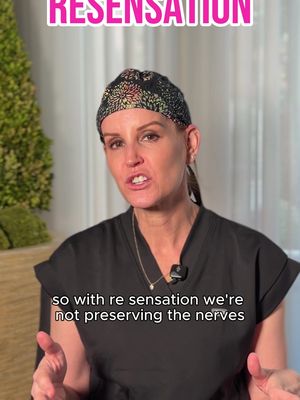
What Is Resensation? Restoring Feeling After a Mastectomy
August 6, 2026
A mastectomy removes the nerves that supply sensation because they travel through the breast tissue, leaving the skin and nipple numb. Dr. Killeen explains Resensation, a nerve grafting technique that does not preserve nerves but instead connects a nerve from the side of the chest to the cut nerve under the nipple, creating a "highway" that directs regrowth toward the nipple. She covers what result to expect and why it must be done at the time of mastectomy rather than added later.

Very Little Tissue and Considering a Breast Augmentation: Under or Over the Muscle?
June 15, 2026
Dr. Killeen breaks down the under-vs-over-the-muscle decision for thin breast augmentation patients — the traditional pinch test, why modern cohesive implants and fat grafting have changed the old rules, and the overlooked trade-off: thin patients see the implant more under the muscle, but they also see the muscle move more.

My Thoughts on Over-the-Muscle Breast Augmentation (and How They've Changed)
September 23, 2025
Dr. Killeen explains why she's transitioned the majority of her breast augmentation and reconstruction patients to over-the-muscle placement — what changed in the data, why patients prefer it, what trade-offs (rippling, edge visibility) come with it, and how Motiva implants have helped.