Please Don't Do Your Own TCA Peel at Home: A Plea About the Worst TikTok Trend
When you pay for a peel, Botox, filler — you're not just paying for the product. You're paying for the expertise of the person applying it, the aftercare, and the person you can call if something goes wrong. Saving money on those things to save your face does not work out.
Please Don't Do Your Own TCA Peel at Home: A Plea About the Worst TikTok Trend of the Last Few Years
There's a video going around TikTok of a young man with darker skin doing a 30% TCA peel on himself at home, and giving step-by-step advice for other people to do the same. I'm not going to link him because I don't want to send more traffic — but I want to talk about this, because the DIY aesthetics trend is getting out of hand, and I'm genuinely scared people are going to permanently harm themselves.
This isn't about gatekeeping. It's about preventing irreversible scars on people who didn't deserve them.
What a TCA Peel Actually Does
TCA (trichloroacetic acid) peels are a real, legitimate medical aesthetic treatment when done properly. They:
- Chemically remove layers of skin at a controlled depth
- Stimulate new collagen formation during healing
- Can improve pigmentation, fine lines, acne scarring, and texture
The strength matters a lot:
- 10-15% TCA — superficial peel, gentler
- 20-25% TCA — medium-depth peel
- 30-35%+ TCA — deeper peel with significantly higher risk
- Higher concentrations — used only by trained clinicians in specific situations
A 30% TCA peel is not a beginner-level intervention. It's a real medical procedure that can produce real medical complications.
What I Saw in This Video That Worried Me
Watching the video, several things were happening that gave me actual chest pain:
1. Wrong Application Technique
The peel was being applied unevenly and to areas that require special precaution:
- Around the eyes — the skin is thin, vascular, and dangerously close to the eye itself; this is one of the most carefully managed areas in a professional peel
- The nose — the skin behavior changes dramatically across the nose, and peels penetrate differently
- Corners of the mouth — high movement, prone to scarring, requires specific technique
He was not being careful in these areas, and that's where the deepest, most permanent damage happens.
2. No Skin Prep
When we apply a TCA peel to a darker-skinned patient, we typically prep the skin for weeks beforehand:
- Tretinoin to thin the stratum corneum so the peel penetrates evenly
- Hydroquinone or similar to reduce melanocyte activity and prevent post-inflammatory hyperpigmentation
- Sunscreen religiously to set up the best healing environment
He skipped all of this. For someone with darker skin specifically, this dramatically increases the risk of uneven results, hyperpigmentation, hypopigmentation, and scarring.
3. No Proper Application Controls
Professional peelers use specific techniques to prevent too-deep penetration in specific areas:
- Petrolatum in certain spots to block the acid
- Strategic application technique to control depth
- Timing considerations based on skin response
- Knowing when to neutralize vs. let it continue working
None of this was happening.
4. Wrong Post-Care
His follow-up videos show him using the wrong skincare products for a healing peel patient. Post-care after a TCA peel is as important as the peel itself, and includes:
- Specific gentle cleansers
- Occlusive moisturizers to support the barrier as new skin forms
- Strict sun avoidance
- No active skincare (no retinoids, no acids, no exfoliants)
What he was using was actively counterproductive.
5. Visible Uneven Distribution
Even in his early-outcome videos, the peel had clearly not been evenly distributed. Some areas were deeper than others. Uneven peeling produces uneven healing, which produces visible patches of differential pigmentation, texture changes, and sometimes scarring.
Why This Matters Especially for Darker Skin
Patients with darker skin tones (Fitzpatrick 4-6) have a fundamentally different post-peel healing pattern:
- Higher rates of post-inflammatory hyperpigmentation (PIH) — dark patches that can take many months to resolve, sometimes never
- Higher rates of post-inflammatory hypopigmentation — light patches that may not repigment
- Higher keloid scarring risk in some patients
- More need for prep, conservative depth, and aggressive post-care to prevent these complications
I've written about the pigmentation challenges of darker skin tones with scar healing, and the same biology applies to peels. A peel done aggressively, unevenly, and without the right protocols in darker skin can produce permanent visible changes.
A 30% TCA peel done by a layperson on darker skin without prep is a setup for exactly that.
What You're Actually Paying For at a Professional
I get the financial argument. Medical aesthetic treatments are expensive. The product cost is much lower than the treatment price, and patients reasonably ask "why?"
Here's what you're actually paying for when you have a peel (or Botox, or filler, or any other aesthetic treatment) done professionally:
1. The Product Itself
A small part of the cost.
2. The Expertise of the Person Applying It
- Years of training
- Hundreds or thousands of similar procedures
- Specific knowledge about your skin type and anatomy
- Real-time decision-making during application
3. The Pre-Treatment Workup
- Skin assessment
- Prep recommendations
- Discussion of risk factors specific to you
- Timing decisions
4. The Aftercare
- Specific product recommendations
- Healing timeline guidance
- Recognition of complications when they're starting
5. The Person You Can Call If Something Goes Wrong
This is the biggest one, honestly.
If you do a DIY peel and your skin starts looking weird at day 5, who do you call? Your dermatologist who didn't do it isn't going to take responsibility. The ER doesn't handle peel complications. You're alone with a problem you don't know how to fix.
When you have a peel done professionally, you have a clinician you can call at any time if something looks wrong. That access is part of what you're paying for.
"But You Just Don't Want to Lose Money"
Every time I post about this, there's a chorus of comments like "you're just upset you're losing customers" or "make it cheaper then."
Let me address this directly:
- I'm a surgeon. I don't make my living off peels. The financial impact on me is zero.
- If anything, I make more money treating complications from people who tried things at home and ended up with scars, infections, or pigmentation issues that take multiple visits to address.
This isn't about money. It's about not wanting to see a young person scarred for the rest of their life because they tried to save $200 on a treatment they didn't need to have in the first place.
A Reminder About What These Treatments Are For
These aren't treatments you need to live. They're aesthetic treatments. They're supposed to be fun and bring you joy.
A peel done wrong doesn't just fail to improve your skin. It can actively damage it, leaving you worse than where you started — sometimes permanently.
That's a really high cost for an entirely optional procedure. The math doesn't work in your favor.
Young People Usually Heal, But "Usually" Isn't a Guarantee
A young patient with healthy skin will probably heal okay even from a poorly-done peel. The body is resilient, especially in your twenties.
But what if you're not in the "probably" category?
- What if you're the one with permanent hyperpigmentation that takes 18 months to fade — or doesn't?
- What if you're the one with a keloid that grows for years?
- What if you're the one with hypopigmented patches that never repigment?
- What if you're the one with a secondary infection that scars?
You're betting your face on the odds being in your favor. For an aesthetic treatment that wasn't medically necessary. The risk-reward math doesn't make sense even when the base rate of complications is "low."
Why I'm Frustrated With the Platform
DIY aesthetics is the worst trend on TikTok in the last few years. I genuinely wish the platform would moderate this category more carefully.
Meanwhile, my videos discussing complications, evidence-based care, and warnings against unsafe practices get algorithmically suppressed routinely. The platform is happy to host the dangerous content and quiet the educational pushback. I don't fully understand the logic.
If you're a creator watching this content, don't reshare it. If you're a viewer, don't replicate it. The viral video doesn't represent good aesthetic medicine — it represents a young person taking a serious risk with their face, and that's genuinely sad to watch.
What to Do Instead
If you want a peel:
- See a licensed clinician — dermatologist, plastic surgeon, or properly-supervised nurse with experience
- Get a skin assessment specific to your Fitzpatrick type
- Do the prep they recommend, for as long as they recommend it
- Start with a more conservative peel if you're new to this — work your way up if needed
- Follow the aftercare religiously
- Have a contact for if anything looks wrong
If you can't afford a professional peel right now:
- That's genuinely okay
- At-home topicals (gentle retinoids, vitamin C, sunscreen) can produce meaningful results over months
- You don't need an aggressive in-office treatment to take care of your skin
- Wait, save, and do it right when you can
The Bottom Line
A 30% TCA peel is a real medical procedure with real consequences. Done at home, without prep, on darker skin, without proper application technique or post-care, the risk of permanent scarring, hyperpigmentation, hypopigmentation, or infection is real.
When you pay for a professional aesthetic treatment, you're paying for expertise, safety, aftercare, and a real person you can reach if something goes wrong. Skipping that to save money is a poor trade for a procedure that you don't medically need in the first place.
Please don't do your own peels at home. Save up, see a real clinician, and get it done safely. Your face is worth it.
Your Journey to Renewed Confidence

Transform Your Life
Every person deserves to feel comfortable and confident in their own body. Our procedures aren't just about physical change. They're about reclaiming your life, your comfort, and your self-assurance.
Dr. Killeen and her team support you every step of the way, from your first consultation through recovery.
Take the first step toward the life you deserve.
Schedule Your ConsultationTransform Your Life
Every person deserves to feel comfortable and confident in their own body. Our procedures aren't just about physical change. They're about reclaiming your life, your comfort, and your self-assurance.
Dr. Killeen and her team support you every step of the way, from your first consultation through recovery.
Take the first step toward the life you deserve.
Schedule Your ConsultationRelated Articles
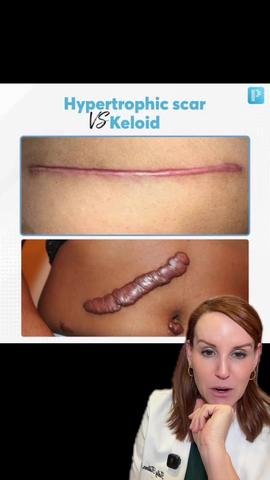
Hypertrophic vs. Keloid Scars — and How They Look on Darker Skin
November 10, 2025
Dr. Killeen explains the difference between hypertrophic scars and keloids, and how they can behave differently on darker skin — including pigmentation that often layers on top of the raised scar and how to treat both issues together.
Please Do Not Inject Your Own Botox at Home
May 26, 2025
Dr. Killeen responds to a viral video of someone injecting their own Botox at home with no idea of the dosing, using product from an unregulated overseas source. Why DIY Botox is so dangerous, what the real complications are (up to vision problems), why legitimate companies never sell neurotoxins to laypeople, and how to report these sellers to the FDA.
How to Treat Post-Inflammatory Hyperpigmentation (PIH) After Scars and Injuries
November 17, 2025
Dr. Killeen walks through the evidence-based treatments for post-inflammatory hyperpigmentation — topical TXA and hydroquinone, laser and microneedling, oral TXA for stubborn cases, and why sun protection makes or breaks your results.