What Happens to Your Fat After Liposuction? Is It Gone Forever, and Does It "Move"?
As an adult, the number of fat cells in your body is stable, so the cells we remove with liposuction are permanently gone. If you gain weight afterward, the treated area has fewer cells to fill, so new weight goes somewhere new. That is where the myth that liposuction makes your fat move comes from. It does not move; new weight gain just distributes differently.
What Happens to Your Fat After Liposuction? Is It Gone Forever, and Does It "Move"?
So what the heck actually happens after liposuction? Is the fat permanently gone? Does it go somewhere new? What happens if you gain weight? These are great questions, and the answers come down to one simple fact about how fat cells work. Let's talk about it.
The Key Fact: Adults Don't Grow New Fat Cells
Here's the foundation for everything else: as an adult, the number of fat cells in your body is, for the most part, stable. You aren't really growing brand-new fat cells.
So how do you gain weight? The fat cells you already have get larger. You're not adding cells, you're inflating the ones you've got. Hold onto that, because it explains the whole picture.
Why We Target Certain Areas
When people come in for liposuction, we're treating areas of stubborn fat, those spots where, every time you gain a little weight, it always seems to go right there. Those genetically stubborn zones are exactly what liposuction is designed to address, by permanently removing a portion of the fat cells in that area. (If you're curious about the different approaches, I break those down in liposuction options.)
Once those fat cells are removed, they're gone, they don't regenerate. Which sets up the two scenarios everyone asks about.
Scenario 1: You Don't Gain Weight (Everything Stays Great)
If you maintain your weight after liposuction, the answer is simple and happy: things remain the same.
- You're not going to grow more fat cells in the treated area
- You shouldn't gain weight there
- Your result is stable and long-term
This is the ideal, and it's exactly why we say liposuction results last, as long as your weight stays steady.
Scenario 2: You Gain Weight (and Where the "Fat Moves" Myth Comes From)
Now, what if you do gain weight after liposuction? This is the interesting part.
Remember: gaining weight means your existing fat cells get bigger. But in the treated area, you now have fewer fat cells than you used to, because we removed a bunch. So when you gain weight, that fat has to go somewhere, and with fewer cells to fill in the old area, more of it goes to other areas instead.
The result: you may notice weight gain showing up in different places than you were used to.
This is where the rumor that "liposuction makes your fat move" comes from. Liposuction is not relocating your fat. But if you gain weight afterward, that new weight has fewer cells to land in at the treated site, so it goes somewhere new.
It's a subtle but important distinction. Your fat didn't migrate, your body simply stored new weight gain in a different distribution than before. This is also part of why gaining weight (or a pregnancy) after lipo can create an uneven, lumpy look, and why significant weight changes after lipo can affect your result.
The Bottom Line
After liposuction:
- Adults don't grow new fat cells, so the cells we remove are permanently gone.
- If you don't gain weight, your result is stable and long-term, no new fat cells will form in the treated area.
- If you do gain weight, it has fewer cells to fill the treated area, so new weight tends to show up elsewhere, which is the real explanation behind the "lipo makes your fat move" myth. It doesn't move; new gain just distributes differently.
The takeaway is empowering: your liposuction results should be stable and long-term, as long as you don't gain a significant amount of weight. Maintaining your weight is the single best thing you can do to keep your result looking exactly the way it did the day it settled.
Your Journey to Renewed Confidence

Transform Your Life
Every person deserves to feel comfortable and confident in their own body. Our procedures aren't just about physical change. They're about reclaiming your life, your comfort, and your self-assurance.
Dr. Killeen and her team support you every step of the way, from your first consultation through recovery.
Take the first step toward the life you deserve.
Schedule Your ConsultationTransform Your Life
Every person deserves to feel comfortable and confident in their own body. Our procedures aren't just about physical change. They're about reclaiming your life, your comfort, and your self-assurance.
Dr. Killeen and her team support you every step of the way, from your first consultation through recovery.
Take the first step toward the life you deserve.
Schedule Your ConsultationRelated Articles
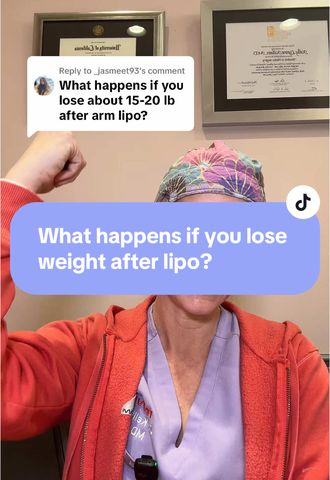
What Happens If You Lose Weight After Liposuction?
May 21, 2025
Dr. Killeen answers what happens if you lose a significant amount of weight after liposuction — why your skin may not shrink back, the variables that predict it (prior weight loss, smoking, sun damage, how your skin behaved, and how fast you lose the weight), the skin-tightening options from non-invasive up to a brachioplasty, and why operating at your goal weight is the best strategy.
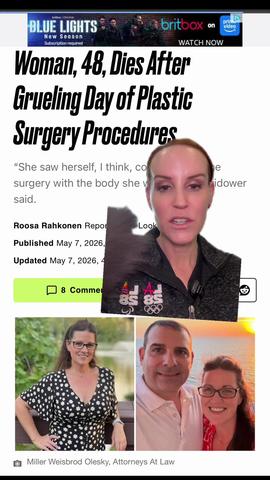
A Tragedy in the News: Joy Barbera and the Risks of Stacking Cosmetic Procedures
May 8, 2026
Dr. Killeen analyzes the publicly reported facts of the Joy Barbera case — a 48-year-old woman who passed away after a 10-hour operation combining an arm lift, breast augmentation, 360 liposuction, BBL, and lower body lift — and the broader lesson for patients about why staging matters when multiple surgeons recommend it.
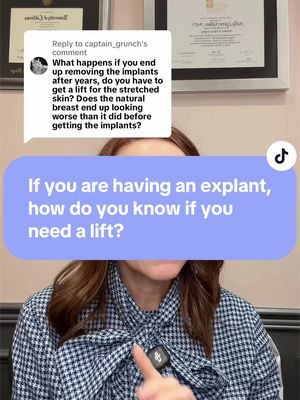
What Happens to Your Chest When You Remove Implants? (And Will You Need a Lift?)
May 27, 2026
Dr. Killeen walks through what implants do to your chest tissue, what happens when they're removed, and the specific anatomic clues that predict whether you'll need a lift after explant, including the often-misread scenario where an implant sitting too high makes the nipple appear low when it's actually fine.