What Happens If You Lose Weight After Liposuction?
Whenever we do a cosmetic procedure, the goal is to do it when you are at your goal weight, because we want stable, long-term results. If you lose a lot of weight after liposuction, the skin may not shrink back and you can end up with sagging. Slow and steady weight loss gives the skin time to recover; rapid loss does not.
What Happens If You Lose Weight After Liposuction?
Great question, and I'll warn you up front: this is one of those answers you may find a little unsatisfying. Someone asked me what happens if you have liposuction and then go on to lose a bunch more weight afterward. The honest answer is — it depends, and you can't always predict it. There are so many variables. Let me walk through them, because understanding them is the key to getting a stable, long-term result.
The Core Issue: Will Your Skin Shrink Back?
When we do liposuction, we remove fat from under the skin. The hope is that your skin then shrinks back down smoothly over your new, slimmer contour. Whether that happens well depends a lot on your skin quality — and that's exactly why a surgeon may steer some patients toward a tummy tuck instead of lipo when the skin isn't likely to retract on its own.
Here's the problem: if you lose a significant amount of weight after your liposuction, your skin may not have the ability to shrink back up as much as we'd like. When that happens, you can end up with more sagging skin in the treated area than you started with.
The Variables That Predict How Your Skin Behaves
Why is the answer so unpredictable? Because how your skin responds depends on several factors that are unique to you:
1. Were You Already a Weight-Loss Patient?
Did you lose a lot of weight before your liposuction? If you're already a massive-weight-loss patient, your skin has likely lost some of its elasticity already, so it's less able to bounce back after fat is removed.
2. Do You Smoke?
Smoking damages the small blood vessels and the collagen in your skin. Smokers' skin tends to have less ability to recover and retract.
3. Do You Have a Lot of Sun Damage?
If you've spent years with significant sun exposure, your skin's collagen and elastin are broken down, which again means less shrink-back potential.
4. How Did Your Skin Behave Right After Lipo?
If your skin shrunk up nicely after your initial liposuction, that's a good sign it has decent elasticity. If it was already loose afterward, more weight loss is likely to make that worse.
5. How Fast Do You Lose the Weight?
This is a big one. Slow and steady weight loss gives your skin time to recover and adapt. Rapid weight loss doesn't — the skin gets outrun and is much more likely to become loose.
So, What's the Likely Outcome for You?
Putting it together:
- If you didn't have massive weight loss before lipo, don't smoke, don't have a lot of sun damage, your skin shrunk up nicely after your procedure, and you lose any new weight slowly and steadily — you may be just fine. The skin will have time to recover and hopefully won't become too loose.
- But if you do have one or more of those risk factors — you're a weight-loss patient, you smoke, you have a lot of sun damage, or you drop the weight very quickly — your skin may not shrink back, and you can be left with sagging.
And to be fully honest: even with all the favorable boxes checked, it certainly can still happen. We don't always know how things will end up. That's the unsatisfying part.
If You Do End Up With Loose Skin, You Have Options
Let's say the weight loss happens and you're left with sagging skin. You're not out of options — they just escalate depending on how much loose skin you have:
- Non-invasive skin tightening — energy-based treatments for milder laxity
- Minimally invasive skin tightening — a step up for moderate cases
- Surgical skin tightening — when there's a meaningful amount of excess skin, we remove it directly. On the arms, for example, that procedure is called a brachioplasty (an arm lift)
Surgical removal is the most reliable fix for significant excess skin, which is the same reason a tummy tuck involves a longer scar than lipo — sometimes the only way to deal with extra skin is to take it out. And if your issue after lipo is contour irregularity rather than looseness, there are separate options for lumpy or uneven results.
The Real Lesson: Operate at Your Goal Weight
Here's the principle that ties all of this together, and it's how I approach essentially every cosmetic case:
Whenever we do a cosmetic procedure, the goal is to do it when you're at your goal weight.
Why? Because we want your results to be stable and long-term — we don't want anything to change underneath them. When you have liposuction and then your weight shifts significantly, you introduce exactly the kind of change that can undo the result.
Since the outcome of major weight change after lipo is unpredictable, the smartest move is to avoid the situation in the first place whenever we can. If you know you have more weight to lose, the better plan is usually to lose it first, get to a weight you can maintain, and then do your body contouring. That sequencing gives you the best shot at a result that lasts.
The Bottom Line
If you lose a lot of weight after liposuction, your skin may not shrink back, and you can end up with sagging. Whether that happens depends on your history of weight loss, smoking, sun damage, how your skin behaved after surgery, and how fast you lose the weight. Slow and steady is your friend; rapid loss is not.
If it does happen, you have a ladder of options from non-invasive tightening up to surgical skin removal like a brachioplasty. But the best strategy is to sidestep the whole issue: get to your goal weight first, then do your procedure. Stable foundation, stable result. That's always the aim.
Your Journey to Renewed Confidence

Transform Your Life
Every person deserves to feel comfortable and confident in their own body. Our procedures aren't just about physical change. They're about reclaiming your life, your comfort, and your self-assurance.
Dr. Killeen and her team support you every step of the way, from your first consultation through recovery.
Take the first step toward the life you deserve.
Schedule Your ConsultationTransform Your Life
Every person deserves to feel comfortable and confident in their own body. Our procedures aren't just about physical change. They're about reclaiming your life, your comfort, and your self-assurance.
Dr. Killeen and her team support you every step of the way, from your first consultation through recovery.
Take the first step toward the life you deserve.
Schedule Your ConsultationRelated Articles
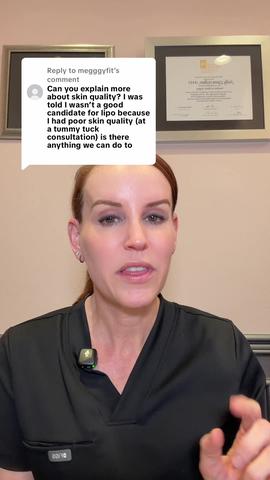
Skin Quality and Body Contouring: Why Your Surgeon May Recommend a Tummy Tuck Over Lipo
November 13, 2025
Dr. Killeen explains how skin quality affects liposuction and tummy tuck results — what causes poor skin quality, what topicals and procedures can do, and why a tummy tuck is often the most cost-effective route to a flat abdomen.
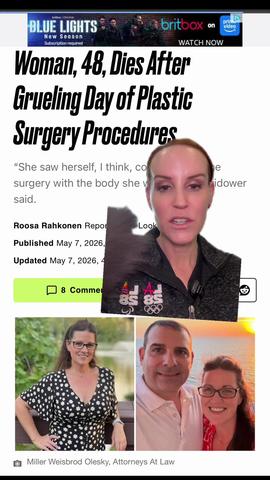
A Tragedy in the News: Joy Barbera and the Risks of Stacking Cosmetic Procedures
May 8, 2026
Dr. Killeen analyzes the publicly reported facts of the Joy Barbera case — a 48-year-old woman who passed away after a 10-hour operation combining an arm lift, breast augmentation, 360 liposuction, BBL, and lower body lift — and the broader lesson for patients about why staging matters when multiple surgeons recommend it.
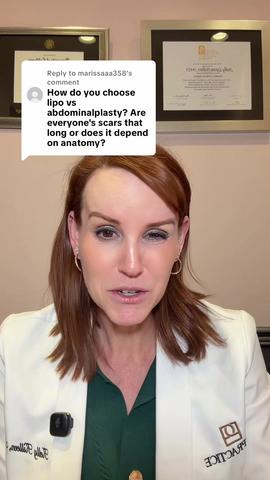
Liposuction vs. Tummy Tuck — and Why Some Scars Are Longer Than Others
November 11, 2025
Dr. Killeen walks through how to choose between liposuction and a tummy tuck based on your anatomy, why some patients opt for lipo even when a tummy tuck is technically better, and how your body determines how long the tummy tuck scar will be.