You Got Lipo and Now You're Lumpy. What Are Your Options?
Patients always want me to take as much fat as possible — and that is exactly what leads to lumpiness. Leave a healthy normal layer of fat right under the skin. You can always do a second round if you want more, but you can't put back contour you destroyed by taking too much.
You Got Lipo and Now You're Lumpy. What Are Your Options?
This is a really common follow-up consultation in my practice: a patient comes in months after a liposuction procedure done elsewhere, and the contour is lumpy and uneven. They want to know what can be done.
The short answer: yes, it can usually be improved — but it often takes more than one round of treatment, and the strategy depends entirely on whether the problem is peaks or valleys.
Let me walk through how I diagnose what's actually going on and the treatment options for each scenario.
Step 1: Figure Out What's Causing the Lumpiness
Lumpiness after lipo isn't one problem — it's usually one of two specific problems (or sometimes both at once).
Problem A: Too Many Valleys (Over-Suctioned Areas)
This is when the lipo went too deep or removed too much fat in certain spots, creating dents or depressions in the surface. The lumpiness is actually because some areas are too low.
If you run your hand over the area, you'll feel scoop-shaped depressions in between areas of normal contour.
Problem B: Too Many Peaks (Under-Treated Areas)
This is when certain spots didn't have enough fat removed, leaving bumps or raised areas sticking up above the rest of the contour.
If you run your hand over the area, you'll feel firm raised lumps with smooth tissue between them.
Problem C: Combination of Both
Often patients have some areas that are too deep and other areas that are too high, in the same overall surgical zone. The treatment strategy has to address each problem in its specific location.
Fixing the Valleys: Adding Tissue Back
If the issue is valleys, the only solution is to add tissue back to fill the depressions. Options include:
Fat Grafting
This is my preferred approach in most cases:
- We harvest fat from another area of your body
- It's purified and injected into the valleys
- The fat that survives stays permanently
- See my fat grafting take percentage post for what percentage of grafted fat actually survives long-term
Pros:
- Uses your own tissue
- Permanent for the fat that takes
- Can be very precise
Cons:
- Requires a second surgery with anesthesia
- Multiple rounds often needed for significant valleys
- Take rate varies (typically 50–80%, depending on technique and patient factors)
Hyaluronic Acid Filler
Filler can be used for smaller, more accessible valleys:
- Injected like a dermal filler
- Temporary (typically 6–18 months)
- Useful as a "test drive" or for patients who want to avoid surgery
Other Tissue Substitutes
There are some other injectable products that can fill depressions, but I generally prefer fat grafting for body contour because it's permanent and natural.
Fixing the Peaks: Reducing the Bumps
If the issue is peaks — areas where too much fat is sticking up — the treatment options reduce or remove the excess.
Targeted Liposuction
For meaningful peaks, another round of liposuction focused only on the raised areas is often the best option:
- Very precise
- Removes the offending fat
- Can be done at the same time as fat grafting for the valleys
Pros:
- Definitive removal
- Can address multiple peaks in one session
Cons:
- Another surgery
- Risk of creating new valleys if not done carefully
Kybella (Deoxycholic Acid Injection)
A non-surgical option for smaller peaks:
- Injectable medication that dissolves fat cells
- Best for smaller volumes of unwanted fat
- Multiple injection sessions usually needed
- Original FDA approval was for the chin area, but it's used off-label in other body areas
CoolSculpting (Cryolipolysis)
Another non-surgical option:
- Freezes fat cells through external applicators
- Can be useful for specific isolated bumps
- Less precise than liposuction
- Has its own risks (paradoxical adipose hyperplasia, etc.)
Radiofrequency Microneedling
In some patients, radiofrequency microneedling can be used to:
- Slightly smooth contour irregularities
- Tighten the overlying skin
- Reduce the visibility of minor bumps
This is more of an adjunct than a primary treatment for significant peaks — but it can be a useful part of the overall plan.
The Combined-Problem Strategy
When patients have both peaks and valleys in the same area, the treatment plan is essentially:
- Map the contour carefully at consultation
- Identify the specific peaks and valleys
- Targeted lipo the peaks
- Fat graft the valleys
- Often done in the same operative session
This is intricate, careful work. Each area of the contour gets a different intervention based on what it actually needs.
What Patients Need to Know About Realistic Expectations
I want to be honest about a few things that patients often don't hear up front.
1. Blood Supply Is Often Compromised
After a previous liposuction, the blood supply to the area is often not great. This affects:
- Fat graft take rates (fat needs good blood supply to survive)
- Healing
- Risk of further contour irregularity
So revisions in this area need a careful, conservative approach.
2. It Often Takes Multiple Rounds
It is rare that significant lumpiness from a previous liposuction can be fixed in one revision procedure. Most patients need:
- 2-3 rounds of fat grafting for valleys
- Touch-up treatments for peaks
- 6-12 months between rounds for healing
Setting this expectation up front prevents disappointment.
3. It Won't Be Perfect
Even with skilled revision work, the contour is often better but not pristine. The damage from the original procedure can't always be completely reversed. The goal is meaningful improvement, not perfection.
Why This Is So Hard to Fix
This brings me to the most important point of all:
The best way to manage lumpiness after liposuction is to not have it happen in the first place.
The way to prevent it:
- Don't take too much fat
- Stay deep enough in the tissue
- Leave a healthy, normal layer of fat right under the skin
Patients often come into consultation wanting everything taken — they want me to remove as much fat as possible in one operation.
That is exactly what leads to lumpy results.
A skilled surgeon will:
- Decline to take too much
- Leave appropriate subcutaneous fat under the skin
- Sacrifice maximal fat removal for smooth, even contour
- Recommend a second round later if more removal is wanted, rather than overdoing the first one
This is one of the things that distinguishes experienced board-certified plastic surgeons from operators at chop-shop chains — the willingness to leave fat behind to protect the contour.
If your surgeon is happy to take "everything," that's actually a worry signal. The right answer is often "not as much as you want."
What to Do If You're Currently Dealing With This
If you're a patient with significant contour irregularities after liposuction:
1. Find a Surgeon Experienced With Revisions
This is not the same skill set as primary liposuction. You want someone with:
- Significant revision experience
- Fat grafting expertise
- An honest conservative approach to setting expectations
- A track record of meaningful before-and-after results
2. Be Patient
Multiple rounds of treatment over months to a year is realistic. Trying to rush the process generally makes things worse.
3. Get an Honest Assessment
Before signing up for anything, ask:
- "What do you think the cause of my lumpiness is — peaks or valleys?"
- "How many rounds of treatment do you think it will take?"
- "What's your honest expectation of how much improvement we can achieve?"
A good surgeon will give you a measured, specific answer.
4. Avoid Going Back to the Original Surgeon If It Was Severely Botched
If the original surgery was done poorly enough to create significant contour irregularity, going back to that same surgeon is often not the right answer. The skill that caused the problem isn't suddenly going to fix it.
For more on when to switch surgeons, I've written separately about that.
The Bottom Line
If you're lumpy after a liposuction:
- Identify whether the problem is peaks (too much fat in some areas), valleys (over-suctioned dents), or both
- Peaks are treated with targeted lipo, Kybella, CoolSculpting, or RF microneedling
- Valleys are treated with fat grafting or filler
- Most patients need multiple rounds of treatment to get significant improvement
- Perfection is rarely achievable — the goal is meaningful improvement
The best lesson from this conversation, honestly, is for future lipo patients:
Don't let your surgeon (or yourself) take too much fat. Leave a healthy layer under the skin. You can always do a second round if you want more — but you can't put back the contour you destroyed by taking too much in the first place.
If you're currently dealing with this complication, the good news is that meaningful improvement is achievable. It just takes patience, the right surgeon, and a willingness to do this in multiple stages.
Your Journey to Renewed Confidence

Transform Your Life
Every person deserves to feel comfortable and confident in their own body. Our procedures aren't just about physical change. They're about reclaiming your life, your comfort, and your self-assurance.
Dr. Killeen and her team support you every step of the way, from your first consultation through recovery.
Take the first step toward the life you deserve.
Schedule Your ConsultationTransform Your Life
Every person deserves to feel comfortable and confident in their own body. Our procedures aren't just about physical change. They're about reclaiming your life, your comfort, and your self-assurance.
Dr. Killeen and her team support you every step of the way, from your first consultation through recovery.
Take the first step toward the life you deserve.
Schedule Your ConsultationRelated Articles
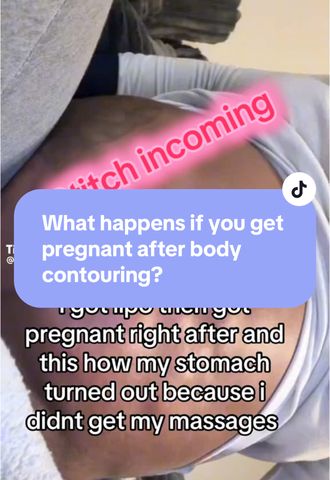
"I Got Lipo Then Got Pregnant": Why the Stomach Turned Out Lumpy (And Why It's Not About Massages)
May 2, 2025
A creator shared that she got liposuction then became pregnant right after, leaving a lumpy stomach she blamed on skipping lymphatic massages. Dr. Killeen explains the real mechanism (fat enlarging around fixed scar tissue with weight gain, not missed massages), why aggressive liposuction close to the skin makes it worse, why leaving a healthy fat layer helps, and the honest options — get back to normal weight first, then fat grafting, targeted lipo, or a tummy tuck (which tends to partially recur). Plus a plea to be kind to the creator.

After a Single Mastectomy, Why the Two Sides Settle Differently
September 4, 2026
Yes, you can have surgery on the non-cancerous breast for symmetry, and it is typically covered by insurance as a symmetry procedure. Dr. Killeen explains the options for that side (nothing, a lift, a lift with a small implant, an implant, or a reduction), why the two sides usually do not look even right away (the mastectomy side has already settled while the symmetry side has never been operated on), why coming out larger is safe according to data she and her partner published, what adding fat grafting really costs you in recovery, and why the two breasts will age differently over the years.
You Had Fat Grafting and Now There's Fat Necrosis. How Long Until It Goes Away?
May 5, 2025
Dr. Killeen explains how long fat necrosis takes to resolve after fat grafting, and why it depends on two things: how much fat was placed and lost (modest grafting can reabsorb in weeks, heavy grafting can take many months), and the size of any walled-off masses (small ones often resolve in six months to a year, larger ones shrink but may not fully disappear). Plus why to tell your surgeon promptly and how aspiration, injections, and minimally invasive removal can speed it up.