Why Leaving Your Area for Surgery Is a Real Problem — Even Inside the U.S.
When you have a serious complication, you don't have the luxury of time to plan a trip, take time off, fly down, and see your surgeon. You need to be seen right away — in person — by someone who can actually intervene. That's the part of medical tourism that doesn't work.
Why Leaving Your Area for Surgery Is a Real Problem — Even Inside the U.S.
A great question came in: "Why is it a problem to leave your geographic area to have surgery?"
I get accused sometimes of bringing this up as a self-serving way to keep patients local. Let me be honest about that up front: I'm doing just fine financially. What I don't want is to keep seeing patients come into my office in horrible shape because they had surgery somewhere else and now have nowhere to go for help.
Let me walk through why medical tourism — both internationally and within the U.S. — is genuinely a higher-risk choice, and how to be smart about it if you decide to do it anyway.
What Normal Post-Surgical Care Actually Looks Like
To understand why medical tourism creates a problem, you need to understand what the standard cycle of care with a local plastic surgeon looks like.
A typical timeline with me:
- Initial consultation
- Pre-operative appointment several weeks before surgery (final risk-benefit discussion, last questions, planning)
- Surgery day
- Day after surgery — patient is seen by one of my staff (usually my nurse practitioner)
- Week 1 follow-up with me
- Month 1 follow-up with me
- Month 3 follow-up
- Month 6 follow-up
- More appointments if needed, often well beyond that
Each of those visits exists for a reason. I'm looking for:
- Wound healing progression
- Early infection signs
- Seromas forming
- Asymmetric swelling or fluid
- Implant position for implant-based reconstruction patients
- Scarring progression
- Aesthetic outcome evolution
Most complications in plastic surgery don't show up right away. They show up weeks to months later, when patients have stopped paying close attention and small problems can become big ones.
That's why follow-up — the kind I've written about extensively as half of your surgical result — matters so much.
How Aftercare Is Built Into the Price
Here's something patients often don't realize: when you pay for surgery, your post-op care is included in the price.
This is built into something called a global fee:
- Your surgery cost covers the procedure
- It also covers a defined period of post-op visits, included at no additional cost
For insurance-covered procedures (like reduction or reconstruction), the global is shorter — typically 90 days.
For cosmetic procedures, most plastic surgeons I know cover 6 to 12 months of post-op visits free of cost. You can come back as many times as needed during that window without paying extra.
That's a meaningful chunk of value — and it's how we stay engaged with your healing and outcome over time.
What Happens When You Leave That Cycle
Medical tourism — whether to another country or another part of the U.S. — breaks this cycle in real ways.
The Time-and-Money Barrier to Follow-Up
If you fly out of the country (or across the country) for surgery, you don't have practical access to multiple in-person follow-ups:
- Patients flying out of the country for surgery are usually doing it for cost reasons
- The same cost-sensitivity makes flying back for several follow-up visits prohibitively expensive
- A "minor" follow-up issue that I'd catch in 5 minutes at a routine visit becomes invisible — until it's big
Complications Don't Wait for Travel Plans
Here's the part that scares me the most:
When you have a serious complication, you don't have the luxury of time to plan a trip.
You can't book a flight, take time off work, and travel to see your original surgeon when:
- You're bleeding post-operatively
- You have a severe infection
- You have signs of pulmonary embolism
- Your wound is breaking down
You need to be seen immediately — in person — by a clinician who can actually intervene. Patients who flew somewhere else for surgery typically end up in the emergency room of their local hospital, where the team has no knowledge of what was done internally and is starting from scratch under stressful conditions.
Problems Get Worse Without Follow-Up
The patients I see in my office after medical tourism almost universally have worse problems than they would have had with local follow-up because:
- Small issues weren't caught early
- They tried to manage things at home
- They didn't want to fly back over a "small" concern
- By the time someone saw them, the small problem had become a big one
This is part of why I emphasize that follow-up is half of your result — when you remove that follow-up infrastructure, you're betting on never needing it. That's a bet a lot of patients lose.
"Can I Just Pay Another Surgeon for Aftercare?"
A reasonable question — and the realistic answer is sometimes, but it's much harder than it sounds.
The problem is structural: most plastic surgeons don't want to take on care of another surgeon's patient, especially a tourism patient. Reasons include:
- We don't know what was actually done in the operating room
- We don't know the patient's specific anatomy mid-surgery
- We don't know what technique was used, what implant, what suture, what scaffolding
- If something goes wrong on our watch, we look like we caused it
- The medico-legal exposure is significant
- And honestly: we already have full schedules with our own patients
So even if you're willing to pay another surgeon for aftercare locally — finding one who's willing to take that on is much harder than you'd think.
You may end up bouncing between emergency rooms, urgent care, and surgeons who decline to take on your care because they didn't do the original operation.
The Difference Between In-U.S. Travel and International Travel
Both carry risk, but they're not equivalent.
Surgery in the U.S., Travel From Out of State
If you fly within the United States to see me, the infrastructure mostly still works:
- I have friends in plastic surgery across the country
- Your insurance still covers care
- If you develop a seroma after going home, I can call a colleague in your city and arrange care
- Our medical community has relationships that translate across state lines
It's still some additional risk vs. having had surgery locally, but the infrastructure is largely intact.
Surgery Out of the Country
International medical tourism is a different animal:
- Different regulatory standards for facilities and surgeons
- No reliable infrastructure for U.S.-based follow-up care
- Insurance won't cover complications back home
- Surgeons in your home country often won't take on your care
- Limited medico-legal recourse if something went wrong with the original surgery
- Cost-driven choice often means the original surgeon also didn't have the resources for great patient education or follow-up
The risk profile is meaningfully higher.
I See This All the Time
I get consult requests every week from patients who:
- Had surgery with a doctor they didn't fully vet
- Are now having complications
- Cannot get the original surgeon to answer the phone
- Cannot find a local surgeon willing to take on their care
- Don't know what to do
It's heartbreaking. And honestly, it's why I keep making content about this. I'm not trying to drive you to me. I'm trying to give you the information to make decisions you won't regret.
If You're Still Going to Travel — Be Smart About It
If after all of this you still want to travel for surgery — domestically or internationally — that's your decision. But please be smart about it:
Questions to Ask Your Surgeon Before Booking
- "If I have complications when I get home, what can I do?"
- "Do you have colleagues in my area who could see me if needed?"
- "What does your post-op care plan look like for patients who travel?"
- "Are you available by phone after I leave?"
- "What happens if I need to come back urgently — what's the cost and logistics?"
A surgeon who has thoughtful answers is much safer than one who waves these questions off.
Questions to Have Answered for Yourself
- How will I get home if I'm in pain?
- What's my plan if I bleed at 2 a.m. three days after surgery?
- Who is my local emergency contact?
- What insurance applies if I need ER care back home?
- What's my backup plan if the original surgeon stops answering?
You deserve answers to all of these before you commit to anything.
The Bottom Line
Medical tourism is genuinely riskier than having surgery locally — and this is true even for in-U.S. travel, though less so than international travel. The biggest reasons:
- Post-op care is half of your surgical result — and travel breaks that infrastructure
- Complications don't wait for plane tickets
- Other surgeons don't want to take on another surgeon's patients
- Cost savings on the surgery itself are often offset by the cost of complications, ER visits, or revision surgery you didn't anticipate
If you're going to do it anyway, do it smart:
- Vet the surgeon rigorously
- Have an emergency plan in writing
- Have local backup identified before you go
- Make sure you have access to your operative notes
- Build in the time and money for follow-up travel, not just the original trip
And if you're in a complication situation right now with a tourism surgeon who isn't responding — please find a local surgeon willing to help you, get proper follow-up restarted, and don't suffer alone trying to wait for the original surgeon to call you back.
Your Journey to Renewed Confidence

Transform Your Life
Every person deserves to feel comfortable and confident in their own body. Our procedures aren't just about physical change. They're about reclaiming your life, your comfort, and your self-assurance.
Dr. Killeen and her team support you every step of the way, from your first consultation through recovery.
Take the first step toward the life you deserve.
Schedule Your ConsultationTransform Your Life
Every person deserves to feel comfortable and confident in their own body. Our procedures aren't just about physical change. They're about reclaiming your life, your comfort, and your self-assurance.
Dr. Killeen and her team support you every step of the way, from your first consultation through recovery.
Take the first step toward the life you deserve.
Schedule Your ConsultationRelated Articles
Why Your Post-Op Follow-Up Visits Are Half of Your Surgical Result
September 12, 2025
Dr. Killeen pushes back on the idea that post-op follow-up appointments don't matter — explaining why the things we catch at follow-up (small seromas, early scarring, perfusion issues) prevent the much larger problems that come from skipping them, and why this matters especially for medical tourism patients.
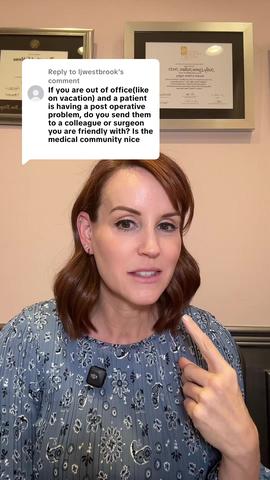
What Happens When Your Surgeon Is on Vacation and You Need Help?
August 5, 2025
Dr. Killeen explains how surgical coverage actually works when your surgeon is out of town — including how partners and solo practitioners arrange coverage, the cross-city network for traveling patients, and what questions to ask up front so you're never left without help if something happens.
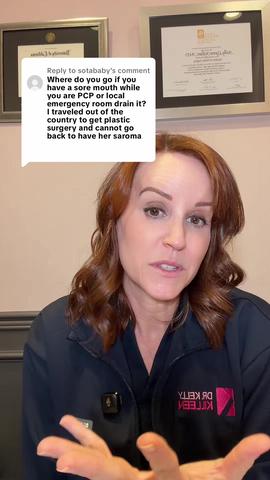
What to Do If You Have Complications After Surgery
December 22, 2025
Dr. Killeen explains the steps to take if you're experiencing surgical complications — from calling your surgeon to finding a new one through your primary care doctor.