Do "Heavy Metals in Breast Implant Capsules" Cause BII? What the Research Actually Shows
Heavy metals were measured at the same levels in capsules of women with BII symptoms, capsules of women without symptoms, and breast tissue of women who never had implants. Same levels. So heavy metals cannot be the explanation for BII — and there's no evidence-based reason to remove the capsule for that concern.
Do "Heavy Metals in Breast Implant Capsules" Cause BII Symptoms? What the Actual Research Shows.
A version of this comment shows up on my page on a near-daily basis:
"Heavy metals build up in breast implant capsules. That's why you have to remove the capsule when explanting. Talk to the doctors who do this all day."
Let's talk about it — calmly — because there's real evidence on this that gets ignored every time the conversation comes up, and that ignorance is leading patients toward unnecessarily aggressive surgery.
The Study Everyone Should Know About
About three years ago, a study was published that directly looked at this question. The researchers compared three groups of women:
- Women with breast implants and BII symptoms
- Women with breast implants and no symptoms
- Women having breast surgery who had never had implants (and weren't getting any)
They measured heavy metal levels in:
- The capsule tissue of the two implant groups
- The breast tissue of the no-implant control group (since those women don't have capsules)
The Result
No difference. None.
- Heavy metal levels in capsule tissue of symptomatic implant patients
- Heavy metal levels in capsule tissue of asymptomatic implant patients
- Heavy metal levels in breast tissue of women who never had implants
…were all statistically indistinguishable.
That is a critical finding. Because it means heavy metals are not concentrating in implant capsules at a rate that differs from baseline tissue in women without implants at all.
What That Actually Means
If heavy metals are present at the same levels in:
- The capsules of women with BII symptoms, and
- The capsules of women without BII symptoms, and
- The breast tissue of women who never had implants
…then heavy metals cannot be the explanation for BII symptoms. They're just present in similar low levels in breast region tissue regardless of implant status.
This is the same epidemiologic logic I walked through in my breakdown of the recent ASJ meta-analysis: if a proposed cause is present at the same rate in symptomatic and asymptomatic populations, it can't be the cause.
What This Means for Capsule Removal Decisions
Here's where this becomes really important — not as an abstract science question, but as a surgical decision affecting actual patients.
Some explant practitioners argue that:
- Heavy metals build up in the capsule
- That accumulation causes BII symptoms
- Therefore, the capsule must always come out when implants are removed
If the first premise is wrong (and the data shows it is), the whole chain collapses. There is no heavy-metal-based argument for routine capsule removal in BII patients.
What the Research Actually Shows About Explant
Here's what we do know from multiple high-quality studies in multiple countries:
- Implant removal helps many women with BII symptoms feel better. That part is real and consistent.
- The way the implant is removed doesn't change the rate of improvement.
- Women who had simple implant removal, partial capsulectomy, complete capsulectomy, or en bloc capsulectomy all improved at similar rates.
- Women in implants don't need en bloc capsulectomy for BII — that's well established at this point.
So if you care about BII patients having the best outcomes, you should care about them having the least invasive operation that delivers the symptomatic relief they're seeking. More surgery is not better — it's just more surgery.
Why This Matters for Patient Safety
Aggressive capsule removal in patients who don't need it has real downsides:
- Higher rates of complications (bleeding, hematoma, infection, prolonged drainage)
- Bigger incisions and longer recovery
- Worse cosmetic outcomes (more contour deformity, more depressed breast appearance)
- More expensive surgery
- No additional symptomatic benefit over a simpler removal
So if a surgeon is recommending en bloc or aggressive capsulectomy in a BII patient based on the "heavy metals" argument, they're recommending a more dangerous surgery for no evidence-based benefit.
That's the part of this I find frustrating. We have research that's been published for years, and there's a tribe of practitioners actively ignoring it because it conflicts with their business model.
"But Talk to the Surgeons Who Do This All the Time!"
This part of the comment always gets to me. The implication is that surgeons who perform aggressive explants every day are the right authorities here, and that I should defer to their expertise.
Here's my response: no, I have no interest in deferring to doctors who don't practice evidence-based care.
If a surgeon is unaware of (or actively ignoring) studies published years ago in their own field, that surgeon's clinical opinion is not authoritative — it's contradicted by the literature.
Doing a procedure many times does not make you an expert on whether the procedure is necessary. It makes you experienced at performing it. Those are very different things.
Instead of harassing surgeons who are practicing evidence-based care, please:
- Go to those "explant experts" and ask why they're still recommending capsule removal when the evidence shows it isn't needed for symptomatic improvement
- Ask them about the heavy metals study specifically
- Ask them why they're ignoring the published data
- Hold them to a higher standard instead of attacking the surgeons who are following the science
That accountability is where the patient safety improvement is going to come from — not from harassing surgeons in the comments section.
"Anecdotes Aren't Evidence"
The other thing in the comment was: "the evidence is the women who have had their implants out." I get this framing, but it's flawed.
- Yes, women who have had implants removed often improve
- No, that does not tell us anything about which type of removal mattered
- Anecdotes from improved patients can't distinguish between "the explant helped me" and "the en bloc capsulectomy helped me" — both groups improve at the same rate
That's exactly why we need controlled studies instead of anecdotes. And those studies have been done. They show:
- Removal helps
- The type of removal doesn't change the rate of improvement
- En bloc and aggressive capsulectomy add risk without adding benefit
Anecdotes aren't evidence. Patients with BII deserve evidence-based care, not whatever procedure their surgeon personally believes in. (More on the broader pattern of poor evidence being used to push aggressive explant surgery.)
What I Want Patients to Take Away
If you have implants and you're considering an explant — for BII symptoms, for peace of mind, or for any other reason:
- The decision to remove your implants is yours. I support that.
- You do not need a capsulectomy specifically for "heavy metals." That premise is not supported by the data.
- You do not need an en bloc capsulectomy for BII symptoms. The evidence is clear that all forms of explant produce similar symptomatic improvement.
- More invasive surgery is not safer. It produces more complications, more pain, more cosmetic deformity — for no additional benefit.
- A complete capsulectomy (implant removed first, then full capsule dissected out cleanly) is often the most thorough operation that's actually warranted for non-cancer indications.
A surgeon who insists you "need" en bloc for BII or for "heavy metals" is responding to marketing pressure or personal belief, not evidence.
The Bottom Line
Heavy metals do not concentrate in breast implant capsules at rates different from baseline breast tissue in women who never had implants. This has been studied and published. It is not new information.
That means there is no evidence-based reason to remove the capsule for "heavy metal" concerns when explanting. And there is no evidence-based reason to recommend en bloc capsulectomy for BII symptoms — multiple studies show that the way the implant is removed doesn't change the rate of symptomatic improvement.
If you care about BII patients, you care about them getting the right operation, not the most invasive one. The right operation does not include unnecessary capsule removal.
Anecdotes are not evidence. Studies are. The studies are clear. Let's start expecting our surgeons to keep up with them.
Your Journey to Renewed Confidence

Transform Your Life
Every person deserves to feel comfortable and confident in their own body. Our procedures aren't just about physical change. They're about reclaiming your life, your comfort, and your self-assurance.
Dr. Killeen and her team support you every step of the way, from your first consultation through recovery.
Take the first step toward the life you deserve.
Schedule Your ConsultationTransform Your Life
Every person deserves to feel comfortable and confident in their own body. Our procedures aren't just about physical change. They're about reclaiming your life, your comfort, and your self-assurance.
Dr. Killeen and her team support you every step of the way, from your first consultation through recovery.
Take the first step toward the life you deserve.
Schedule Your ConsultationRelated Articles

Do All Explants Need Total Capsule Removal Because of "Toxins"? No — Here's the Evidence
August 14, 2025
Dr. Killeen answers the common question of whether the toxins causing BII stay in the implant capsule and therefore require total capsule removal. The answer: no identified BII toxin, no measurable difference in heavy metals between capsules and unrelated tissue, and no outcome benefit from capsule removal in BII patients.
A Bad ASJ Paper on Breast Implant Illness Is Being Misused — Here's the Real Story
August 20, 2025
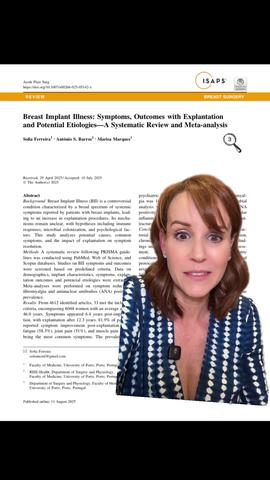
Dr. Killeen breaks down a recent meta-analysis in the Aesthetic Surgery Journal claiming biofilm, autoimmunity, and silicone exposure cause breast implant illness — and walks through why each of those claims falls apart when you actually examine the underlying data the paper analyzed.
Implant Removal and Capsulectomy: Insurance, Procedure Types, and Why "En Bloc" Is Only for Capsule Cancer
May 7, 2026
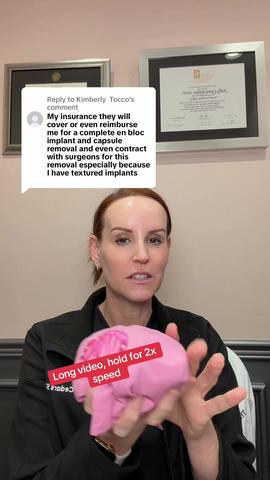
Dr. Killeen breaks down the five types of implant removal and capsulectomy, why insurance often says "yes" while plastic surgeons say "cosmetic code only," and why an en bloc capsulectomy is only for a documented capsule cancer like BIA-ALCL.