Mesh vs. Dermal Matrix in Breast Reconstruction: Do You Settle the Same Way?
Dermal matrix has a lot of stretch, so everything settles and comes down with time, roughly 20%. Mesh is a totally different story: things stay where you put them. That makes precise placement on the table more important than ever, because it is not going to drop into place over time the way dermal matrix did.
Mesh vs. Dermal Matrix in Breast Reconstruction: Do You Settle the Same Way?
A patient who had breast reconstruction with mesh asked a really good question, and I thought it was the perfect jumping-off point: do you settle the same way with mesh as you do without it? What should you expect? I can't give specific medical advice for any one person, but let's talk in general about mesh, how it differs from what we used before, and the timeline you can expect.
First, What These Materials Do
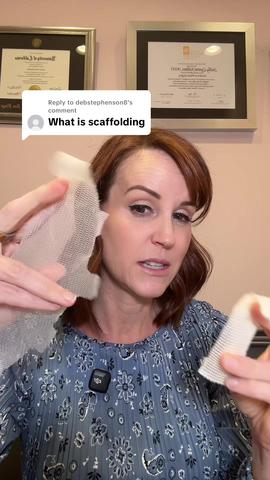
In breast reconstruction, we often use a piece of scaffolding to support the implant and the reconstruction. If you want the full primer on what these materials are, I've covered that in detail here. For this discussion, the key is the difference between the two main options:
- Dermal matrix (ADM) — the traditional scaffolding
- Mesh — what many of us, including me, have transitioned to
The reason this matters so much is that these two materials behave completely differently over time, and that changes what you should expect after surgery.
Dermal Matrix Stretches. Mesh Mostly Doesn't.
Here's the core difference:
Dermal matrix has a lot of stretch to it. When you did a reconstruction with dermal matrix, everything would settle and stretch with time — we used to counsel patients on roughly 20% stretch. Because of that, surgeons would intentionally place things a little high, knowing it would all come down as the matrix relaxed.
Mesh is a totally different story. With mesh, we really don't see settling the same way. You always settle somewhat after any breast surgery, but with mesh, things tend to stay where you put them — there isn't a lot of movement afterward.
This is genuinely a big change for surgeons like me who started on ADM and moved to mesh. Where we used to place things high and expect gravity and stretch to do some of the work, now it's more important to put everything exactly where we want it on the table, because it's not going to drop into place over time the way dermal matrix did. Precision up front matters more than ever.
Not All Mesh Is the Same: It Comes Down to How It Dissolves
Here's a nuance a lot of people don't realize: how long the process takes depends heavily on the type of mesh. And the meshes are not all equal:
- Fast-dissolving meshes — gone in a couple of weeks to a couple of months. These don't leave behind firmer collagen, so they add less long-term support, and you'll see more settling with time. Honestly, I don't like these as much for that reason.
- Slow-dissolving meshes — can take a year to two years to dissolve, and as they go, they leave behind firmer collagen. That collagen is what holds the implant up and prevents as much settling over time.
So the mesh isn't just a temporary sling — with the better meshes, the collagen it leaves behind becomes part of your long-term support. That's why two patients with "mesh" can have different experiences depending on which mesh was used.
Questions to Ask Your Surgeon
Because the material drives the outcome, this is worth a direct conversation with your own surgeon. Ask them:
- What type of mesh do you use?
- How long does it take to dissolve?
- Does it completely dissolve, and if so, should I expect some settling over time?
A good surgeon should be able to give you clear direction on all three based on the specific product they used in your reconstruction.
The Tightness Timeline Is the Same No Matter What
One more reassuring point, because this worries a lot of people early on. The tightness you feel right after surgery is the same regardless of which mesh you have — and it even happens without mesh at all. It's a normal part of healing, not a sign something is wrong. Here's the typical arc:
- Right after surgery: things feel tight
- They tighten more for the first few weeks, usually peaking around 4 to 6 weeks
- Around 8 weeks: you'll start to feel things soften as the collagen remodels
- 6 months to a year: the timeframe where things finish softening and settle into their final result
So if you're a few weeks out and feeling tighter rather than looser, that's exactly on schedule. This is the same softening process every implant goes through, and it's part of why reconstruction implants can feel firmer than you might expect in the early going.
The Bottom Line
Dermal matrix stretches and settles (we counted on about 20%, placing things high to let them come down). Mesh largely doesn't settle — things stay where the surgeon puts them, which makes precise placement on the table more important than ever. How much settling you do see depends on the type of mesh: fast-dissolving meshes leave less support and allow more settling, while slow-dissolving meshes leave behind firmer collagen that holds everything up.
Whatever material you have, the early tightness is normal, peaks at 4 to 6 weeks, softens from 8 weeks on, and reaches its final result by 6 months to a year. And the single best move is to ask your surgeon exactly which mesh they used and what to expect from it. This is all part of the broader picture of what to expect from implant-based reconstruction.
Your Journey to Renewed Confidence

Transform Your Life
Every person deserves to feel comfortable and confident in their own body. Our procedures aren't just about physical change. They're about reclaiming your life, your comfort, and your self-assurance.
Dr. Killeen and her team support you every step of the way, from your first consultation through recovery.
Take the first step toward the life you deserve.
Schedule Your ConsultationTransform Your Life
Every person deserves to feel comfortable and confident in their own body. Our procedures aren't just about physical change. They're about reclaiming your life, your comfort, and your self-assurance.
Dr. Killeen and her team support you every step of the way, from your first consultation through recovery.
Take the first step toward the life you deserve.
Schedule Your ConsultationRelated Articles

What Is an Internal Bra? (And Why I Use Surgical Scaffolding)
May 8, 2025
Dr. Killeen explains what an internal bra is — added internal support built into a breast lift, reduction, or augmentation to hold things up like a bra. She covers the many ways to make one (stitches, fascia, skin, tucking under the muscle) and her favorite, surgical scaffolding with dissolving products like TIGR Matrix and GalaFLEX that leave supportive collagen behind. She also explains why these products are used off-label in the breast and why that deserves a conversation.
What Is "Scaffolding" in Breast Surgery? Dermal Matrix, Mesh, and What They Actually Do
August 21, 2025
Dr. Killeen explains what surgeons mean by "scaffolding" in breast surgery — including dermal matrix products like AlloDerm and Strattice, dissolvable meshes like TIGR and Galaflex, and why this is fundamentally different from the vaginal mesh products you've seen in scary commercials.

How Long Does It Take Implants (and Any Surgery) to Soften?
October 6, 2025
Dr. Killeen explains the two phases of healing after breast surgery — the firm initial healing phase (2–6 weeks) and the remodeling phase (months) — and why most primary augmentation patients reach their final softness around 6 months post-op.