Plastic Surgery "Chop Shops": Why They're Dangerous and How to Protect Yourself
There were surgeons recruited that had multiple patient deaths attributed to them, were in trouble with medical boards in more than one state — and still got jobs at Goals Plastic Surgery, where they ended up hurting people. Education and training matter.
"Chop Shops" in Plastic Surgery — Why They're Such a Problem
There was an article published this week about some of the plastic surgery "chop shops" operating in the United States, and the patterns of behavior we've all been watching with growing concern. Two specific chains were called out by name: Goals Plastic Surgery and Sono Bello.
The article documents that these companies have, in multiple instances, hired surgeons who were already in significant trouble in other states — with active medical board investigations and multiple malpractice lawsuits. Some of those recruited surgeons had multiple patient deaths attributed to them, had been disciplined by medical boards in more than one state, and still got jobs at these chains, where they went on to hurt more patients.
This is not new. It is also not normal. And I want to talk about why these high-volume cosmetic chains are so problematic, and what to look for if you're considering plastic surgery.
Why Chop Shops Are Different
These chains operate on a high-volume, low-overhead, mass-marketing business model. The financial incentives are pointed in the wrong direction, and you can see it in how patients are managed from the first phone call to the final follow-up.
Here are the specific things that make them dangerous.
1. They Are Often Not Staffed by Plastic Surgeons
This is the single biggest issue.
- Some of these chains have a handful of board-certified plastic surgeons they feature prominently on their website
- They employ many other physicians who are not board-certified in plastic surgery
- Some of those physicians come from completely unrelated specialties
The article notes that Sono Bello operates a 3-month "fellowship" — and after completing this short program, the company refers to its graduates as "board-certified plastic surgeons."
For context, an actual plastic surgery residency is a 6-year integrated training program (or 3+ years of additional training after a full general surgery residency, which itself is 5 years). Calling someone a "board-certified plastic surgeon" after a 3-month internal fellowship is wildly misleading — and it's currently getting these companies in legal trouble. "Plastic surgeon" is not a perfectly protected term in every jurisdiction, which is what allowed this to slip through for as long as it did.
2. They Don't Offer the Full Range of Plastic Surgery
A real plastic surgery practice can offer the full toolbox — and choose the right tool for your specific anatomy. A chop shop only offers what it sells.
That means if you walk in with concerns about your abdomen and you really need a tummy tuck, but the chain you walked into only sells liposuction…
…you get sold liposuction, regardless of whether it's the right procedure for you.
This produces predictable bad outcomes. Lipo on a patient who really needs a tummy tuck doesn't fix loose skin or muscle separation. It just thins out the tissue, leaves the laxity behind, and the patient is back at square one — but now with money spent and tissue altered.
3. The Surgical Decision Is Often Made by a Non-Medical Salesperson
This is one of the most concerning patterns to me. At many chop shops:
- The patient meets a non-medical "consultant" — essentially a salesperson
- The procedure is chosen and recommended by that consultant, often based on a price tier the patient can afford
- The patient may not meet the actual surgeon until the day of surgery
I have a personal patient who had liposuction done at one of these chop shops right next to my office. She didn't meet the surgeon until the day of her surgery. That is genuinely insane. The person performing surgery on you should be someone you've sat across from, examined you, walked through your options with you, and earned your informed consent — not a stranger in a surgical cap on the morning of your procedure.
4. Inadequate Post-Op Care
This is the part that brings these patients to the emergency room — and to my office — over and over.
What I see in chop-shop patients:
- No scheduled follow-up appointments
- No clear point of contact if something goes wrong after hours
- No way to reach their actual surgeon when they have problems
- Recruitment emails from these chains explicitly advertising "no call, no weekends" to attract physicians
I will say this clearly: surgical patients have problems 24/7. Hematomas, infections, suture issues, breathing problems, signs of pulmonary embolism, wound dehiscence — these don't politely wait for business hours.
If your surgeon is only available during the daylight hours, that is a fundamental safety problem. Period.
5. They Hire Surgeons Who Can't Get Hired Elsewhere
This is the most damning piece of the article. Several of the surgeons profiled:
- Had been disciplined by medical boards in multiple states
- Had multiple patient deaths attributed to their care
- Had multiple active malpractice suits
- Could not get hired by reputable practices or hospitals
…and still got jobs at these chains, where they went on to hurt more patients. The chains' hiring standards are, charitably, broken.
My Frustration
I will admit, this topic genuinely irritates me. A few things about it:
- I really wish no plastic surgeons would work for these places. Every legitimate, board-certified surgeon employed at a chop shop lends institutional credibility to a fundamentally illegitimate operation.
- I wish our specialty societies would take a stronger stand. When the American Society of Plastic Surgeons and other organizations are silent on this, the chains use that silence as cover.
- I went through 6+ years of formal training because I care about my patients. It's terrifying to me that not every surgeon prioritizes that — and that there's an entire business model built around the assumption that they don't have to.
How to Protect Yourself
If you're considering plastic surgery, here is the bare minimum I'd want you to do:
1. Verify Board Certification — the Right One
- Make sure your surgeon is board-certified by the American Board of Plastic Surgery (ABPS) — not one of the made-up "boards" that some chop-shop physicians cite
- The ABPS is one of the 24 boards officially recognized by the American Board of Medical Specialties
2. Verify Hospital Privileges
- Your surgeon should have hospital privileges for the procedures they're performing on you
- This is one of the strongest objective signals of legitimacy — hospitals do their own credentialing and would not extend privileges to someone unqualified or with serious malpractice/disciplinary history
3. Meet Your Surgeon Before the Day of Surgery
- The actual surgeon should examine you in consultation
- They should make the surgical recommendation — not a salesperson
- You should have time to ask questions, push back, and think about it before signing anything
4. Ask About After-Hours Coverage
- "Who do I call if something goes wrong at 2 AM?"
- "Will I see you at every follow-up?"
- "What is the plan if I have a complication?"
If the answers are vague or punted to a hotline, that's a flag.
5. Verify Malpractice and Disciplinary History
- Most state medical boards have public, online lookup tools
- Check your surgeon's name before booking a procedure
- A clean record isn't a guarantee of a great outcome — but a record full of red flags is a guarantee you should walk away
The Bottom Line
There are many wonderful, board-certified plastic surgeons in the United States who will give you genuinely excellent care. You do not need to go to one of these chop shops. The savings are not worth what you give up — proper training, full procedural options, real consultations, real follow-up, and a surgeon who is reachable when something goes wrong.
If you take nothing else from this: education and training matter. A 3-month internal fellowship is not a plastic surgery residency. A salesperson is not a surgeon. And "no call, no weekends" is not a model of care — it's an indication that nobody is going to be there when you need them.
Be safe out there.
Your Journey to Renewed Confidence
Transform Your Life
Every person deserves to feel comfortable and confident in their own body. Our procedures aren't just about physical change. They're about reclaiming your life, your comfort, and your self-assurance.
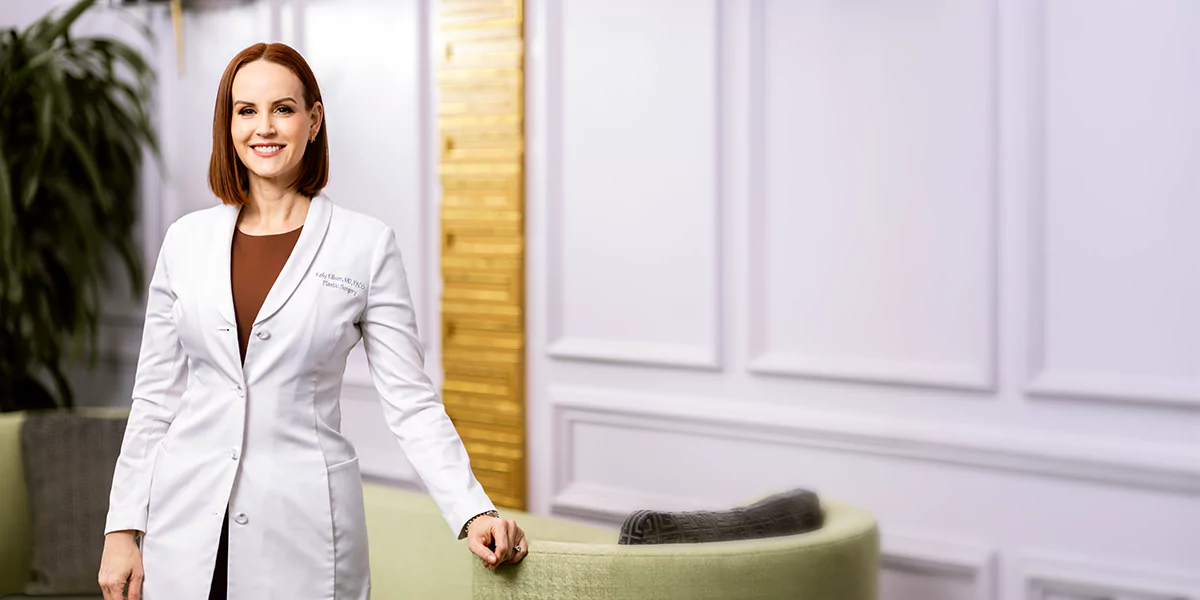
Dr. Killeen and her team support you every step of the way, from your first consultation through recovery.
Take the first step toward the life you deserve.
Schedule Your ConsultationTransform Your Life
Every person deserves to feel comfortable and confident in their own body. Our procedures aren't just about physical change. They're about reclaiming your life, your comfort, and your self-assurance.
Dr. Killeen and her team support you every step of the way, from your first consultation through recovery.
Take the first step toward the life you deserve.
Schedule Your ConsultationRelated Articles
Hospital Privileges: Why They Matter When Choosing a Surgeon
March 16, 2026
Dr. Killeen explains what hospital privileges are, how they work, and why it's critical that your surgeon can follow you to the hospital if complications arise.
"I Learned Liposuction on YouTube": Why This Should Terrify You
May 6, 2025
Dr. Killeen responds to a provider who admitted online that she learned liposuction from YouTube, mentors, CME courses, and textbooks — with only a one-year transitional residency, no surgical training, no hospital privileges, and no malpractice insurance. Why "different paths to the same proficiency" is false, why liposuction is core to plastic surgery training, and how to make sure you are seeing a genuinely qualified expert.
A Patient Died After Surgery in a Queens House: How to Actually Vet a Surgeon
April 7, 2025
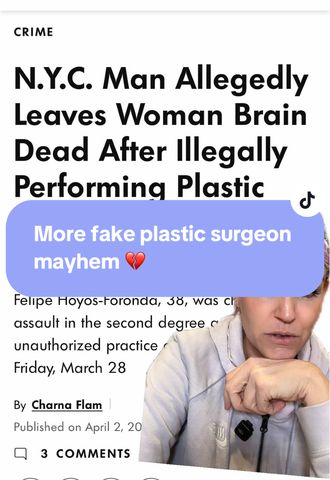
An unlicensed man performed surgery on a woman inside his Queens house, called 911 when she became unresponsive, then fled and was apprehended at JFK trying to leave the country. She could not be saved. Dr. Killeen uses the case to walk through the checks that would have prevented it: verifying state licensure and American Board of Plastic Surgery certification, confirming hospital privileges so a surgeon can follow you on transfer, checking facility accreditation, and asking where your surgery will actually be performed.