Prevena Vac Troubleshooting: What the Error Codes Mean and How to Fix Them
If your Prevena alarms in the middle of the night, do not panic. Turn it off, go back to sleep, and we will sort it out in the morning. Nothing bad happens if the machine is off overnight. The two errors are simple: an X blockage means a kinked tube, and the leak error means air is getting in, so check your connections and tape seal.
Prevena Vac Troubleshooting: What the Error Codes Mean and How to Fix Them
One of the most common calls we get at night is a patient panicking about their Prevena Vac. The machine starts beeping, it's loud, it's the middle of the night, and it's alarming, literally. So let's walk through exactly what this device does, what each error means, and how to fix it, so you're not scared the next time it makes noise.
First, What the Prevena Vac Actually Does
The Prevena Vac is a special dressing we put on your incision at the end of surgery. It applies gentle negative pressure (suction) across your closed incision, and that negative pressure pulls extra blood flow to the area, which helps you heal better. It's a really nice tool for protecting an incision while it heals.
If you're holding the unit right now and wondering what you actually have, most of my patients go home with the 3M Prevena Plus 125 Therapy Unit (the brand moved to Solventum, so you may see either name on the box). The "125" is not a model year or a size, it's the pressure: the unit delivers a continuous -125 mmHg of suction. Worth knowing, because that number is printed right on the device, and it's the one you'll end up typing into your phone at 2am. For the full background on what these devices do and who needs one, I wrote a complete guide to the Prevena wound vac.
It runs on a small battery-powered unit, and like any little machine, it has a few alarms it can throw. Here's the key mindset to start with:
If it alarms in the middle of the night, do not panic. You can simply turn it off, go back to sleep, and we'll sort it out in the morning. Nothing bad will happen if the machine is off overnight.
I tell every patient: treat it like your cell phone. If it's being a problem at 2am, turn it off, and we'll work with it in the morning. No emergency.
The Countdown Dots: It "Self-Destructs" After 7 Days
Before we get to errors, one thing confuses a lot of patients. Around the unit you'll see little dots, and one disappears each day. That's a countdown.
The Prevena unit is designed to run for a set number of days and then stop working on purpose. Most patients have the 7-day unit (some run 7 to 8 days), but the Prevena Plus 125 also comes in a 14-day version, so it is worth confirming which one you were sent home with. Either way, when you see the dots counting down and the unit eventually quits:
- It does not mean the battery died
- It does not mean something is broken
- It just means the device reached the end of its built-in lifespan
That's completely normal and expected. The countdown is just telling you how many days it has left.
The Two Error Codes You'll Actually See
At the top of the unit there are two error symbols. Learning these two is most of the battle:
1. The Blockage Error (the "X")
A blockage error means the tubing is kinked somewhere, so the suction can't get through. To fix it, follow the tube from your body all the way to where it enters the machine and check for kinks:
- Make sure it's seated properly on the machine
- Make sure it's not kinked inside your garment
- Make sure you're not lying on it and pinching it
- Sometimes the tubing just winds around itself and kinks
Straighten out the kink and the blockage error usually clears.
2. The Leak Error (the arrow)
The leak error means air is getting into the system when it shouldn't. This one is a little more involved, but here's the order I'd check things:
- Check all the connections. Sometimes a connection falls apart without you realizing it. Follow the tubing to where it enters the machine, find the little plastic connector, push on it, and make sure it's seated properly and fully attached.
- Check the sponge on your body. The purple sponge over your incision needs to be intact and nothing should have come apart.
- Check the tape seal. If the connections are fine and you still have a leak alarm, the concern is a hole in the tape, or the tape peeling up. Look closely at the sponge and push on it all the way around to find any spot where air can sneak in. It may have snagged on your clothing or garment. Make sure the tape is flat and sealed all the way around, flush to your skin.
- Patch any leak you find. If you locate a hole or a lifting edge, patch it with tape or a Tegaderm. Your team should have sent you home with some patching tape exactly for this. You can patch around the edges (the periphery) the same way.
Once you have a leak, it can be genuinely challenging to hunt down and patch, which is the whole reason the best strategy is to be gentle with the device in the first place (more on that below).
Which Prevena Do I Have? The Plus 125 vs. the Smaller Unit
There's also a smaller version of the Prevena that's battery powered and doesn't have to be plugged in. The catch: this little one doesn't guide you when there's a problem. It just starts yelling with an alarm light, and you have to do the troubleshooting yourself, check for a blockage (kinked tube) first, then check for leaks, until you find the culprit. There's also a battery indicator on it letting you know when the charge is getting low.
How to tell which one you have: if your unit shows you a specific symbol for the problem, the "X" for a blockage or the arrow for a leak, you have the guided unit and the two sections above apply exactly as written. If it just beeps with a single alarm light and tells you nothing else, you have the simpler one, and you work the same two causes yourself in the same order: check for a kink first, then hunt for a leak. The fixes are identical. The only difference is whether the machine tells you where to look.
Keep It Charged
The last little symbol is just the charge indicator. You want to keep the unit charged so it doesn't alarm simply because it's dying. It can be unplugged for a couple of hours at a time, but check it periodically and make sure it's getting enough charge. An alarm because the battery is low is the most avoidable one of all.
The Best Fix Is Not Having a Problem in the First Place
Here's the philosophy I want you to walk away with. The longer I've used this device, the better I've gotten at applying it in a way that minimizes the chance of trouble. And as the patient, your job is simple: be careful with it.
The biggest avoidable cause of trouble is pulling on the cord. If you tug on it and disrupt the seal, you increase the chance of a leak, and as I said, leaks are a pain to find and patch. So be gentle, mind the tubing, and don't yank it. Protecting your incision while it heals is part of why your post-op care and follow-up matter so much.
When to Troubleshoot, and When to Call
- Troubleshoot it yourself? Always fine to try. Check for a kink (blockage) and check the seal/connections (leak).
- Call the company. Every unit comes with a manual and a 1-800 number that is staffed 24 hours a day. You can call them anytime for help with the device.
- Middle of the night? Don't panic, turn it off, and we'll handle it in the morning. If something feels truly wrong with your incision itself (not just the machine), that's when to loop in your surgical team, the device alarms alone are not an emergency.
The Bottom Line
The Prevena Vac uses negative pressure to boost blood flow and help your incision heal. The dots count down to the end of the unit's run, 7 days for most units and 14 for the extended version (it stops on purpose, the battery isn't dead). The two errors are simple once you know them: the "X" blockage means a kinked tube, and the arrow leak means air is getting in, so check connections, the sponge, and the tape seal, and patch holes with tape or a Tegaderm. Keep it charged, be gentle with the cord, call the 24/7 number if you're stuck, and if it alarms overnight, just turn it off and call us in the morning. It's a helpful little device, and a little noise is nothing to be scared of.
This is the same family of tools as the Y-connector setup we use to run one Prevena across multiple incisions and the newer suction devices that help get drains out faster, all aimed at helping you heal as smoothly as possible.
Your Journey to Renewed Confidence

Transform Your Life
Every person deserves to feel comfortable and confident in their own body. Our procedures aren't just about physical change. They're about reclaiming your life, your comfort, and your self-assurance.
Dr. Killeen and her team support you every step of the way, from your first consultation through recovery.
Take the first step toward the life you deserve.
Schedule Your ConsultationTransform Your Life
Every person deserves to feel comfortable and confident in their own body. Our procedures aren't just about physical change. They're about reclaiming your life, your comfort, and your self-assurance.
Dr. Killeen and her team support you every step of the way, from your first consultation through recovery.
Take the first step toward the life you deserve.
Schedule Your ConsultationRelated Articles
What Is a Prevena Wound Vac? A Complete Guide to How It Works and Who Needs One
April 10, 2025
Dr. Killeen explains the Prevena wound vac — a negative-pressure dressing that, unlike traditional wound vacs, is safe to use on intact skin over closed surgical incisions. She covers how it works (dilating blood vessels to boost blood flow and reduce swelling), how long it stays on (seven to nine days), who benefits most (breast lifts, reductions, reconstructions, tummy tucks, and patients with diabetes, hypertension, immunosuppression, or prior radiation), the scar and keloid benefit, how to get one, and what it costs.
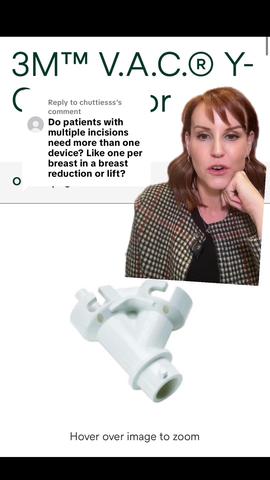
Can You Use One Prevena Vac for Multiple Incisions? Yes — With a Y Connector
September 16, 2025
Dr. Killeen explains how a single Prevena (incisional wound vac) machine can cover multiple incisions using a Y connector — and when you actually do need two separate machines, like for combined breast and tummy tuck cases.

You Got a Keloid From One Surgery. Does That Mean Every Surgery Will Keloid?
May 9, 2025
Dr. Killeen reassures patients that a keloid from a prior surgery usually does not mean every future surgery will scar badly. She explains why certain areas (C-sections, shoulders, central chest, back, knees) scar thick more often while breast surgery scars behave better, what surgeons do in the OR to prevent it, why she follows up more aggressively with bad scarrers, and how a Prevena vac plus early silicone and lasers help.