What Happens When Your Surgeon Is on Vacation and You Need Help?
A good surgeon never leaves town without arranged coverage. If your surgeon is on vacation and you need help, the worst answer is "I can't reach anyone." Ask about this at consultation — and yes, the medical community is mostly lovely. We help each other.
What Happens When Your Surgeon Is on Vacation and You Need Help?
A really good question came in: "What happens if your surgeon is out of town and you need help?" With a sweet follow-up: "Is the medical community nice?"
The short answers: a good surgeon never leaves town without arranged coverage, and the medical community — at least my corner of it — is largely lovely. Let me walk through how this actually works.
The Baseline Standard: Arranged Coverage
If you're reading this and you're a current or future surgical patient, this is the single most important rule to know:
A surgeon who goes on vacation should never leave their patients without coverage. Always.
This means before your surgeon leaves town:
- Another qualified surgeon has agreed to take their calls
- That surgeon knows which patients are in active post-op care
- The covering surgeon can see your records, take you to the OR if needed, and manage emergencies
- There's a clear phone number for you to call if something is wrong
This isn't optional. A surgeon who simply disappears for a week with no coverage is being negligent, and patients should not accept that as normal.
How This Works in My Practice
For me personally, this part is easy because I have multiple partners. When I'm out of town:
- One of my partners is on call for my patients
- All of my partners have access to my operative notes, imaging, and patient records
- They can take a patient back to the OR if needed
- The patient gets the same standard of care I would give them
I do the same for my partners. Today, in fact, I helped one of my partners' patients while she was out of town. Mutual coverage is the bedrock of how we run our practice.
How This Works in Solo Practice
If your surgeon is in a solo private practice, the mechanics are slightly different but the principle is the same. They'll:
- Call a colleague in town and ask: "I'm out next week — are you around if my patients need anything?"
- Brief them on any active post-op patients who might call
- Give patients the colleague's number in case they need help
- The colleague helps with what they can — and contacts the original surgeon if needed
This is essentially professional courtesy in action, and the vast majority of plastic surgeons participate willingly. We all need someone covering for us at some point.
My Out-of-State Patient Network
This is where it gets really fun. I have a peer group of plastic surgeons all over the country — friends from training, conferences, and shared professional networks.
When I see patients who travel from out of state for surgery (which I have real opinions about), I want to be sure they're covered when they're home. If one of my patients lives in Texas, Florida, New York, or anywhere else and needs help while they're home post-op:
- I can call a friend in their city
- I can ask that friend to see my patient if something comes up
- I can discuss the case directly with them by phone or text
And in the reverse direction — I get calls regularly from friends around the country whose patients are temporarily in my area and need help:
- A drain that needs to come out
- An incision that's not looking right
- A small fluid collection
- A quick check that everything's on track
I'm always happy to help my colleagues' patients. This is what a functional surgical community looks like.
Is This Always How It Goes? Honestly, No.
I want to be fair, because I get DMs every week from patients who haven't had this experience.
Realistic scenarios where coverage breaks down:
- A surgeon goes on vacation with no clear coverage plan
- A surgeon's "coverage" is actually their voicemail
- A patient can't reach anyone when they have a real concern
- A "covering" surgeon refuses to help a patient that isn't theirs
- A medical tourism patient back home can't find anyone willing to evaluate them
- A surgeon's partner turns out to not actually cover urgent issues
These situations exist, and they're part of why I pushed back so hard on the idea that follow-up doesn't matter. A surgeon you can't reach when something goes wrong is a meaningful gap in your care.
This is also part of why I've been vocal about the med spa / chop shop business model that explicitly advertises "no call, no weekends" to attract physicians. Surgical patients have problems 24/7. A practice structured around not handling them is a practice that's offloading risk onto patients.
What to Ask Before Your Surgery
When you're consulting with a plastic surgeon, here's what I'd recommend asking up front:
- "What happens if I have a problem during your vacation?"
- "Do you have partners, or do you arrange external coverage?"
- "Will I have the name and phone number of whoever's covering before you leave?"
- "If I'm an out-of-town patient, do you have connections in my area in case I need help?"
- "What is your typical response time when a patient calls with a concern?"
A surgeon with good answers to these questions will sound confident and specific. A surgeon who hand-waves or gives vague reassurance is worth a second thought.
When You're the One Out of Town
A quick word for medical tourism patients specifically: if you traveled for your surgery, your post-op coverage at home is one of the most important things to lock down before you ever go to the OR.
- Ask your surgeon if they have colleagues in your home city
- Get those colleagues' names and contact info in advance
- Understand what your surgeon will do (telehealth? phone consults? referral?) if something happens at home
- Have a plan for what counts as "call your surgeon" vs. "go to the ER"
Without this layer in place, medical tourism is genuinely riskier than people realize.
Is the Medical Community Nice?
The honest answer: mostly, yes, in my experience.
My circle of plastic surgery friends are genuinely lovely people. We:
- Help each other out without keeping score
- Help each other's patients out without expecting reciprocation
- Refer patients to each other when we're not the right fit
- Cover for each other freely
Are there difficult people in medicine? Sure. Every field has them. But the community-of-help that I've experienced has been very real, and it's a reason I love practicing in this specialty.
The Bottom Line
When your surgeon goes on vacation, a competent surgeon has already arranged coverage for you with another qualified physician — whether that's a partner in the same practice or a colleague in town. That's the baseline.
If you can't reach anyone when your surgeon is out, that's a problem worth flagging when they return — and worth considering when choosing a surgeon in the first place.
Ask the question at consultation. The answer tells you a lot about how the practice is run.
And yes — most of the time, the medical community is nice. We help each other and we help each other's patients. It's one of the better aspects of the profession.
Your Journey to Renewed Confidence

Transform Your Life
Every person deserves to feel comfortable and confident in their own body. Our procedures aren't just about physical change. They're about reclaiming your life, your comfort, and your self-assurance.
Dr. Killeen and her team support you every step of the way, from your first consultation through recovery.
Take the first step toward the life you deserve.
Schedule Your ConsultationTransform Your Life
Every person deserves to feel comfortable and confident in their own body. Our procedures aren't just about physical change. They're about reclaiming your life, your comfort, and your self-assurance.
Dr. Killeen and her team support you every step of the way, from your first consultation through recovery.
Take the first step toward the life you deserve.
Schedule Your ConsultationRelated Articles
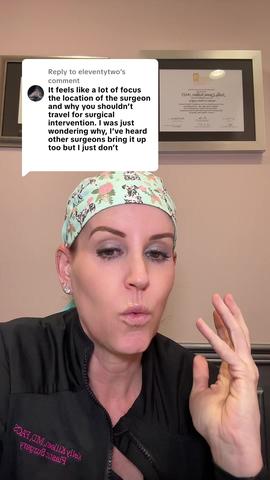
Why Leaving Your Area for Surgery Is a Real Problem — Even Inside the U.S.
July 29, 2025
Dr. Killeen walks through the structural reasons medical tourism — both international and within the U.S. — is genuinely a higher-risk choice. Including the role of post-op care in a successful outcome, why complications don't wait for flights, and why local surgeons typically won't take on another surgeon's tourism patient.
Why Your Post-Op Follow-Up Visits Are Half of Your Surgical Result
September 12, 2025
Dr. Killeen pushes back on the idea that post-op follow-up appointments don't matter — explaining why the things we catch at follow-up (small seromas, early scarring, perfusion issues) prevent the much larger problems that come from skipping them, and why this matters especially for medical tourism patients.
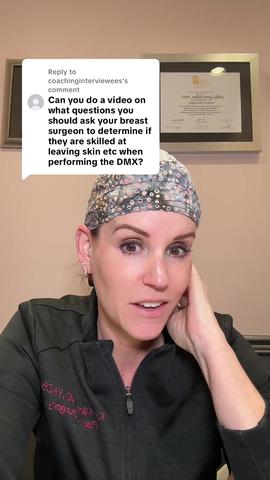
How to Evaluate the Breast Surgeon Doing Your Mastectomy — Questions to Ask
August 4, 2025
Dr. Killeen explains the questions to ask your breast (general) surgeon — not just your plastic surgeon — before a mastectomy. Including flap necrosis rate, follow-up practice, nipple-sparing experience, and how to cross-check their answers with your plastic surgeon for the most honest picture of their skill.