Where Are the Drains Placed for a Tummy Tuck?
I don't place drains in the mons because when the patient looks down, it looks like an unhappy face — the two drain holes plus the curved incision above them. Once you see it, you can't unsee it.
Where Are the Drains Placed for a Tummy Tuck?
If you have a tummy tuck coming up and you're going to have drains as part of your recovery, this is one of the questions that almost never gets answered clearly: where on my body will the drain actually exit?
There are three common locations, each with their own pros, cons, and aesthetic trade-offs. Here's the rundown — and where I personally place them in my own patients.
A Quick Refresher on Where the Tummy Tuck Incision Lives
Before talking about drains, you need a mental picture of the tummy tuck scar:
- It runs straight (or gently curved) across your lower abdomen
- It typically sits just above the pubic area, hidden in the bikini line
- The length depends on how much skin needs to be removed (more on that here)
Drains are little soft tubes placed inside the surgical pocket to collect fluid (blood, lymphatic fluid) while you heal, with one end exiting through your skin connected to a small bulb.
The question is: where does that exit point go?
Option 1: Through the Incision Itself
This is one of the most common drain placements. The drain comes out directly through the tummy tuck incision — usually a couple of centimeters in from the end of the incision (not at the very tip).
Why Not at the Very Ends?
Placing the drain exactly at the corner of the incision tends to leave a slightly funny-looking scar at the tip. Bringing it a few centimeters in from the end produces a cleaner result.
Pros
- No additional scars elsewhere on the abdomen — the drain hole heals into the existing tummy tuck scar
- When the drain is pulled out, the little circular hole shrinks up nicely and is essentially invisible — most patients can't even tell where the drain was
Cons
- It can interfere with Prevena and other incisional negative pressure wound vac systems that sit directly on the closed incision
For surgeons not using a Prevena vac, this is a perfectly clean placement.
Option 2: In the Mons (Below the Incision)
Another common location: drains are brought out below the tummy tuck scar, in the mons area (just above the pubic bone, below the incision line).
My Honest Opinion
I genuinely don't love this placement. When the patient stands up and looks down at their abdomen, the two drain holes in the mons — one on each side — combined with the curved incision above them, create what I can only describe as an unhappy face looking up at them. It's a small thing. But once you see it, you can't unsee it.
So aesthetically, it's not how I'd choose to place a drain.
Pros
- Doesn't interfere with the incision or wound vacs
- Tucked low and hidden under most clothing
Cons
- Adds two extra small scars in a sensitive cosmetic area
- The "unhappy face" optic
- Drain holes that take a while to fully fade
Option 3: Below the Incision, Set Back — My Preferred
This is how I place drains in my own tummy tuck patients (when I use them at all).
The drains exit through the skin farther back from the incision and slightly downward — not directly through the incision, and not in the mons.
Pros
- Doesn't interfere with the Prevena vac, which I use on all my tummy tuck closures
- Avoids the "unhappy face" mons placement
- The exit point is in an area that fades nicely and ends up well-hidden under bathing suits and lingerie
- Functions just as well as either of the other options
Cons
- Leaves a small scar that isn't part of the main incision (though this is true of any non-incisional drain location, including the mons placement)
For me, this is the cleanest combination of aesthetic outcome and compatibility with my closure technique (Prevena vacs are excellent at reducing seroma rates and fluid output, so I want to be able to use them without compromise).
Why Use Drains At All?
A quick note on the broader question: drains are placed because tummy tuck pockets generate a lot of fluid in the early healing phase. If that fluid has nowhere to go, it can pool and form a seroma.
Drains:
- Reduce the chance of seroma
- Help the surgical pocket "stick down" by removing fluid that would otherwise hold the layers apart
- Allow your team to monitor fluid output and progress
There are some surgeons doing drain-free tummy tucks using progressive tension sutures — there are pros and cons to that approach. But if your surgeon plans on using drains, knowing where they'll exit (and the trade-offs) helps you prepare.
For more on what to actually do during recovery to keep that fluid output under control — and what to do if a seroma forms anyway — I've written separately about practical steps to reduce seroma fluid output and what to do if your drain gets stuck.
What to Ask Your Surgeon
Before your tummy tuck, it's worth asking:
- "Will I have drains?"
- "Where will the drains exit?"
- "How long do you typically leave them in?"
- "Do you use a Prevena or other wound vac?"
- "What's your typical seroma rate?"
The answers will give you a better sense of how your specific recovery is going to look.
The Bottom Line
There are three main options for tummy tuck drain placement: through the incision itself, in the mons below the incision, or set back from the incision in a tucked-away skin location. Each has trade-offs around scarring, aesthetics, and compatibility with wound vac devices.
Personally, I place drains set back from the incision — it keeps the Prevena vac happy, avoids the mons "unhappy face," and the resulting tiny scars fade beautifully. But all three options can give you an excellent result in the right hands.
Your Journey to Renewed Confidence

Transform Your Life
Every person deserves to feel comfortable and confident in their own body. Our procedures aren't just about physical change. They're about reclaiming your life, your comfort, and your self-assurance.
Dr. Killeen and her team support you every step of the way, from your first consultation through recovery.
Take the first step toward the life you deserve.
Schedule Your ConsultationTransform Your Life
Every person deserves to feel comfortable and confident in their own body. Our procedures aren't just about physical change. They're about reclaiming your life, your comfort, and your self-assurance.
Dr. Killeen and her team support you every step of the way, from your first consultation through recovery.
Take the first step toward the life you deserve.
Schedule Your ConsultationRelated Articles

What Is a Prevena Wound Vac? A Complete Guide to How It Works and Who Needs One
April 10, 2025
Dr. Killeen explains the Prevena wound vac — a negative-pressure dressing that, unlike traditional wound vacs, is safe to use on intact skin over closed surgical incisions. She covers how it works (dilating blood vessels to boost blood flow and reduce swelling), how long it stays on (seven to nine days), who benefits most (breast lifts, reductions, reconstructions, tummy tucks, and patients with diabetes, hypertension, immunosuppression, or prior radiation), the scar and keloid benefit, how to get one, and what it costs.
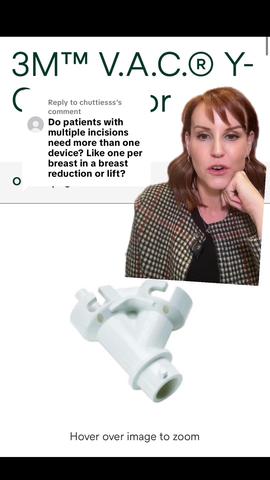
Can You Use One Prevena Vac for Multiple Incisions? Yes — With a Y Connector
September 16, 2025
Dr. Killeen explains how a single Prevena (incisional wound vac) machine can cover multiple incisions using a Y connector — and when you actually do need two separate machines, like for combined breast and tummy tuck cases.

What to Do If Your Surgical Drain Gets Stuck
January 23, 2026
Dr. Killeen explains why surgical drains get stuck, the different types of drains, and what your surgeon does to safely remove a stuck or accidentally sewn-in drain.