Do Breast Implants Sag More Under or Over the Muscle?
There is no correct place to put an implant, and there is no place that prevents sagging. Size, weight changes, capsule thickness, tissue quality, muscle, and activity all play into it. Anyone giving you absolute rules is selling certainty that doesn't exist in surgery.
Do Breast Implants Sag More Under or Over the Muscle?
This question gets asked constantly — and the discussion in some Facebook groups can get pretty heated, with people declaring absolute rules: "under the muscle always sags more," or "over the muscle always looks fake."
The truth is messier and more useful than that. There is no implant placement that prevents sagging, and there is no single "correct" answer for every patient. Whether your implant ends up in a great position or droops down lower than it should depends on a stack of variables — and which placement is right for you depends on which of those variables apply to you.
Here are the real factors at play.
1. Size of the Implant
Larger implants drop more. Period.
- The standard cutoff I use is around 350 cc
- Above that size, the risk of inferior malposition (the medical term for "sagging") increases significantly
- Heavier implants stretch the supporting tissue more aggressively over time
- Heavier implants are pulled down harder by gravity, day after day, year after year
This isn't unique to one placement — large implants stretch tissue regardless of whether they're under or over the muscle. But it's by far one of the strongest predictors of whether you'll have sagging issues over time.
2. Weight Fluctuations
Patients whose tissue has stretched and shrunk repeatedly — through pregnancies, weight gains and losses, GLP-1-driven changes — tend to have:
- Weaker, more lax tissue
- More issues with implant descent over time
It's the same physics as a worn-out elastic band. The tissue can only be stretched and snapped back so many times before it loses its support quality.
3. Capsule Thickness
Your body forms a scar capsule around any implant. The quality of that capsule is genetic and varies wildly between patients:
- A thin capsule allows the implant to migrate as forces push on it (gravity, muscle, activity)
- A thicker capsule provides more containment and holds the implant in place
- A moderate capsule is most patients
If you're someone whose body makes a thin capsule, your implant is more likely to drift downward into the tissue regardless of placement.
4. Native Tissue Quality
Some people have firm, supportive chest tissue that holds an implant where you put it for decades. Some people have soft, lax, droopy tissue that doesn't.
Factors that contribute to poorer tissue quality:
- Sun damage
- Genetics
- Stretch marks (a sign of compromised dermal collagen)
- Significant prior weight changes
- Aging
If your native tissue isn't great, no implant placement is going to magically rescue it. We can choose placements that work with weak tissue (and use techniques like internal support, mesh, or fat grafting), but we can't override the tissue itself.
5. The Muscle Itself
Now to the actual placement debate.
Dual Plane (Most Common "Under the Muscle")
Most patients who say they have "under the muscle" implants actually have a dual plane placement. In a dual plane:
- The lower portion of the pectoralis muscle is released from its rib attachment
- This allows the implant to sit in a more natural position
- The muscle continues to push down on the upper part of the implant with every contraction
- That repeated downward force can cause the implant to drop lower than it should over time
This is one of the reasons we see drift apart and downward over time in dual plane patients more than in over-the-muscle patients.
Truly Submuscular
Fully submuscular (no muscle release at all) tends to be:
- Less prone to inferior drift than dual plane
- Less common, because it produces less natural-looking results in most patients
Over the Muscle (Subglandular / Subfascial)
Over-the-muscle placements:
- Don't have constant downward muscle force on the implant
- Sag with the rate at which your tissue sags, since they're sitting in the breast tissue itself
- Are more dependent on the strength of your native tissue and capsule for support
6. Activity Level
This one gets overlooked: certain activities drive sagging dramatically more than others.
High-impact activities in particular:
- Running
- Boot camp / HIIT-type workouts
- Jumping rope
- High-impact aerobics
- Heavy chest training (especially with submuscular implants)
The repeated bouncing force on heavier implants in a soft-tissue envelope is a real driver of inferior malposition. Patients who run several days a week with larger submuscular implants have more sagging issues than couch-dwellers with the same anatomy.
So Which Placement "Sags Less"?
Here's the honest answer: it depends on your personal stack of variables.
- Big implants in a runner with thin tissue and weight fluctuations? Going to sag, regardless of placement
- Modest-sized implants in a patient with great tissue quality, no muscle activity issues, and a thick capsule? Probably stays put for a long time, regardless of placement
Different placements have different failure modes:
- Dual plane (under the muscle): more inferior drift over time from repeated muscle force
- Subglandular/subfascial (over the muscle): more dependent on native tissue support and overall breast aging
There is no placement that is "always better" or "never sags." Anyone telling you otherwise is selling certainty that doesn't exist in surgery.
A Note on Facebook Groups and Absolute Claims
Some advice for anyone navigating the implant decision:
- A Facebook group with a lot of members is not the same as expertise
- "Loud" doesn't equal "correct"
- People naturally defend the choice they made ("I have under-the-muscle implants and they're great, so under-the-muscle is best")
- One of the reasons there are so many under-the-muscle advocates is that dual plane was the dominant approach for the past 15+ years — there are simply more of those patients in the world
We evolve and improve in surgery. The most popular technique of a previous decade isn't necessarily the best technique going forward. New data, new implants, and new techniques — like the rise of subfascial and over-the-muscle placements with Preservé — are all part of that evolution.
Social media groups can be a useful resource — they're a fine place to hear from real patients about real experiences. They are not a substitute for the surgeon who has examined you, knows your tissue, knows your goals, and is going to do your surgery.
What Actually Should Drive Your Placement Decision
The best decision-making process is collaborative and patient-specific:
- Your tissue quality — what does the surgeon's exam show?
- Your implant size goals — bigger goal = different placement considerations
- Your activities and lifestyle — runners think differently than yogis
- Your concerns about animation deformity vs. tissue support
- Your history — past pregnancies, weight changes, prior surgeries
- Your priorities — most natural feel? Best longevity? Fastest recovery?
That's the conversation that produces the right placement. Not a Facebook poll.
The Bottom Line
There is no implant placement that prevents sagging and no placement that is universally better than another. Whether your implant ends up sagging is driven by:
- Implant size
- Weight fluctuations
- Capsule thickness
- Tissue quality
- Muscle release pattern
- Activity level
Each of those interacts with the rest of your anatomy. The right answer for your sister, your friend, the loudest commenter in a Facebook group, or the woman in the comments who has "had perfect implants for 20 years" is not necessarily the right answer for you.
Listen to the surgeon examining you. That's the person whose opinion is actually about your anatomy and your outcome.
Your Journey to Renewed Confidence

Transform Your Life
Every person deserves to feel comfortable and confident in their own body. Our procedures aren't just about physical change. They're about reclaiming your life, your comfort, and your self-assurance.
Dr. Killeen and her team support you every step of the way, from your first consultation through recovery.
Take the first step toward the life you deserve.
Schedule Your ConsultationTransform Your Life
Every person deserves to feel comfortable and confident in their own body. Our procedures aren't just about physical change. They're about reclaiming your life, your comfort, and your self-assurance.
Dr. Killeen and her team support you every step of the way, from your first consultation through recovery.
Take the first step toward the life you deserve.
Schedule Your ConsultationRelated Articles
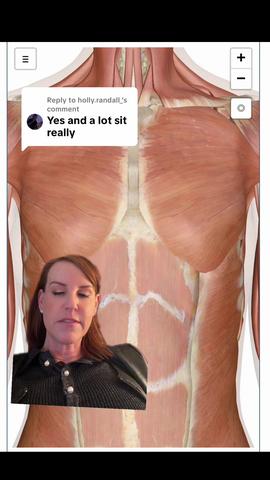
Do Submuscular Breast Implants Drift Apart Over Time? Yes — Here's Why
October 10, 2025
Dr. Killeen breaks down why submuscular breast implants tend to drift farther apart over time — the fixed sternal muscle attachment, repeated muscle force pushing the implant down and out, and the water-hammer effect of saline implants — and why it's a real but not universal risk.

Can a Breast Implant Slip Out From Under the Muscle Over Time? Yes — Here's What Causes It.
June 20, 2025
Dr. Killeen explains the four main reasons a submuscular breast implant can drift out from under the muscle over time — lower pole capsule stretch, over-release at original surgery, capsular contracture, and combinations of those — and how revision surgery diagnoses and fixes each cause.
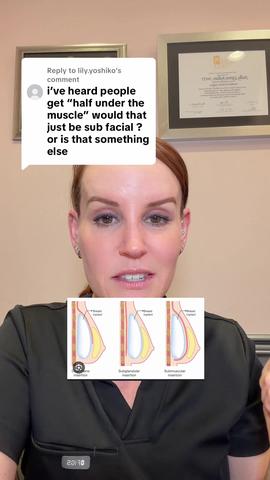
Subglandular, Submuscular, Dual Plane, Subfascial — Implant Placements Explained
October 21, 2025
Dr. Killeen breaks down the four most common breast implant placements — subglandular, submuscular, dual plane, and subfascial — what each one means anatomically, what the trade-offs are with animation deformity and biofilm, and how to think about which is right for you.