Do Submuscular Breast Implants Drift Apart Over Time? Yes — Here's Why
Submuscular implants tend to drift apart over time because the muscle's sternal attachment is fixed and the muscle continually pushes the implant down and out. Saline implants make this worse — via the water-hammer effect on the capsule.
Do Submuscular Implants Drift Apart Over Time? Yes — and Here's Why
Replying to a comment that confidently claimed implants placed over the muscle sit farther apart than implants placed under the muscle. That's actually backwards — and the anatomy is worth understanding, because it explains a real long-term issue I see in submuscular augmentation patients.
So let's break down what's really happening.
The Anatomy Refresher
The pectoralis major muscle is the big fan-shaped muscle that covers your chest. It attaches:
- Medially along your sternum (breastbone)
- Inferiorly along the lower edge of your ribs
For a breast augmentation:
- Submuscular = the implant is placed under the entire pectoralis muscle
- Dual plane = the muscle is partially released from its lower attachments so the lower half of the implant sits more directly behind breast tissue
- Over the muscle (subglandular or subfascial) = the muscle is left completely intact, and the implant is placed in front of it
Why Submuscular Implants Tend to Drift Apart Over Time
There are two main reasons submuscular implants are more likely to end up sitting farther apart than we'd like — and it isn't because the muscle physically separates them. It's the way the muscle behaves over time and where it's anchored.
Reason 1: We Have to Leave the Sternal Attachment Intact
When we do a submuscular or dual plane augmentation, we release some of the muscle's lower attachments to allow the implant to sit naturally. But there's a hard rule:
- Don't release the muscle from the sternum.
Why? Because over-releasing the muscle medially is what causes animation deformity (or "muscle flex deformity") — that bizarre, jumpy movement and distortion you see when an augmented patient flexes their pecs. The more medial release, the worse the animation.
So we leave the muscle attached at the sternum. Which means:
- Where the muscle attaches to the breastbone is essentially fixed
- That attachment varies from patient to patient
- If your muscle is attached relatively far out on the sternum, the implant can only sit so close to the midline
In short: your muscle's anatomy decides how close together your implants can sit, and we can't override that without trading away your animation deformity safety margin.
This is one of the reasons it's so hard to create tight cleavage in some submuscular patients — the muscle is, quite literally, in the way.
Reason 2: The Muscle Pushes the Implant Down and Out Over Time
Here's where time becomes the enemy.
The pectoralis is a constantly active muscle — every time you push, lift, hug, reach, swing, do a push-up, do a chest fly. Every contraction generates force that pushes against whatever is sitting under it.
What's sitting under it is your implant.
Over years, that repeated downward and lateral force does a few things:
- Stretches the capsule the body has formed around the implant
- Pushes the implant inferiorly and laterally (down and out)
- Widens the gap between the two implants over time
- Can contribute to armpit drift and other malposition issues
This is essentially capsule stretch driven by muscle activity. The thinner your natural capsule, the more susceptible you are.
Reason 3 (Bonus): Saline Implants Make This Worse
A specific note for saline implant patients:
Saline behaves like a relatively dense, low-viscosity fluid inside the implant shell. Every time the muscle compresses the implant, the fluid creates a water hammer effect — a sudden hydraulic force against the capsule wall.
That force, repeated thousands of times, is significantly harder on the capsule than the gel inside a silicone implant. Cohesive silicone gel disperses force more gently.
So:
- Saline + submuscular + thin capsule = highest risk of long-term drift
- Silicone + submuscular + thicker capsule = lower risk, but the underlying mechanism still applies
If you have saline implants and they're under the muscle, this is a known long-term consideration.
Does This Happen to Every Patient?
Of course not. Plenty of women with submuscular implants do beautifully for decades, and many of my own submuscular augmentation patients are very happy with their results.
But the question wasn't "does this always happen" — it's "is this a real risk of submuscular placement?" And the honest answer is yes. Plastic surgery is full of these probability conversations, and pretending the risks don't exist isn't doing patients any favors.
A Note on the Genre of This Comment
Whenever I or any other plastic surgeon discusses complications or trade-offs of a particular technique, the conversation isn't:
"Every patient with submuscular implants has these problems."
The conversation is:
"These are the known potential issues with this technique."
Those are very different statements. Discussing the trade-offs of submuscular placement does not invalidate anyone's experience with their own surgery. If you have submuscular implants and you love them, that's wonderful — keep loving them. The discussion is about what's more likely with which technique, so future patients can make informed decisions.
Plastic Surgery Evolves
One last thought, because it applies to literally every conversation about technique:
Plastic surgery evolves. What we do today is meaningfully different — and better — than what we did 10 years ago. And what we do 10 years from now will be different and better than what we do today.
That doesn't mean that the surgery you had in 2015 was bad surgery. It means it was the best version of surgery available at the time, based on what we knew. The same will be true of whatever I'm doing in 2025 when we look back from 2035.
That nuance matters. Improvement in a field is not an indictment of the past — it's just what happens when knowledge accumulates.
The Bottom Line
Yes — submuscular implants tend to drift farther apart over time than over-the-muscle implants. The mechanism is:
- The sternal muscle attachment is fixed and limits how close together we can place the implants in the first place
- Repeated muscle contraction pushes the implants downward and outward over years
- Saline implants make this slightly worse than silicone via the water-hammer effect
Doesn't happen to everyone. Real complication to know about. Different from saying every submuscular augmentation will fail — exactly the kind of nuanced, technique-specific conversation patients deserve to have before deciding which placement is right for them.
Your Journey to Renewed Confidence

Transform Your Life
Every person deserves to feel comfortable and confident in their own body. Our procedures aren't just about physical change. They're about reclaiming your life, your comfort, and your self-assurance.
Dr. Killeen and her team support you every step of the way, from your first consultation through recovery.
Take the first step toward the life you deserve.
Schedule Your ConsultationTransform Your Life
Every person deserves to feel comfortable and confident in their own body. Our procedures aren't just about physical change. They're about reclaiming your life, your comfort, and your self-assurance.
Dr. Killeen and her team support you every step of the way, from your first consultation through recovery.
Take the first step toward the life you deserve.
Schedule Your ConsultationRelated Articles

Can a Breast Implant Slip Out From Under the Muscle Over Time? Yes — Here's What Causes It.
June 20, 2025
Dr. Killeen explains the four main reasons a submuscular breast implant can drift out from under the muscle over time — lower pole capsule stretch, over-release at original surgery, capsular contracture, and combinations of those — and how revision surgery diagnoses and fixes each cause.

Subglandular, Submuscular, Dual Plane, Subfascial — Implant Placements Explained
October 21, 2025
Dr. Killeen breaks down the four most common breast implant placements — subglandular, submuscular, dual plane, and subfascial — what each one means anatomically, what the trade-offs are with animation deformity and biofilm, and how to think about which is right for you.
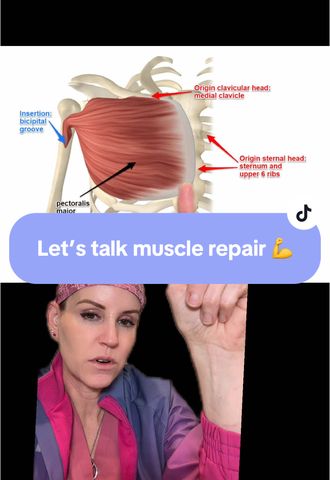
Muscle Repair During Implant Removal and Revision
March 26, 2025
Placing an implant under the pectoralis major requires detaching and stretching the muscle, and Dr. Killeen explains why that matters when the implant comes out: the unanchored muscle can make animation look worse after removal than it did with the implant in. She covers why she makes a point of repairing the muscle back to the chest wall during explant or a plane change, the technique (creating a raw surface by removing or roughing up the capsule, then heavy dissolvable sutures), and the problems she finds in revision cases including over-released muscle, split muscle, and the fibrotic wad from long-standing contractures.