When a Physician Influencer Spreads Anti-Mammogram Misinformation: A Response
The "evidence" backing this physician's anti-mammogram claim is a hypnotist, a wellness coach, and a doctor running an unvalidated screening business. That isn't the literature — that's a vibe. Mammograms have reduced breast cancer deaths by 15 to 20 percent. Please get yours.
When a Physician Influencer Is Spreading Anti-Mammogram Misinformation: A Response
Do you ever come across a video on TikTok and you can't believe it's not satire? I came across one this week from an actual practicing physician — a family medicine doctor named Deepa — titled effectively: "Why I won't do mammograms, never have, and you shouldn't either."
It's a video that bothers me on so many levels that I want to walk through it carefully — not to pile on one person, but because this kind of content is everywhere, and it does real harm. Particularly heading into Breast Cancer Awareness Month.
The Setup
The video came across my feed and made me genuinely double-take. Here's what was odd about it:
- It's presented as physician-level guidance
- The creator claims to be board-certified in family medicine
- The framing is: the medical establishment is wrong about mammograms, and here's the evidence
So of course I went to her website to see what was happening, because surely a board-certified family medicine doctor isn't building a real anti-mammogram platform. Right?
What I found:
- Wellness content
- Weight loss services
- Botox and filler (because mammograms are dangerous, but injectables are fine, apparently)
- And, most importantly, a long list of "evidence and experts" supporting her anti-mammogram position
It's that evidence list that I want to walk through, because it tells you everything you need to know about the credibility of this kind of content.
Looking at "Her Experts"
When a physician makes an extraordinary claim — like "mammograms are dangerous and you shouldn't get them" — the standard for evidence has to be higher. Real medical recommendations are built on studies, peer-reviewed research, and expert consensus.
So who are the "experts" cited in the video? Let me describe what I actually found:
Several "Experts" With Unidentifiable Credentials
Several of the people cited had no clear credentials I could verify. They're named, but their training, affiliations, and backgrounds aren't identifiable. Just unnamed people on the internet expressing opinions.
That's not "expert evidence." That's just people.
A "Holistic Transformational Mind Coach"
One of the cited experts is, I kid you not, a "hypnotist / holistic transformational mind coach." That's not a medical credential. That's a personal brand.
A "Wellness Coach" / "Health Coach"
Another listed expert is a wellness or health coach with no actual medical training. Coaches in this space can be wonderful for accountability and lifestyle support, but they are not credentialed to evaluate the cancer-screening literature.
One Actual Doctor — Who Is Already a Known Issue
The only person on the list who is a doctor founded a clinic offering "QT scans" as a breast cancer screening modality. QT scans (quantitative transmission ultrasound) are not validated as a breast cancer screening tool the way mammography is. They're being aggressively marketed and sold despite a lack of high-level evidence.
This is the same pattern as thermography and Prenuvo / HerScan-style self-service screenings — unvalidated alternatives, sold to women, with confident messaging that they're a substitute for evidence-based screening.
So the "evidence" backing this physician's anti-mammogram claim is, in summary:
- Random people
- A hypnotist
- A health coach
- A doctor running an unvalidated screening business
That's not the literature. That's a vibe.
A Note on the Credentialing Issue
One thing I noticed on her own website is that her board certification is listed as expired. A note for the creator: take that off your website. Listing yourself as currently board-certified when your certification has expired is the kind of thing that gets physicians in trouble — both with the actual specialty board and potentially with state medical boards. (California recently saw a federal judge crack down on similar credential misrepresentation, and the trend is going in one direction.)
This matters not just for legal reasons — it also matters because patients trust the title. When the title isn't accurate, patients are making decisions based on a false impression of who they're listening to.
Why This Kind of Content Is So Harmful
Let me be really clear about why I'm taking the time to address this:
Anti-mammogram physician content actively costs lives.
- Mammograms have reduced breast cancer mortality by 15–20% since modern screening programs were established
- Catching cancer early allows for less aggressive treatment, better outcomes, and dramatically higher survival
- Women who skip mammograms based on confidently-delivered misinformation are walking into late-stage diagnoses that didn't have to happen
- Late-stage cancer means mastectomy, chemotherapy, radiation, hormone therapy — and significantly worse survival
When a physician with a public platform tells women not to get mammograms, the harm scales with the audience. This isn't a private opinion held over coffee. This is potentially leading patients to skip the single most evidence-based screening test in oncology.
For a deeper look at the evidence around this, I've also written about why mammogram remains the gold standard and where ultrasound fits as an addition, and why physicians who actually treat breast cancer recommend against thermography.
A Pattern I Keep Seeing
This particular video is part of a much bigger pattern. The same playbook keeps appearing:
- A physician with a wellness/aesthetics practice builds a public platform
- They take a contrarian position on an evidence-based intervention (mammograms, vaccines, statins, antibiotics, etc.)
- They cite a list of "experts" who, on closer look, are mostly non-physicians or fringe figures
- They sell unvalidated alternatives (thermograms, "QT scans," wellness panels, supplements)
- They build trust through the medical title — even if the title is shaky
- Patients get hurt quietly, not visibly, because the people who skip screening don't come back to leave a bad review when they're diagnosed late
This is the part of medical misinformation that's genuinely insidious. The harm doesn't look like an obvious scandal — it looks like one woman, one cancer, one preventable late diagnosis at a time.
What Honest Critique of Mammograms Looks Like
To be fair: there are legitimate critiques of breast cancer screening that responsible physicians do discuss:
- Overdiagnosis of certain low-risk lesions (DCIS, particularly)
- Anxiety and psychological burden of false positives and callbacks
- Compression discomfort and the patient experience
- Cost-effectiveness discussions in different age groups
- When screening should start and stop (USPSTF, ACS, ACR all have nuanced positions)
These are real conversations. They happen in academic medicine and shape clinical guidelines.
None of these legitimate critiques justify telling women to skip mammograms entirely. That conclusion isn't supported by any reasonable reading of the literature. It's an extreme position dressed up in scientific language.
Going Into Breast Cancer Awareness Month
I want to say this directly, as a board-certified general surgeon and plastic surgeon who actually cares for breast cancer patients — both surgically and through reconstruction:
Please get your mammograms.
- Mammograms are the best-studied imaging modality for catching breast cancer early
- You may also benefit from an ultrasound if you have dense breasts
- You may be recommended an MRI if you're very high-risk
- All of those are evidence-based additions
- Thermograms are not — they are essentially flipping a coin
- Random scans sold by clinics with no validation are not screening replacements
Mammograms save lives. They reduce breast cancer mortality by 15 to 20 percent. We want you to live.
And to the Physicians Reading This
If you have a public platform as a physician, you carry more weight than you may realize. The patients consuming your content trust the MD or DO behind your name. That trust is precious, and it carries an obligation:
- Recommend evidence-based interventions
- Don't cherry-pick fringe sources to support contrarian positions
- Disclose when you're selling alternatives that don't have solid evidence behind them
- Don't monetize fear about evidence-based care
If your evidence list contains a hypnotist, a health coach, and a charlatan, that should be a flag to you before you publish — not a feature you're proud of.
The Bottom Line
A practicing physician with a real audience publishing "Why I don't do mammograms and you shouldn't either" — backed by a list of "experts" that includes hypnotists, wellness coaches, and physicians running unvalidated screening businesses — is the kind of misinformation that actively costs lives.
Please get your mammograms. Add ultrasound or MRI when your physician recommends them based on your risk profile. Skip the thermograms, the QT scans, and the confidently-delivered TikToks of physicians whose business model is built on alternative screenings.
Mammograms work. They save lives. And going into Breast Cancer Awareness Month, the most important thing I can say is: don't let an algorithm-rewarded contrarian on TikTok talk you out of one.
Your Journey to Renewed Confidence
Transform Your Life
Every person deserves to feel comfortable and confident in their own body. Our procedures aren't just about physical change. They're about reclaiming your life, your comfort, and your self-assurance.
Dr. Killeen and her team support you every step of the way, from your first consultation through recovery.
Take the first step toward the life you deserve.
Schedule Your ConsultationTransform Your Life
Every person deserves to feel comfortable and confident in their own body. Our procedures aren't just about physical change. They're about reclaiming your life, your comfort, and your self-assurance.
Dr. Killeen and her team support you every step of the way, from your first consultation through recovery.
Take the first step toward the life you deserve.
Schedule Your ConsultationRelated Articles
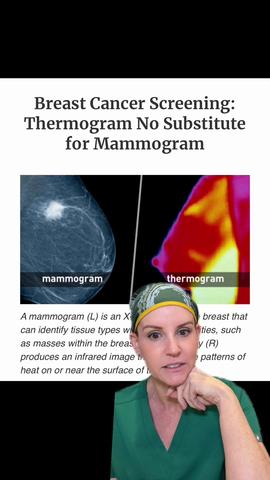
Thermograms vs. Mammograms: Why Physicians Recommend Against Thermography
September 25, 2025
Dr. Killeen does a deep dive into thermography for breast cancer screening — why the research never panned out, why thermograms can't find early cancers or be used to biopsy, and why the aggressive marketing of thermograms over mammograms is a real patient-safety problem.
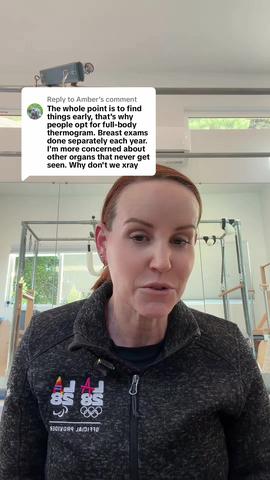
Why Thermograms Don't Work for Cancer Screening
January 5, 2026
Dr. Killeen explains why thermography is not an effective screening tool for breast cancer or any cancer, and why the right test for the right condition matters.
My Plastic Surgery Pet Peeve: Self-Promotion Through Fear-Mongering and Old Implant Photos
April 30, 2026
Dr. Killeen takes on the trend of plastic surgeons misrepresenting valid techniques as dangerous to drive personal practice volume — and the misleading use of decades-old "dinosaur egg" implant photos as if they represent the reality of modern implant care in 2026.