Do Surgeons Manage Their Own Wound Problems? And How We Handle NAC Perfusion Issues
NAC perfusion issues are managed differently from skin elsewhere — we don't debride early. We often leave them alone for a long time, because in this part of the body it's almost never full thickness. The eschar lifts off and heals nicely underneath.
Do Surgeons Take Care of Their Own Wound Problems? And How We Handle NAC Perfusion Issues
Two great questions packed into one comment, both of which I get asked a lot. Let's walk through them.
- If a surgeon's patient develops a wound after surgery, do they take care of it themselves or call in for help?
- How do we manage problems with blood supply (perfusion) to the nipple-areola complex (NAC)?
The short answers: yes, surgeons handle their own wound complications, and NAC perfusion problems are managed very differently from wound issues elsewhere on the body. Here's the longer version.
Question 1: Do Surgeons Manage Their Own Wound Complications?
Yes — surgeons are wound-care experts. Pretty much every surgeon manages the wound complications associated with the surgeries they do.
If you have a wound issue after a tummy tuck, breast reduction, breast lift, or any other plastic surgery procedure with me — I take care of it. I don't hand you off to someone else. That's what surgeons are trained to do.
Where Plastic Surgery Specifically Comes In
Plastic surgeons have a slightly broader wound-care role than most other specialties because we do two things:
- Manage wounds like any other surgeon
- Cover wounds with reconstructive techniques like skin grafts and flaps
If a general surgeon, vascular surgeon, or orthopedic surgeon ends up with a wound that needs coverage — meaning the wound is too big to close primarily and needs a reconstructive solution — they may consult plastic surgery for help with that piece. We come in, do the coverage, and hand it back to them.
Some general surgeons do their own skin grafts; others call us. Either is fine. The point is that plastic surgeons are the people called when wound coverage gets complicated — but managing the wound day-to-day is normally handled by the operating surgeon.
What About Wound Care Clinics?
Wound care clinics are a separate thing, and the question often comes up because patients see them and assume that's where surgical wounds get sent.
Who staffs a wound care clinic?
- Nurses
- Nurse practitioners
- Physician assistants
- Plastic surgeons (sometimes — depending on the clinic)
- General surgeons (sometimes)
- Medical doctors without a surgical background but with a special interest in wounds
Who do they actually see?
The vast majority of wound clinic patients are non-surgical — patients with:
- Diabetic ulcers
- Lower extremity venous insufficiency ulcers
- Pressure injuries
- Chronic wounds of various other origins
You do occasionally see surgical patients there — but typically not because we (the operating surgeon) need help managing the wound. Surgical patients usually end up at a wound clinic because:
- They can't do their own dressing changes (mobility, vision, dexterity)
- The dressing changes are complex enough that they benefit from specialized hands
- They live with someone who can't safely help them
It's a logistical resource, not a "we couldn't handle this" referral.
Personal Experience
I worked at Kaiser for a few years and staffed the wound clinic there — and that location did have plastic surgeons rotating through. But that's not always the case. Plastic surgeons are valuable in wound clinics specifically because we can do both management and coverage — but lots of wound clinics function fine without one.
So yes: I always manage my own wounds. And honestly, anyone who isn't willing to manage the wound complications of their own surgical patients is a flag worth noting.
Question 2: Managing Perfusion Issues With the NAC
This is a different conversation, because the nipple-areola complex (NAC) doesn't behave like skin elsewhere on the body when it has trouble.
What "Perfusion Issues" Means
After a breast lift or breast reduction, the nipple has to be repositioned, and its blood supply has to keep up. Sometimes the blood supply gets stressed and the NAC starts to look concerning — dusky, dark, blistered, or scabby.
In the rest of the body, when skin has perfusion issues, we tend to debride (cut away) the dead tissue early so we can manage the wound underneath cleanly.
With the NAC, we do the opposite. We mostly leave it alone.
Why We Don't Debride the NAC Early
There are a few reasons for this counterintuitive approach:
1. NAC Perfusion Issues Are Usually Superficial
When the NAC has problems with blood supply, it's almost never full thickness. The deeper layers of skin and the underlying tissue are typically fine. What looks scary on the surface is usually just the top layer misbehaving.
If you wait it out:
- The dark/dusky tissue will become a thick eschar (a firm scab)
- That eschar lifts off on its own over weeks
- Healthy, viable skin is underneath
- It heals nicely without aggressive intervention
2. Aggressive Early Intervention Distorts the Shape
The NAC is a perfectly round structure. If you debride too early — before you really know how much tissue is going to demarcate — you risk:
- Distorting the round shape of the areola
- Creating a wound that has to be packed (uncomfortable for the patient)
- Producing a larger scar than you would have ended up with by leaving it alone
- Compromising future nipple reconstruction options if it does end up needing one
Patience here genuinely produces better outcomes.
3. You Often Don't Need to Do Anything At All
This is the part that surprises patients (and sometimes other clinicians): with NAC perfusion issues in a non-implant patient, we often don't need to do anything. No special dressings. No packing. No daily debridement. Just observation, gentle cleansing, and time.
The Exception: Implant Reconstruction Patients
I want to be clear about one important caveat: I feel differently when there's an implant involved, especially in a reconstruction patient.
When the NAC has perfusion issues and there's an implant directly underneath:
- The risk profile changes significantly
- A wound that opens to an implant pocket can lead to implant exposure and infection
- We tend to be more aggressive about getting on top of any potential breakdown
- The "leave it alone" approach may not be appropriate
This is also why I emphasize OR techniques that protect against this kind of complication in the first place — Keller Funnel, NAC shields, irrigation protocols, etc. The best management of an NAC complication is preventing one in the first place.
Where the "Wait It Out" Strategy Applies
The watch-and-wait approach is most appropriate for:
- Breast reduction patients
- Breast lift patients
- Other patients without implants where there's no underlying device that could become exposed
These patients overwhelmingly do best when we don't panic and don't debride early.
What This Means for Patients
If you're a patient and you develop a wound after surgery — or your NAC starts to look concerning after a lift or reduction — here's what I want you to take from this:
- Your surgeon should be managing the wound. That's their job. If they're trying to hand you off to a clinic for the management itself (not just dressing changes), that's an unusual and worth-questioning situation.
- NAC perfusion issues often look much worse than they are. Try not to panic at the dusky, scabby appearance — most of the time, it's superficial and will heal beautifully with patience.
- Don't intervene aggressively without your surgeon's direction. Picking at scabs, peeling eschars early, or applying random products can turn a problem that would have healed quietly into something more visible long-term.
- In an implant patient, do call your surgeon promptly if the wound looks like it might be opening to the implant. That changes the urgency.
The Bottom Line
Surgeons take care of their own wound complications. Wound clinics primarily exist for non-surgical wounds — diabetic ulcers, venous insufficiency, pressure injuries — and as logistical support for patients who can't do their own dressing changes. Plastic surgeons are uniquely positioned to manage wounds and provide coverage with flaps and skin grafts when needed.
NAC perfusion issues are managed very differently from wounds elsewhere on the body. In non-implant patients, the best medicine is usually time and patience — almost all of these issues are superficial, the eschar lifts off on its own, and aggressive early intervention causes more harm than good. In implant patients, especially reconstruction patients, the calculus shifts and we get more aggressive.
Either way: call your surgeon, not your aesthetician. This is exactly the kind of post-op concern that benefits from someone who understands the surgery you actually had.
Your Journey to Renewed Confidence

Transform Your Life
Every person deserves to feel comfortable and confident in their own body. Our procedures aren't just about physical change. They're about reclaiming your life, your comfort, and your self-assurance.
Dr. Killeen and her team support you every step of the way, from your first consultation through recovery.
Take the first step toward the life you deserve.
Schedule Your ConsultationTransform Your Life
Every person deserves to feel comfortable and confident in their own body. Our procedures aren't just about physical change. They're about reclaiming your life, your comfort, and your self-assurance.
Dr. Killeen and her team support you every step of the way, from your first consultation through recovery.
Take the first step toward the life you deserve.
Schedule Your ConsultationRelated Articles
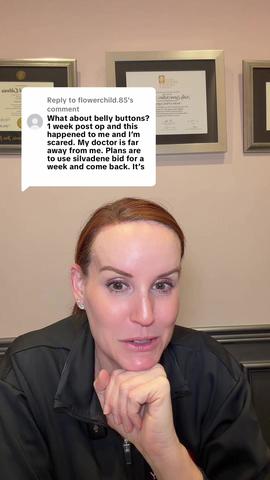
Belly Button Necrosis After a Tummy Tuck: What to Expect
November 24, 2025
Dr. Killeen explains belly button necrosis after tummy tuck or DIEP flap surgery — why it happens, what it looks like, how it's treated, and why the outcome is usually better than expected.
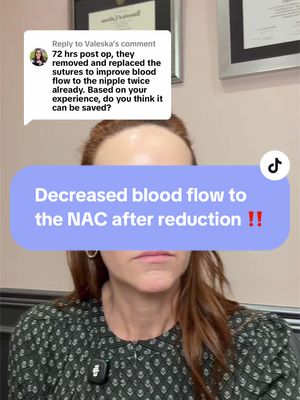
Nipple Blood Supply Problems After a Reduction or Lift: What Helps
October 8, 2026
After a breast reduction or lift, surgeons watch the blood supply to the nipple and areola closely, because the surgery itself reduces it. Dr. Killeen explains what can be done when it is struggling: removing the stitches around the areola (which only helps when swelling is the cause), hyperbaric oxygen therapy, and topical nitropaste or DMSO. She also gives the questions to ask your surgeon and explains why a nipple that looks terrible often still survives.
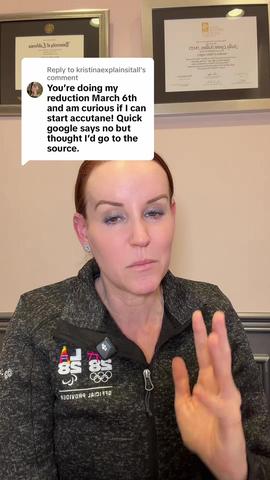
Can You Have a Breast Reduction While on Accutane?
January 19, 2026
Dr. Killeen explains the current evidence on Accutane and surgery — why the old rule of waiting six months may no longer apply for breast reduction patients.