Dark Skin Next to Your Vertical Scar After a Breast Lift or Reduction
Most of the time, it is just a little residual tissue that looked like completely normal skin, but actually was the end of the areola.
Dark Skin Next to Your Vertical Scar After a Breast Lift or Reduction
A question came in from someone who noticed a dark strip of skin next to the vertical incision after a breast lift.
This unfortunately happens a decent amount of the time. Let me explain why it happens, because your surgeon may not have even been able to see that tissue at the time of your lift.
You've Probably Seen It in Before-and-Afters
If you look at enough before-and-after photos of breast lifts and breast reductions, you will see people with a dark strip next to the vertical incision, the one that runs from the bottom of the areola down toward the fold.
Sometimes that's just post-inflammatory hyperpigmentation, the darkening that can follow any scar. (PIH has its own treatment plan.) But often it's something else:
Often it's residual, or left-behind, areolar tissue.
Why Areola Gets Left Behind
A Natural Areola Doesn't Have a Hard Edge
A natural areola has a certain pigment, and then it feathers out at the edges, getting lighter and lighter.
So when we're doing surgery, sometimes the area we think is normal skin is actually where the areola is still feathering out. In the operating room, it looks like ordinary skin.
Then Surgery Reduces Its Blood Supply
After surgery, that area is ischemic. Its blood supply is not as good as it was before surgery. And that ischemia leads to darkening of the tissue.
So it probably looked great in the operating room, and nothing looked like it was left behind. But as the weeks go on, the tissue gets darker, and the faint edge of areola that nobody could see becomes a visible strip.
The Same Thing Can Happen to the Whole Areola
Go look at before-and-afters of lifts and reductions again, and you'll often see the areola itself completely darker in the post-op pictures.
It's the same process. Ischemia can lead to pigmentation, and especially with a breast reduction, this tissue has much reduced blood flow after surgery. (When that blood supply is struggling more seriously, it's a different and more urgent problem.)
One More Reason: A Very Large Areola
If you have a really, really large areola, it's possible your surgeon just couldn't get it all out. Taking all of it would have made things too tight, or made the shape strange. (Where the new areola sits on the breast is its own set of decisions.)
In that situation, we:
- Get out as much as we can
- Let you heal, and let everything stretch and settle
- Go back and remove some later, if it's bothering you
The Fix Depends on the Cause
There isn't one answer here. It really depends on what the situation was:
- Pigment in the scar itself is post-inflammatory hyperpigmentation, and it's treated like PIH anywhere else on the body
- Areola left behind on purpose, because there was simply too much of it, can be removed later once everything has healed and settled
So ask your surgeon which one you're looking at.
Most of the Time, It's a Little Leftover Tissue
Most of the time, in my experience, it's just a little residual tissue that looked like completely normal skin, but actually was the end of the areola, and it gets darker after surgery.
It isn't usually a sign that your surgeon was careless. In the operating room, that skin looked normal. (For what's normal with the scars themselves, here's what to expect from breast reduction scars.)
The Bottom Line
- A dark strip next to the vertical scar after a lift or reduction is common
- Sometimes it's post-inflammatory hyperpigmentation, but often it's leftover areola from the feathered edge, which looked like normal skin during surgery
- Reduced blood flow after surgery (ischemia) darkens that tissue over the following weeks, and the same process can darken the whole areola, especially after a reduction
- With a very large areola, some may be left behind on purpose to avoid tightness or an odd shape, and removed later once you've healed
- The fix depends on the cause, so ask your surgeon which one you have
Your Journey to Renewed Confidence

Transform Your Life
Every person deserves to feel comfortable and confident in their own body. Our procedures aren't just about physical change. They're about reclaiming your life, your comfort, and your self-assurance.
Dr. Killeen and her team support you every step of the way, from your first consultation through recovery.
Take the first step toward the life you deserve.
Schedule Your ConsultationTransform Your Life
Every person deserves to feel comfortable and confident in their own body. Our procedures aren't just about physical change. They're about reclaiming your life, your comfort, and your self-assurance.
Dr. Killeen and her team support you every step of the way, from your first consultation through recovery.
Take the first step toward the life you deserve.
Schedule Your ConsultationRelated Articles

Breast Lift vs. Breast Reduction: What's the Difference?
January 6, 2025
A breast lift and a breast reduction use identical incisions, usually the lollipop pattern in Dr. Killeen's practice. The difference is volume: a lift keeps all of your tissue and moves it higher, while a reduction does the same and also removes tissue. Because every reduction includes a lift, she explains why you should never pay extra for the lift on a reduction.
Nipple Blood Supply Problems After a Reduction or Lift: What Helps
October 8, 2026
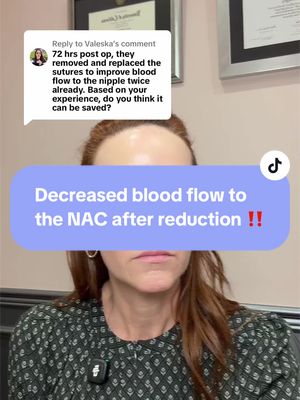
After a breast reduction or lift, surgeons watch the blood supply to the nipple and areola closely, because the surgery itself reduces it. Dr. Killeen explains what can be done when it is struggling: removing the stitches around the areola (which only helps when swelling is the cause), hyperbaric oxygen therapy, and topical nitropaste or DMSO. She also gives the questions to ask your surgeon and explains why a nipple that looks terrible often still survives.

How to Treat Post-Inflammatory Hyperpigmentation (PIH) After Scars and Injuries
November 17, 2025
Dr. Killeen walks through the evidence-based treatments for post-inflammatory hyperpigmentation — topical TXA and hydroquinone, laser and microneedling, oral TXA for stubborn cases, and why sun protection makes or breaks your results.