Implant Problem and Planning a Pregnancy: Fix It Now or Wait?
There's not a perfect solution to this problem. You just have to figure out which risks you're willing to take.
Implant Problem and Planning a Pregnancy: Fix It Now or Wait?
This is a relatively common scenario in my practice: you have a problem with your breast implants, like a capsular contracture or a rupture, and you're planning a pregnancy. Do you fix the implants first, or wait until you're done having kids?
I can't give you individual medical advice, but here are our general recommendations for people with implant problems who are planning a pregnancy.
Why I Usually Recommend Fixing Implant Problems Sooner
In general, when I see patients with implant problems, I recommend fixing them sooner rather than later, because I don't want you to live like this.
- Capsular contractures can look strange, they hurt, some people get strange symptoms with them, and they get worse with time.
- Ruptured silicone implants, if you don't already have a contracture, can lead to one. And the longer you have a ruptured silicone implant, the more likely silicone is to travel outside the capsule, something called an extracapsular rupture, which is harder to manage and treat. (More on what happens if a ruptured implant is left in.)
So you can certainly fix these things before a planned pregnancy. But it's important to understand that we can't promise you won't develop problems from your pregnancy and breastfeeding.
What Pregnancy and Breastfeeding Can Do to Implants
Contracture After Mastitis
Some women develop contractures during breastfeeding, and it often happens after bouts of mastitis, an infection in the breast while breastfeeding.
If that infection seeds the implant, you can get an implant infection, or sometimes just a contracture. You may not lose your implant to an emergency infection, but you might develop that tight scar tissue, which is miserable.
This is not a very common scenario. Women with implants breastfeed all the time without issues. But it can happen.
Changes in How Your Breasts Look
The next thing, of course, is aesthetic changes. Pregnancy can change your breasts with implants in ways you're not happy with, and then you may want another surgery afterward.
So if you're planning a pregnancy in the next couple of years, it's often easiest to wait until you're done, and then solve all the problems at once.
Is It Safe to Breastfeed With Silicone Implants?
Yes. Studies have compared the breast milk of women with silicone implants to women without implants, and found no difference.
So it's completely safe, and recommended, to breastfeed with silicone implants.
I have silicone implants. I breastfed both of my children, 18 months each. So I feel strongly this is safe.
(Whether you can breastfeed after augmentation has more to do with the incision than the implant. Here's why the incision matters most.)
What About Ruptured Implants?
With a ruptured implant, we just don't know, because it hasn't officially been studied. That doesn't mean it isn't safe. It just means it hasn't been studied.
So if you have ruptured implants, we currently don't recommend that you avoid breastfeeding.
Part of the reason is that cow's milk and infant formula have far more silicon than breast milk to begin with. In one study, breast milk had about the same level whether or not the mother had implants. Store-bought cow's milk had roughly 13 times that level, and infant formula roughly 80 times. (That study measured silicon, the element silicone is made from.)
So even if a ruptured implant theoretically raised the amount in your breast milk a bit, it would not be more than the formula we feed babies, which is safe.
A Third Option: Remove Now, Replace Later
If you're planning a baby and you have a contracture, a rupture, or something else with your implant that needs to be managed, it's always an option to remove the implants now, have the baby, breastfeed, and replace them later.
(Here's how I think about whether to replace or remove implants after a problem, and how long to wait after an explant before getting pregnant.)
There's No Perfect Answer
There's not a perfect solution to this problem. You just have to figure out which risks you're willing to take.
Based on your personal history and your anatomy, talk it out with your surgeon to see which path makes the most sense for you.
The Bottom Line
- Implant problems usually get worse with time. Contractures progress, and ruptured silicone implants can lead to contracture and extracapsular rupture, which is harder to treat
- You can fix them before a pregnancy, but no one can promise pregnancy and breastfeeding won't cause new problems
- Breastfeeding can cause contracture, often after mastitis, though it's not common. Pregnancy can also change how implants look, so if a pregnancy is coming soon, it's often easiest to wait and fix everything once
- Breastfeeding with silicone implants is safe. Studies found no difference in breast milk, and I breastfed both of my kids with silicone implants
- Ruptured implants haven't been studied, but we don't recommend avoiding breastfeeding. Cow's milk and formula start out far higher
- Removing now and replacing later is always an option
Your Journey to Renewed Confidence

Transform Your Life
Every person deserves to feel comfortable and confident in their own body. Our procedures aren't just about physical change. They're about reclaiming your life, your comfort, and your self-assurance.
Dr. Killeen and her team support you every step of the way, from your first consultation through recovery.
Take the first step toward the life you deserve.
Schedule Your ConsultationTransform Your Life
Every person deserves to feel comfortable and confident in their own body. Our procedures aren't just about physical change. They're about reclaiming your life, your comfort, and your self-assurance.
Dr. Killeen and her team support you every step of the way, from your first consultation through recovery.
Take the first step toward the life you deserve.
Schedule Your ConsultationRelated Articles
The Real Problems That Happen With Ruptured Silicone Implants
November 20, 2025
Dr. Killeen breaks down the specific problems that can happen when a silicone breast implant ruptures — capsular contracture, silicone granulomas, lymph node involvement, and why routine replacement beats waiting for rupture.
How Long Should You Wait After an Explant to Get Pregnant?
February 6, 2025
Dr. Killeen has had so many patients get pregnant right after an explant that her practice used to joke she was a fertility specialist. She explains why it is better to wait: pregnancy hormones cause engorgement, and if your explant involved a capsulectomy or a lift, that tissue needs to heal well first. She asks patients to wait three months, which also leaves time to handle any complications before a first trimester, and explains why breastfeeding risk is lowest with a simple implant removal.
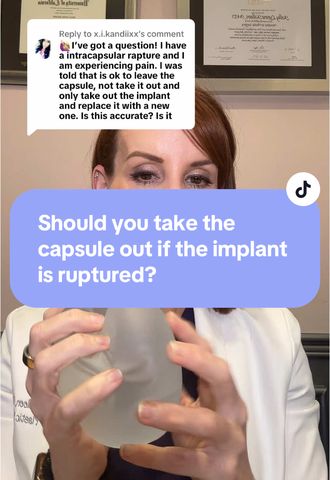
Ruptured Silicone Implant: Should You Remove the Capsule or Leave It Behind?
May 30, 2025
Dr. Killeen explains why she removes the capsule when a silicone implant has ruptured — even when it looks soft and normal — because the silicone-contaminated capsule can drive a capsular contracture later. With a real patient example and the honest caveat that surgeons disagree.