If Your Insurer Denies Your Hospital Stay, the Hospital Bills You
If your insurer does not approve that stay, it is not the insurance company that is coming after you for that money. It's the hospital.
If Your Insurer Denies Your Hospital Stay, the Hospital Bills You
Every time insurance denials come up, so does this idea: if you medically need an extra day in the hospital and your insurer won't approve it, just stay anyway and let the insurance company sort out the bill later.
I know it sounds like a great idea. It isn't. Here's what actually happens.
The Bill Doesn't Go to the Insurer. It Goes to You.
This is the part that surprises people most:
If you need to stay in the hospital an extra day and your insurer does not approve that stay, it is not the insurance company that is coming after you for that money. It's the hospital.
The insurer's denial doesn't create a fight between the hospital and the insurer that you get to watch from the sidelines. It creates an unpaid balance with your name on it.
Why the Number Is So Enormous
To understand the size of that bill, you have to understand how hospital pricing works, and it isn't how most people assume.
Hospitals don't just have a rate they charge. The way insurers force us to work with them is that we have to charge, then negotiate, and eventually get paid some agreed-upon amount. Which means the amount initially charged to the insurance company is a really huge fee.
When the insurer denies the stay, that huge initial charge is what lands on you as the patient. Not the negotiated rate the insurer would have paid. The sticker number that exists mostly as a negotiating position.
Yes, You Can Negotiate, But It's a Hassle
You can absolutely call the hospital and negotiate a cash rate or a self-pay rate, and you should if you're in this position.
But be realistic: it's a huge hassle. You're now spending your recovery time on the phone with a billing department, negotiating a number you never agreed to in the first place.
If You Just Don't Pay, It Gets Worse
If you don't pay it, that's really problematic. You can be turned over to collections, and then you're into that whole horrible chain of events. Medical debt is one of the ugliest corners of American healthcare, and it follows people for years.
The Consequence Nobody Sees Coming
Here's the one I most want patients to know about, because it catches people completely off guard.
If the hospital in question is your home hospital and you have unpaid medical debt there, they may not allow you to book elective procedures or visits.
To be clear about what's never at risk: for emergencies, we never turn anyone away. That's not what this is about.
But say you're one of my cancer reconstruction patients, coming in for fat grafting or some type of elective revision, the finishing work that takes a reconstruction from acceptable to genuinely good. If you have unpaid debt to that facility, they would not allow you to book.
So the unpaid bill from the stay your insurer denied can end up blocking the rest of your reconstruction. That is a devastating place to find yourself, and it's entirely downstream of a denial you didn't choose.
Why Dr. Potter Took That Call
This is exactly why Dr. Elisabeth Potter did what she did.
According to reporting, in January 2025 the Austin plastic surgeon was asked to call UnitedHealthcare from the operating room, mid-procedure, to answer administrative questions about the inpatient stay of a patient having breast cancer surgery. The stay was denied anyway, and after she spoke publicly about it, the insurer sent her a legal threat.
She didn't scrub out of an operation to win an argument. She did it because she didn't want her patient to go through what I just described. That's what that call was about.
What We're Actually Asking For
As a physician, I never want you to have to go through any of this. And what doctors want here is not complicated:
We just want the insurers to cover what they should cover. We don't want to have to jump through stupid hoops. And we want you as a patient to be protected and provided for by the insurer you pay.
That's it. That's the whole ask.
The Bottom Line
If your insurer denies a hospital stay you medically need, staying anyway and ignoring it is not a strategy, because the hospital bills you, at the inflated pre-negotiation rate, not the insurer.
If you're already in that position:
- Call the hospital and ask about a cash or self-pay rate
- Don't let it go to collections if you can possibly avoid it
- Know that unpaid debt at your home hospital can block future elective care, including the reconstruction steps you're counting on
And if you think the system shouldn't work this way, you're right. That's why surgeons keep making noise about it, and why advocacy like the Breast Reconstruction Access Bill matters. Meanwhile, be careful about anyone who offers to get your surgery covered for a fee, because that's a different scam entirely.
Your Journey to Renewed Confidence

Transform Your Life
Every person deserves to feel comfortable and confident in their own body. Our procedures aren't just about physical change. They're about reclaiming your life, your comfort, and your self-assurance.
Dr. Killeen and her team support you every step of the way, from your first consultation through recovery.
Take the first step toward the life you deserve.
Schedule Your ConsultationTransform Your Life
Every person deserves to feel comfortable and confident in their own body. Our procedures aren't just about physical change. They're about reclaiming your life, your comfort, and your self-assurance.
Dr. Killeen and her team support you every step of the way, from your first consultation through recovery.
Take the first step toward the life you deserve.
Schedule Your ConsultationRelated Articles
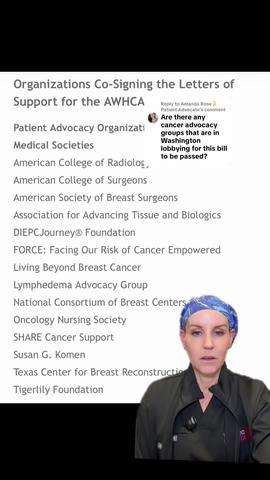
The Breast Reconstruction Access Bill: Who's Behind It and How to Help
October 31, 2025
Dr. Killeen runs through the major physician organizations, patient advocacy groups, and state medical associations backing the breast reconstruction access bill (#AWHCA) — and how patients can call their representatives and share their stories to help push it through.

Breast Reduction Insurance Denied? Here Are Your Cash-Pay Options
September 16, 2025
Dr. Killeen walks through realistic options for patients who are great candidates for a breast reduction but whose insurance won't cover it — including surgical financing, resident clinics at teaching programs, last-minute cancellation discounts, and stronger documentation for appeals.
Do Plastic Surgeons Take Insurance? Yes, Sometimes — Here's How It Works
August 13, 2025
Dr. Killeen explains the three categories of plastic surgeon when it comes to insurance — in-network, out-of-network, and cash-pay only — what each one means for your wallet, and how to navigate the conversation with your surgeon's office to figure out what your procedure will actually cost.