"I Learned Liposuction on YouTube": Why This Should Terrify You
She learned liposuction from YouTube, mentors, and CME courses, with one transitional year of residency, no surgical training, no hospital privileges, and no malpractice insurance. No one learns surgery from a video. We are taught by experts, practice with experts, then operate on our own only after a structured training program. If you are considering plastic surgery, see a real expert who did the training to keep you safe.
"I Learned Liposuction on YouTube": Why This Should Terrify You
I came across a video that genuinely stopped me in my tracks. In it, a provider explains, in her own words, that she learned to do liposuction from YouTube videos, mentors, some CME courses, and textbooks. She even says she was "terrified at first that she wouldn't have the skill set to treat complications."
Let me respond to that as plainly as I can, because this is a patient safety issue, not a personal one.
Why Would a "Surgeon" Say Something Like That?
The answer is simple: because she's not a surgeon. This person did no surgical training.
Here's what her training actually consists of, based on what's publicly available:
- One year of training after medical school, in a transitional year residency
- A transitional year is a residency that does not focus on any one specialty, you rotate through different specialties every few months
- No surgical residency. Zero.
So when she says she was terrified she wouldn't be able to manage complications? I agree. That fear was appropriate, and to this day, she does not have the training to manage the complications that liposuction can cause.
And it gets more concerning. As it appears on the Medical Board of Florida website, she does not have hospital privileges, and she does not carry malpractice insurance. That combination is genuinely wild for someone performing surgical procedures.
"There Are Different Paths to the Same Proficiency"
In the comments, another physician asked the obvious question: didn't you learn liposuction in your surgical training? The answer was no, she learned from mentors, CME courses, textbooks, and "YouTube University." And her defense was that "there are different paths to get to the same level of proficiency."
Respectfully: no. Do you truly believe you've reached the same level of proficiency, from YouTube and weekend courses, as someone who completed multiple years of dedicated training, earned a board certification, and performed thousands of operations in that specialty? Those are not equivalent paths. They are not remotely close.
The Part That Really Got Me: "Plastic Surgeons Need Extra Training for Lipo"
She then claimed she's "not plastic", admitting she's not a plastic surgeon (which matters, because a few places online listed her as one). And she said that plastic surgeons "usually need additional training" to do liposuction.
That's just false. We don't. Liposuction is a core part of plastic surgery residency. How would she even know what our training includes? She did a transitional year at a hospital that doesn't have a plastic surgery training program. This is exactly the kind of thing I've written about in how a doctor can end up practicing outside their specialty, and why the difference between a plastic surgeon and a "cosmetic surgeon" is enormous.
Nobody Learns Surgery From a Video
She defended all this by saying it's "more common than people think", asking, "how many of us watched one video before placing a central line?"
That is not how any of us learned to place a central line. No one is born knowing what to do, correct, but the way you learn is:
- You're taught by experts
- You practice with experts supervising you
- You do it on your own, but only after an organized, structured training program says you're ready
YouTube is not that. Watching a video is not training. The entire point of a residency is the supervised, graduated, accountable path from watching, to assisting, to doing, with experts catching your mistakes before they reach a patient.
Ask Yourself the Only Question That Matters
Here's the gut-check I'd offer anyone. This provider's website reportedly also advertises breast implants, breast lifts, labiaplasties, and tummy tucks, all on the strength of a single transitional year of residency.
So ask yourself: would you want her operating on your mom? Or would you want someone who is properly trained, with hospital privileges, board certification, and malpractice insurance?
The Bottom Line
I'm genuinely shocked someone would admit all of this online, though I suppose I appreciate the honesty, because now patients can see exactly who they'd be trusting. But please be honest with yourself about what it means.
If you are considering any plastic surgery procedure, make sure you're seeing a real expert:
- Someone who cared enough about your safety to do the proper, years-long training
- Someone with a board certification in the specialty
- Someone with hospital privileges
- Someone who carries malpractice insurance
Good surgeons do all of that not just to master their craft, but to keep you safe. That's the whole point. Don't hand your body to "YouTube University", check your surgeon's credentials and confirm they have real hospital privileges before you ever get on the table.
Your Journey to Renewed Confidence

Transform Your Life
Every person deserves to feel comfortable and confident in their own body. Our procedures aren't just about physical change. They're about reclaiming your life, your comfort, and your self-assurance.
Dr. Killeen and her team support you every step of the way, from your first consultation through recovery.
Take the first step toward the life you deserve.
Schedule Your ConsultationTransform Your Life
Every person deserves to feel comfortable and confident in their own body. Our procedures aren't just about physical change. They're about reclaiming your life, your comfort, and your self-assurance.
Dr. Killeen and her team support you every step of the way, from your first consultation through recovery.
Take the first step toward the life you deserve.
Schedule Your ConsultationRelated Articles
Plastic Surgery "Chop Shops": Why They're Dangerous and How to Protect Yourself
October 13, 2025
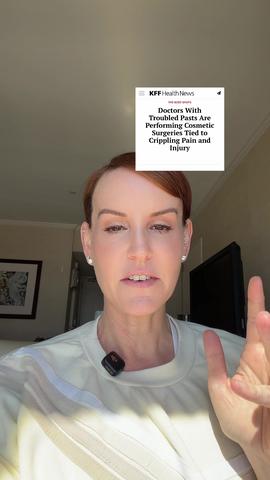
Dr. Killeen breaks down a recent investigative article on plastic surgery chop shops like Goals Plastic Surgery and Sono Bello — including their hiring of disciplined surgeons, fake "3-month plastic surgery fellowships," consultant-led surgical decisions, and lack of after-hours care.
What's the Difference Between a Plastic Surgeon and a "Cosmetic Surgeon"? It's Huge.
June 26, 2025
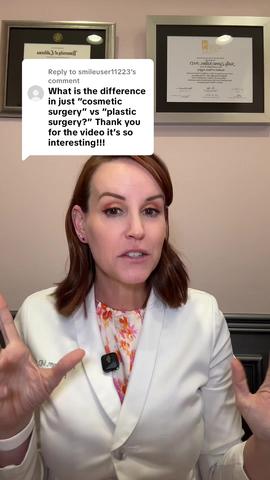
Dr. Killeen walks through the dramatic difference between plastic surgery training (6-9+ years of ACGME residency leading to American Board of Plastic Surgery certification) and "cosmetic surgery" training (6-18 month fellowships with privately-invented boards). Plus why the cosmetic surgery track exists in the first place and what it tells you about a surgeon's priorities.
A Patient Died After Surgery in a Queens House: How to Actually Vet a Surgeon
April 7, 2025
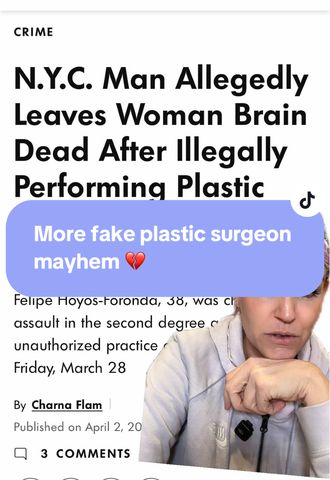
An unlicensed man performed surgery on a woman inside his Queens house, called 911 when she became unresponsive, then fled and was apprehended at JFK trying to leave the country. She could not be saved. Dr. Killeen uses the case to walk through the checks that would have prevented it: verifying state licensure and American Board of Plastic Surgery certification, confirming hospital privileges so a surgeon can follow you on transfer, checking facility accreditation, and asking where your surgery will actually be performed.