Medical Records, Language Barriers, and Implant Warranties: An Underdiscussed Problem With Medical Tourism
When you have implants placed in another country — even by a company we have in the US — it's pretty challenging to get them to honor a warranty for problems like rupture or contracture. That's a cost no one warns you about at the time of the original surgery.
Medical Records, Language Barriers, and Implant Warranties: An Underdiscussed Problem With International Medical Tourism
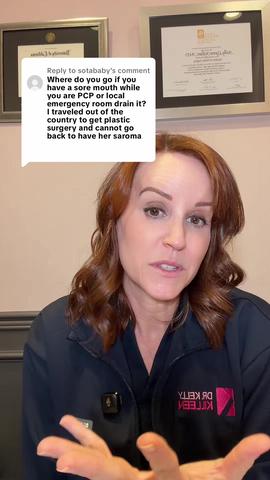
A really thoughtful comment came in on one of my medical tourism posts that brought up a problem I genuinely hadn't talked about much on social media: what happens when you have surgery abroad and then need care in your home country — and the medical records, communication, and warranty infrastructure all fall apart?
This is one of the quieter risks of international medical tourism, and as someone who does a lot of revision surgery on patients who had their original work done in Turkey, Mexico, the Dominican Republic, and elsewhere, I can tell you it's genuinely an issue.
Let me walk through three specific problems and why they matter.
Problem 1: Getting Your Medical Records Is Hard
In the United States, medical record access is well-regulated. HIPAA entitles you to your own records, and U.S. providers have to release them on request, in a reasonable timeframe.
That's not how it works everywhere.
What I See in Practice
Patients come to me wanting revision surgery after a primary operation in another country. I ask for their operative records, and:
- Different countries have different laws about medical record release
- Some countries make it structurally difficult for patients to access their own records
- Even when records are accessible, the process is much slower than in the U.S.
- Sometimes the practice or hospital has closed entirely
- Sometimes the surgeon won't release the records, period
To be frank, I rarely actually get records from these patients. That's not for lack of trying — it's the structural reality of working across international medical systems with very different records access regimes.
Why This Matters for Your Revision
Operating on someone without knowing what was done before is significantly riskier:
- I don't know what implant was placed
- I don't know what pocket was used (under or over the muscle, dual plane, subfascial)
- I don't know what incision technique was performed
- I don't know what scaffolding or mesh was placed
- I don't know what complications occurred during or after the original surgery
I can figure out some of this intraoperatively — but I'd much rather know before I open you up. The risk of intraoperative surprises (and the time spent navigating them) goes up significantly without records.
Problem 2: Language Barriers in the Records You Do Get
Sometimes I do get records — and that's when the next problem starts.
A Native Speaker Isn't Enough
When operative reports come in another language, you can't just have someone in your office who speaks the language read them and tell you what's in them. You need:
- A professional medical translator
- Familiarity with surgical terminology in both languages
- Understanding of regional medical conventions that may differ from U.S. practice
A casual native speaker without medical training will frequently miss:
- The specific implant model mentioned
- The technique described
- Drug names that may be branded differently
- Subtle complications mentioned in passing
Getting an inaccurate translation can be worse than having no translation at all because we may proceed based on wrong information. Your outcomes, complication risk, and even safety can depend on whether we get the translation right.
Problem 3: The Implant Warranty Problem
This is the issue most patients never see coming.
How Warranties Normally Work
Major implant companies (Allergan, Mentor, Motiva, Sientra, etc.) typically offer warranty coverage for issues like:
- Rupture
- Capsular contracture (with specific qualifications)
- Other implant-related complications
When the warranty applies, the company:
- Replaces the implant at no charge
- Sometimes contributes toward surgical costs of the revision
- Documents the failure for ongoing safety surveillance
This is a meaningful financial protection for implant patients.
Why It's Hard to Use If Your Implants Were Placed Abroad
Here's the issue I keep running into: even when the implant brand is the same company sold in the U.S., getting them to honor the warranty for an implant placed abroad is challenging:
- The companies sometimes need the original purchase documentation from the foreign surgeon
- Without detailed records of placement, the warranty review gets stuck
- Some companies treat internationally-placed implants as out of scope for U.S. warranty service
- Cross-border manufacturing and distribution agreements can complicate which version of the implant you actually have
So even when your warranty should apply, the practical path to using it may be blocked by the records gap and the international purchase trail.
This means revision patients who had primary surgery abroad often pay out of pocket for replacement implants they should have gotten under warranty. That's a real cost that no one warns them about at the time of the original surgery.
Problem 4: Talking to the Original Surgeon (When You Need To)
There are revisions where it would be genuinely helpful to talk to the original surgeon:
- "Did you place the implant subfascial or dual plane?"
- "What kind of scar tissue did you see during the case?"
- "Why did you choose this specific implant for her anatomy?"
- "Did you do anything specific to the inframammary fold?"
In the U.S., I can usually pick up the phone, find the surgeon, and have that conversation as a professional courtesy. It happens regularly.
Across borders, that's nearly impossible. Even when I can find the surgeon, the language barrier, time zones, and the absence of a professional relationship make it impractical. The information that would help me serve you well stays trapped.
What This Means If You're Considering Surgery Abroad
I'm not telling you not to do it. I'm saying: understand the records and warranty dimensions before you go, because they're not part of the typical cost-benefit comparison patients run.
Before You Travel
- Ask the foreign surgeon how you'll get your records — and how another surgeon would get them in 5 years
- Get a copy of the operative note in writing before you leave the country, ideally translated already
- Get the implant manufacturer, model number, and serial numbers in writing
- Get the implant warranty card in writing, in English if possible
- Get the surgeon's direct contact information in case you or a future surgeon needs to reach them
If the foreign surgeon won't provide these — that's a flag. A confident, well-organized surgeon should be willing to put all of this in your hands.
Keep Everything
Once you have these documents, don't lose them:
- Keep a physical copy in your medical records at home
- Email a copy to yourself for easy access
- Keep a copy in your phone
- Share copies with family members in case something happens
In 10 years, when you may need a revision, your future plastic surgeon is going to be enormously grateful that you saved all of this.
A Note on the Bigger Picture
These problems aren't about saying foreign surgeons are bad. They're about the systemic friction that exists when care crosses borders. I have a lot of respect for international plastic surgery colleagues and I'm currently training internationally myself.
But the record-keeping and warranty infrastructure are still meaningfully easier to navigate within a single country than across borders. That's not anyone's fault — it's just how the systems work. And patients are the ones who bear the cost of that friction when they later need care back home.
The Bottom Line
Beyond the more visible risks of medical tourism (complications without local follow-up, vetting difficulty, travel logistics), there are three quieter problems that hit patients later:
- Medical records are hard to retrieve across international systems
- Language barriers in the records that do come back require professional translation
- Implant warranties are difficult to honor across borders, leaving patients paying out of pocket for replacements they should have gotten covered
If you're going to travel for surgery, get everything in writing before you leave — operative report, implant info, warranty paperwork, surgeon contact info — and keep it organized. Future you (and future-you's plastic surgeon) will be grateful.
Your Journey to Renewed Confidence

Transform Your Life
Every person deserves to feel comfortable and confident in their own body. Our procedures aren't just about physical change. They're about reclaiming your life, your comfort, and your self-assurance.
Dr. Killeen and her team support you every step of the way, from your first consultation through recovery.
Take the first step toward the life you deserve.
Schedule Your ConsultationTransform Your Life
Every person deserves to feel comfortable and confident in their own body. Our procedures aren't just about physical change. They're about reclaiming your life, your comfort, and your self-assurance.
Dr. Killeen and her team support you every step of the way, from your first consultation through recovery.
Take the first step toward the life you deserve.
Schedule Your ConsultationRelated Articles

Why Leaving Your Area for Surgery Is a Real Problem — Even Inside the U.S.
July 29, 2025
Dr. Killeen walks through the structural reasons medical tourism — both international and within the U.S. — is genuinely a higher-risk choice. Including the role of post-op care in a successful outcome, why complications don't wait for flights, and why local surgeons typically won't take on another surgeon's tourism patient.
What to Do If You Have Complications After Surgery
December 22, 2025
Dr. Killeen explains the steps to take if you're experiencing surgical complications — from calling your surgeon to finding a new one through your primary care doctor.
Why Your Post-Op Follow-Up Visits Are Half of Your Surgical Result
September 12, 2025
Dr. Killeen pushes back on the idea that post-op follow-up appointments don't matter — explaining why the things we catch at follow-up (small seromas, early scarring, perfusion issues) prevent the much larger problems that come from skipping them, and why this matters especially for medical tourism patients.