Post-Op Must-Haves: What You Actually Need After Surgery
The most important thing when you have surgery is to stock up on everything you need before surgery.
Post-Op Must-Haves: What You Actually Need After Surgery
The question: what are your post-op must-haves? Surgical bras, recovery pillows, hyperbaric oxygen, lymphatic massage? What do I tell my patients to do, and what really helps in my experience?
My list is a lot shorter than the shopping lists you'll find online.
1. Stock Up Before Surgery
The most important thing when you have surgery is to stock up on everything you need before surgery.
That means having, already in the house:
- Good options for hydration
- Good options for meals
- Snacks
- Protein
To me, that is the most important thing. You don't want to be sorting out food and drinks in the first few days. (Sort out who is taking care of you ahead of time, too.)
2. A Good Wedge Pillow
The next thing you need is a good wedge pillow: something that is going to help prop you up and make the first week or two after surgery more comfortable.
Surgical Bras: You Probably Don't Need to Buy One
Surgical bras? Eh. I don't know.
We give you one in the operating room. I'm not sure you need to purchase anything from any other source. If you'd like a spare, you can just get a second one from your surgeon.
And you're not going to be wearing them for that long anyway. (That's a separate question from everyday bra wear later on, which I do think matters after a lift.)
The Nice Things: Lymphatic Massage, Hyperbaric, Red Light
Then there are all of the nice things: lymphatic massage, hyperbaric oxygen therapy, red light therapy.
All of these are wonderful adjuncts. But:
For the average patient, you probably don't need them.
They have their place. I do send patients for hyperbaric oxygen when something specific is struggling, like the blood supply to a nipple after a breast reduction or skin after a tummy tuck. That's treating a problem, though, not a routine part of recovering.
The Bottom Line
What you actually need:
- Stock up before surgery: hydration, meals, snacks, and protein
- A good wedge pillow for the first week or two
What you can probably skip:
- Buying surgical bras. You get one in the operating room, and a second from your surgeon if you want it
- Lymphatic massage, hyperbaric oxygen, and red light therapy, unless your surgeon recommends one for a specific reason
Be prepared, stay comfortable, and focus on healing. For the bigger picture, here's what recovery from surgery generally looks like.
Your Journey to Renewed Confidence

Transform Your Life
Every person deserves to feel comfortable and confident in their own body. Our procedures aren't just about physical change. They're about reclaiming your life, your comfort, and your self-assurance.
Dr. Killeen and her team support you every step of the way, from your first consultation through recovery.
Take the first step toward the life you deserve.
Schedule Your ConsultationTransform Your Life
Every person deserves to feel comfortable and confident in their own body. Our procedures aren't just about physical change. They're about reclaiming your life, your comfort, and your self-assurance.
Dr. Killeen and her team support you every step of the way, from your first consultation through recovery.
Take the first step toward the life you deserve.
Schedule Your ConsultationRelated Articles
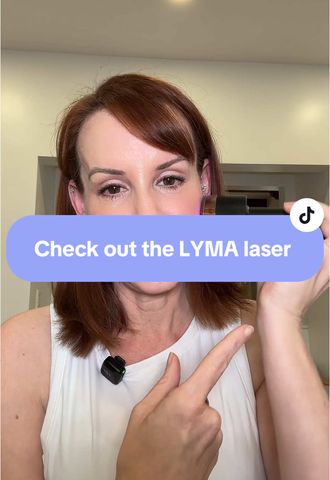
The LYMA Laser: A Cold Laser for Home Use (My Honest Early Review)
May 4, 2025
Dr. Killeen shares her honest early review of the LYMA Laser, a cold (low-level light) laser for daily home use that stimulates cellular activity and blood flow without damaging heat. She explains what a cold laser is, what it is meant to improve (pigmentation, wrinkles, elasticity), how to use it (three minutes per area, even over makeup or SPF), how it can support healing after in-office lasers and peels, and her early results after two weeks. Disclosure: the device was provided as a sample for an honest review.

Capsular Contracture After Radiation: How I Treat It
September 26, 2024
A contracture in a radiated implant reconstruction does not automatically mean the implant has to come out. Dr. Killeen explains how radiation changes the tissue and the three steps she adds for radiated patients: hyperbaric oxygen therapy, a gentler no-heat technique that protects thin skin, and fat grafting timed months apart from the repair.
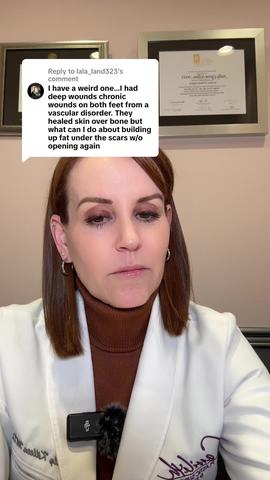
Fat Grafting for Lost Heel and Foot Padding After Vascular Wounds
February 19, 2025
Patients with vascular disease who heal wounds on the foot or ankle are often left with no cushioning, skin directly on bone that hurts when they walk and rubs into new wounds. Dr. Killeen explains why blood flow has to be fixed first, why fat grafting is her favorite option (especially for the heel), why it usually takes several rounds, and how she uses hyperbaric oxygen to help the graft take. It can often be done without general anesthesia.