Schnur Scale Calculator: How Many Grams Does Insurance Require?
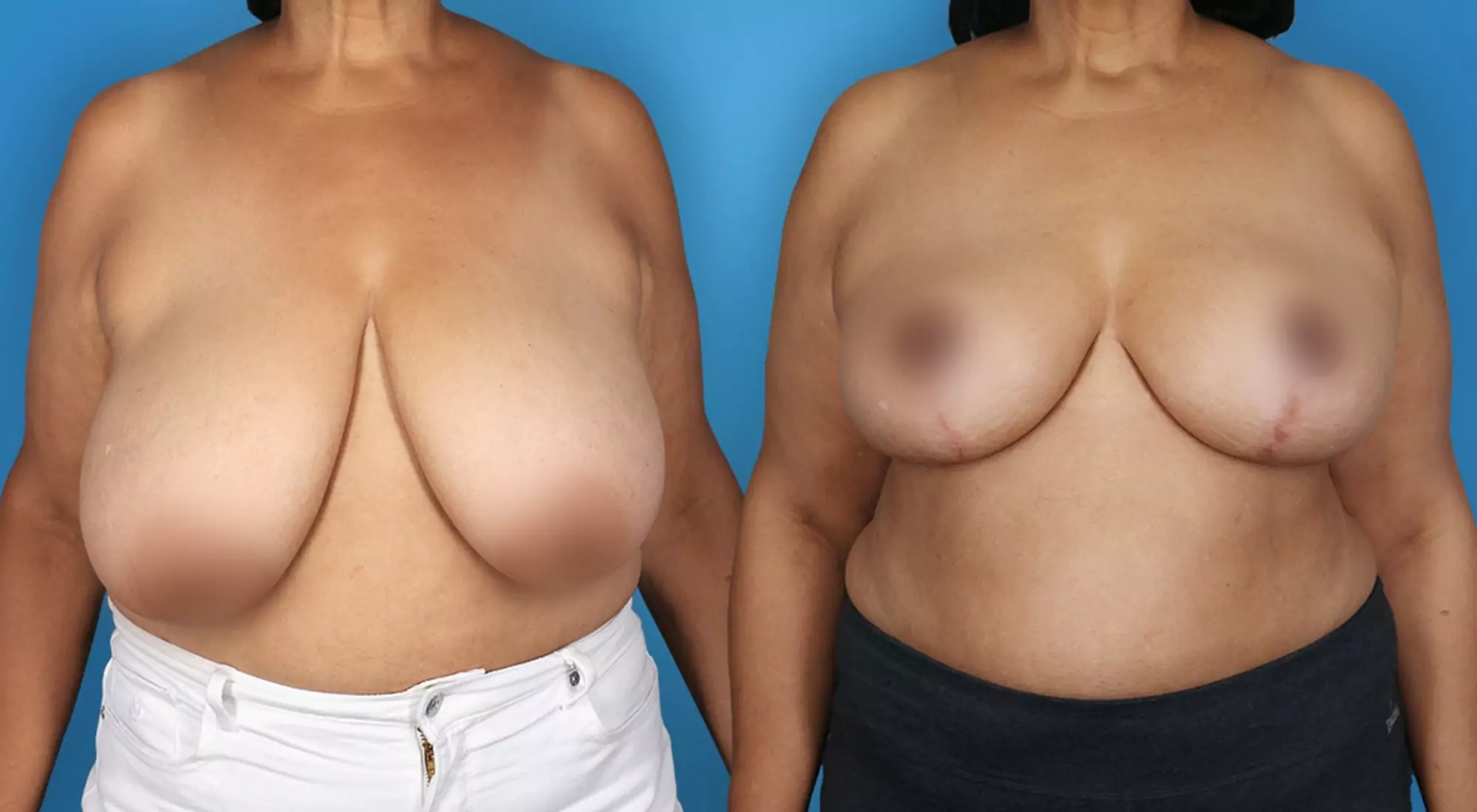
Plastic surgeons, and Dr. Schnur himself, disagree with how insurance companies use this scale. But until that changes, you deserve to know your number before you walk into a consultation.
If you’ve started researching whether insurance will cover your breast reduction, you’ve probably run into the term “Schnur scale.” It sounds mysterious, but it’s just a table from 1991 that insurance companies use to decide how many grams of breast tissue must be removed for your surgery to count as medically necessary. The number is based on your body surface area, which is calculated from your height and weight.
I built the calculator below so you can estimate your number before you ever set foot in a consultation. It uses the same published table and the same body surface area formula that insurance medical policies reference.
Calculate Your Schnur Scale Minimum
Enter your height and weight above to see your estimated body surface area and the minimum grams per breast most Schnur-based insurance plans require.
What Is the Schnur Scale?
In 1991, plastic surgeon Dr. Paul Schnur and colleagues surveyed plastic surgeons across the country; 92 responded with data on roughly 600 breast reduction patients. They plotted how much tissue was removed against each patient’s body surface area. Patients below the 5th percentile of removal weight were usually having surgery for cosmetic reasons, and patients above the 22nd percentile were usually having surgery for medical symptoms like neck pain, back pain, and rashes. Everything in between was a gray zone.
Insurance companies took that 22nd percentile line and turned it into a hard cutoff: meet the number for your body surface area and your reduction is “reconstructive,” miss it and your reduction is “cosmetic.” That was never the intent of the study. Dr. Schnur himself has objected to how insurers use his data, and so do the rest of us who take care of these patients. But it remains the industry standard, so it pays to know how it works.
Your body surface area is calculated with the Mosteller formula: the square root of your height in centimeters times your weight in kilograms, divided by 3,600. The calculator above does this for you and then looks up the 22nd percentile minimum from the published table.
The Full Schnur Sliding Scale Chart
Here is the complete published Schnur chart. Find your body surface area on the left, and the right column shows the minimum grams of tissue that must be removed from each breast under a classic Schnur-based policy.
| Body surface area (m²) | Minimum grams removed per breast |
|---|---|
| 1.35 | 199 |
| 1.40 | 218 |
| 1.45 | 238 |
| 1.50 | 260 |
| 1.55 | 284 |
| 1.60 | 310 |
| 1.65 | 338 |
| 1.70 | 370 |
| 1.75 | 404 |
| 1.80 | 441 |
| 1.85 | 482 |
| 1.90 | 527 |
| 1.95 | 575 |
| 2.00 | 628 |
| 2.05 | 687 |
| 2.10 | 750 |
| 2.15 | 819 |
| 2.20 | 895 |
| 2.25 | 978 |
| 2.30 | 1068 |
| 2.35 | 1167 |
| 2.40 | 1275 |
| 2.45 | 1393 |
| 2.50 | 1522 |
| 2.55 | 1662 |
The Schnur sliding scale, from Schnur PL et al., Annals of Plastic Surgery, 1991. The published table covers body surface areas from 1.35 to 2.55 square meters.
A quick worked example: a woman who is 5’4” and 141 pounds has a body surface area of about 1.70 square meters, which lands right around 370 grams per breast. For scale, a can of soda holds 355 milliliters and weighs about 370 grams, and a typical covered reduction removes roughly 450 to 600 grams per side.
One caution: you may see versions of this chart online that extend far past a body surface area of 2.55. Those extra rows are mathematical extrapolations that were never part of the original data, so don’t panic if a random website shows you an enormous number.
Not Every Insurance Plan Uses the Same Numbers
“Meeting Schnur” is not one universal standard. The same patient can qualify under one plan and be denied under another. Here is how the big plans actually differ:
- Classic Schnur plans (many Blue Cross plans): use the 22nd percentile chart above. Your surgeon’s predicted removal must meet the number for your body surface area.
- Cigna: approves if you meet the Schnur number for your body surface area, or if more than 1,000 grams per breast will be removed regardless of your size.
- Aetna: uses its own table that is meaningfully stricter than Schnur. At a body surface area of 1.50, Schnur requires 260 grams while Aetna requires about 385. At 2.00, Schnur requires 628 grams while Aetna requires about 935.
- Flat minimum plans: some plans skip body surface area entirely and require a flat amount, commonly 500 grams per breast.
So what should you actually do? Call the number on the back of your insurance card and ask for the written medical necessity criteria for reduction mammaplasty (CPT code 19318). And remember the gram minimum is only one of the boxes you have to check. Most plans also require documented symptoms, failed conservative measures, and sometimes a BMI limit. I walk through all of those in my guide to getting your breast reduction covered by insurance.
My Honest Take on the Schnur Scale
I want to be straight with you about this scale, because patients often treat their Schnur number like a verdict on whether their pain is real. It isn’t. The scale came from a survey of surgeons’ recollections, not a prospective study of patient outcomes. Research since then has repeatedly shown that women below the Schnur cutoff get real, lasting relief from breast reduction, just like women above it. Your symptoms don’t politely wait for a body surface area calculation.
There are also real exceptions. If a reduction is part of breast cancer treatment (an oncoplastic reduction after lumpectomy) or treatment of a congenital breast deformity (a breast shape difference you were born with, like tuberous breasts), the gram requirement often does not apply at all. I cover both situations in my full breakdown of breast reduction insurance criteria.
One more honest conversation worth having: sometimes the amount an insurance company requires is more than you actually want removed. Hitting your number gets the surgery covered, but it can leave you smaller than you envisioned. Talk with your surgeon about whether the covered version of your reduction is the result you actually want, not just whether you can get it approved.
What to Do With Your Number
If your estimate is comfortably above the minimum: great, the gram requirement likely won’t be your obstacle. Focus on the other boxes: document your symptoms with your doctor, complete the conservative measures your plan requires (supportive bras, physical therapy, anti-inflammatories), and find a surgeon who regularly gets breast reductions approved.
If you’re close to the line: don’t rule yourself out based on a calculator, including mine. This tool estimates the requirement, not how much tissue you actually have. Only an in-person exam can tell you what your surgeon could realistically remove, and a surgeon who does a lot of these is far better at estimating that than any formula.
If your estimate is below the minimum: you still have options. Your surgeon can appeal a denial through peer-to-peer review (a phone call where your surgeon argues your case directly with the plan’s medical reviewer), your plan may use different criteria than the classic chart, and if coverage truly isn’t possible, there are realistic ways to make a cash-pay reduction affordable.
Schnur Scale FAQs
What is the Schnur sliding scale?
The Schnur sliding scale is a table from a 1991 study by plastic surgeon Dr. Paul Schnur that links body surface area to a minimum weight of breast tissue, in grams per breast, that must be removed. Insurance companies use the table’s 22nd percentile line as a cutoff: if your surgeon expects to remove at least that much, the reduction is considered reconstructive rather than cosmetic.
Is the Schnur scale requirement per breast or total?
Per breast. If your minimum is 370 grams, that means about 370 grams removed from each breast, not 370 grams total.
How do I calculate my body surface area?
Most calculators, including this one, use the Mosteller formula: the square root of height in centimeters times weight in kilograms, divided by 3,600. For example, someone 5 feet 4 inches tall who weighs 141 pounds has a body surface area of about 1.70 square meters.
How many grams of breast tissue must be removed for insurance to cover a reduction?
It depends on your plan and your body surface area. For many average-sized patients the Schnur minimum falls in the 300 to 500 gram per breast range, and a common rule of thumb is about 500 grams per side. Some plans skip the scale and use a flat minimum, and some approve any planned removal over 1,000 grams per breast.
What does the 22nd percentile mean on the Schnur scale?
In Dr. Schnur’s original data, patients above the 22nd percentile of removal weight for their body surface area were typically having surgery for medical reasons rather than cosmetic ones. Insurers adopted that statistical line as a hard coverage cutoff, which is not how the study intended it to be used.
What if my estimate is below the Schnur minimum?
A below-minimum estimate is not an automatic no. Plans use different tables and thresholds, your surgeon can only truly estimate how much can be removed by examining you in person, denials can be appealed through peer-to-peer review, and there are situations, like oncoplastic reduction after breast cancer or congenital breast deformities, where the gram requirement does not apply at all.
Does every insurance company use the Schnur scale?
No. Many Blue Cross plans use the classic Schnur 22nd percentile table, Cigna approves if you meet Schnur or if more than 1,000 grams per breast will be removed, Aetna uses its own stricter body surface area table, and some plans use a flat minimum such as 500 grams per breast. Always request your plan’s written criteria.
How much tissue is removed in an average breast reduction?
A typical insurance-covered breast reduction removes roughly 450 to 600 grams per breast, about one to one and a third pounds per side. For reference, a full soda can weighs about 370 grams.
This calculator and article are for education only. They are not medical advice and not a guarantee of insurance coverage. Every plan applies its own criteria, and only a consultation with a board-certified plastic surgeon can tell you what is realistic for your body and your policy.
Related Articles
Guide to Getting Your Breast Reduction Covered by Insurance (the four boxes every plan makes you check, from conservative measures to pre-authorization)
Will Insurance Cover Your Breast Reduction? (the full criteria breakdown, plus the two situations where Schnur doesn’t apply)
Understanding How Insurance Coverage Works for Breast Reduction Surgery (deductibles, coinsurance, and what “covered” really means for your wallet)
Cash-Pay Options When Insurance Denies Your Breast Reduction (financing, timing strategies, and HSA/FSA funds if coverage falls through)
Your Journey to Renewed Confidence

Transform Your Life
Every person deserves to feel comfortable and confident in their own body. Our procedures aren't just about physical change. They're about reclaiming your life, your comfort, and your self-assurance.
Dr. Killeen and her team support you every step of the way, from your first consultation through recovery.
Take the first step toward the life you deserve.
Schedule Your ConsultationTransform Your Life
Every person deserves to feel comfortable and confident in their own body. Our procedures aren't just about physical change. They're about reclaiming your life, your comfort, and your self-assurance.
Dr. Killeen and her team support you every step of the way, from your first consultation through recovery.
Take the first step toward the life you deserve.
Schedule Your Consultation