Shared Decision Making Doesn't Mean Ordering Tests You Don't Need
Patients don't want to do everything, or a specific thing. Patients want to do the right thing, and it's up to us to help them understand what that is.
A Respectful Disagreement
A young PA on TikTok posted about a patient visit in urgent care, and the video went sideways in the comments. In the scenario the PA described, a chest X-ray was ordered to help convince a patient that what they were asking for wasn't needed, and the PA framed that as shared decision making.
I want to be clear about where I'm coming from. The PA seems lovely and caring, and clearly wants to do the right thing for patients. Early in their career, they already care about antibiotic stewardship, which is so important. I'm sorry the video blew up the way it did. But I think it opened an important conversation, because shared decision making gets misunderstood a lot, by clinicians and patients alike.
What Shared Decision Making Actually Means
Shared decision making is when you, as the expert clinician, present the potential solutions or plans that fit a patient's problem, and then work with them to figure out which one best meets their goals.
Shared decision making never includes testing or interventions that are not indicated.
It isn't ordering a test to convince someone that what they want is wrong when the test itself isn't indicated. And in the scenario that PA described, the X-ray wasn't indicated.
The expert's job is to bring the evidence-based options for that particular problem. The shared part is the patient working with you to pick among them.
Patients Want to Do the Right Thing
My dad is a surgeon, and he taught me a lot during my training. One of the things he told me has stuck with me ever since:
Patients don't want to do everything, or a specific thing. Patients want to do the right thing.
It's up to us, whether we're their PA, physician, or surgeon, to help them understand what the right things are for their problem. Ordering a test they don't need isn't one of them.
Why an "Extra" X-Ray Isn't Harmless
A chest X-ray seems benign. But unnecessary tests carry real risk, the same way unnecessary antibiotics do, and it adds up over time:
- Radiation you don't need. It's a small dose, but a chest X-ray goes through breast tissue, and women already carry a lifetime breast cancer risk. Small or not, you just don't need it.
- Incidentalomas. People will argue with this one in the comments, but it's real: imaging finds incidental things that turn out to be nothing, and diagnosing them means more scans, more procedures, and more worry.
- Cost. Tests that aren't indicated make care more expensive for that patient, and for everyone else too.
We want people to get excellent, high-quality care that doesn't break the bank and doesn't expose them to radiation they don't need.
Patient Satisfaction Isn't the Same as Good Care
The PA brought up patient satisfaction, and it's worth being careful there. Satisfaction scores haven't been shown to go hand in hand with better clinical care. In one large study of telemedicine visits for respiratory infections, patients rated visits higher when they left with an antibiotic, including when they didn't need one. That's not a good thing.
The good news is that this doesn't have to be a trade-off. Urgent care programs have cut unnecessary antibiotic prescribing without patients becoming noticeably less satisfied.
Our goal is happy patients who are treated properly.
Stewardship Matters in Surgery, Too
I'm a plastic surgeon, and I'm a good antibiotic steward, which, honestly, many of my colleagues are not. It comes up all the time in my world, like whether you need antibiotics before a dental cleaning if you have breast implants (usually not), or whether antibiotics prevent tetanus after a dirty wound (they don't). Testing works the same way. My patients get the breast implant imaging they actually need, not imaging for its own sake.
We All Do This Sometimes
None of this is unique to one PA. We all get schnookered into ordering things that may not be indicated sometimes. That's exactly why it's worth talking about.
The Bottom Line
- Shared decision making means choosing together among the options that are indicated. It never includes tests or treatments that aren't.
- Unnecessary tests aren't free: they add radiation, lead to incidentalomas and more workups, and raise costs for everyone.
- Patient satisfaction and good care can line up, but chasing satisfaction with antibiotics or tests doesn't get you there.
- Patients want to do the right thing. Our job is to help them see what that is, and when you do, their satisfaction will be high because you did the right thing.
Your Journey to Renewed Confidence

Transform Your Life
Every person deserves to feel comfortable and confident in their own body. Our procedures aren't just about physical change. They're about reclaiming your life, your comfort, and your self-assurance.
Dr. Killeen and her team support you every step of the way, from your first consultation through recovery.
Take the first step toward the life you deserve.
Schedule Your ConsultationTransform Your Life
Every person deserves to feel comfortable and confident in their own body. Our procedures aren't just about physical change. They're about reclaiming your life, your comfort, and your self-assurance.
Dr. Killeen and her team support you every step of the way, from your first consultation through recovery.
Take the first step toward the life you deserve.
Schedule Your ConsultationRelated Articles
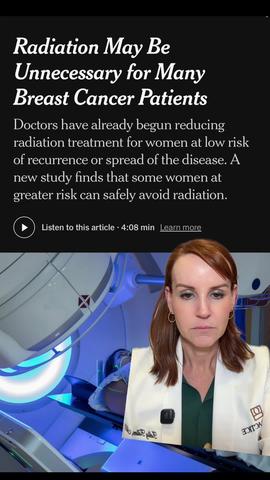
Radiation May Be Unnecessary for Many Breast Cancer Patients — and Plastic Surgeons Are Thrilled
November 7, 2025
Dr. Killeen breaks down a major new NEJM study showing that radiation may not improve outcomes for intermediate-risk breast cancer patients after mastectomy and chemotherapy — and why avoiding unnecessary radiation is a huge win for reconstruction.

When AI Cost a Patient His Life: A Tragic Story About Perplexity and Leukemia
April 21, 2026
Dr. Killeen breaks down a devastating New York Times story about a man with leukemia who declined treatment based on a Perplexity AI report — even after the authors of the cited papers told his family the AI had misread their research — and the broader danger of letting AI override your doctor.
I Just Did My First Hemoccult Test — and Now I Want to Apologize to Every Patient I've Ever Sent Home With Anything
August 19, 2025
Dr. Killeen reflects on the experience of being a patient handed a confusing, gross, multi-day at-home medical task — a hemoccult test — and how it changed her perspective on what she asks her own post-op patients to do at home. With surgical drains, wound care, and garment instructions in mind.