Can You Get a Tummy Tuck With a High BMI? How I Decide
You have to look at the patient and not the number.
Can You Get a Tummy Tuck With a High BMI? How I Decide
Great question, and it came from someone with a BMI of 33 wondering whether a tummy tuck is even on the table.
When I'm evaluating a patient for a tummy tuck who has an elevated BMI, there are really two things I'm trying to figure out as a surgeon:
- Can I get a good result on this patient?
- Is this a safe surgery?
Neither one is answered by the number alone.
Question 1: Can I Get a Good Result?
Let's start with aesthetics. I look at the patient and figure out how their weight is distributed:
- Do they carry a lot of weight around the neck?
- A lot of weight in the midsection?
- A lot of weight in the lower body?
Two of those tell me something specific.
Weight Around the Midsection
A lot of weight around the midsection can indicate visceral fat, and that matters enormously for this operation. Visceral fat makes a tummy tuck less likely to get a good result, and sometimes you can't even get enough laxity to perform one.
The reason is where that fat lives. A tummy tuck works on the skin and the muscle wall, not on fat that sits deeper inside the abdomen, so a belly that's round from that deeper fat can stay round after surgery.
Weight Around the Neck
A lot of weight around the neck can indicate a difficult airway, so it's something to always consider. That's less about how your abdomen will look and more about how safely you can be put under, which is one reason I care so much about who is managing your anesthesia.
You have to look at the patient and not the number. How the weight is distributed is very important.
Two patients with the identical BMI can be completely different surgical candidates.
Question 2: Is It Safe?
Here's the honest, slightly uncomfortable truth about BMI.
BMI is not a great indicator of overall health.
But it has been found to be an independent risk factor for certain surgical complications. That means just that number being elevated, not taking anything else into account, leads to a higher complication rate.
So both things are true at once: it's a crude measure, and it still predicts risk.
Is That Risk Worth Taking On?
That's the real question for you as a patient. My answer:
It can be, in a lot of people, as long as there's not other things going on.
Which is why the next step is always your overall health. I look into my patient's medical history. I see what medications they're on. And we try to figure out whether the risk of the procedure makes sense.
In many patients with a BMI of 33, it does.
It's the same logic I use for patients with medical problems who want implants: the diagnosis, or the number, starts a more careful conversation. It doesn't end one. And it's the same reason the pre-op evaluation is the most important visit you'll have.
The Bottom Line
An elevated BMI doesn't automatically rule out a tummy tuck. What I'm actually evaluating is:
- Can I get a good result? That depends on where you carry your weight. Midsection weight can mean visceral fat, which makes a good result less likely and sometimes makes the operation impossible.
- Is it safe? BMI is a poor measure of health but a real, independent risk factor for certain complications, so your medical history and medications decide whether that added risk makes sense.
For many patients with a BMI around 33, the answer is yes. The only way to know is an exam, because your outcome depends on a lot more than one number.
Your Journey to Renewed Confidence

Transform Your Life
Every person deserves to feel comfortable and confident in their own body. Our procedures aren't just about physical change. They're about reclaiming your life, your comfort, and your self-assurance.
Dr. Killeen and her team support you every step of the way, from your first consultation through recovery.
Take the first step toward the life you deserve.
Schedule Your ConsultationTransform Your Life
Every person deserves to feel comfortable and confident in their own body. Our procedures aren't just about physical change. They're about reclaiming your life, your comfort, and your self-assurance.
Dr. Killeen and her team support you every step of the way, from your first consultation through recovery.
Take the first step toward the life you deserve.
Schedule Your ConsultationRelated Articles
Liposuction vs. Tummy Tuck — and Why Some Scars Are Longer Than Others
November 11, 2025
Dr. Killeen walks through how to choose between liposuction and a tummy tuck based on your anatomy, why some patients opt for lipo even when a tummy tuck is technically better, and how your body determines how long the tummy tuck scar will be.
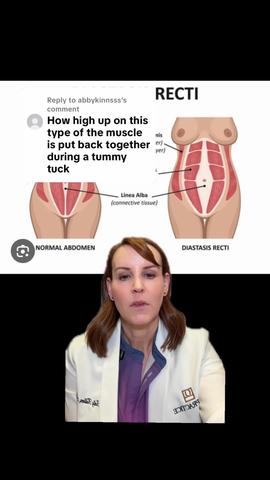
How High Up Do We Go When Repairing Diastasis in a Tummy Tuck?
October 17, 2025
Dr. Killeen explains how high the muscle repair extends in a tummy tuck — from pubic bone to rib margin — why diastasis is almost always present, why a strong core matters more than your faja, and the problem with wearing your garment for months too long.
Is Fat Transfer to the Breast Safe? The Limits, the Complications, and Who's a Good Candidate
August 12, 2026
Fat transfer to the breast is well studied, with a well-defined complication profile, but Dr. Killeen explains why it only works for the right patient. She covers the three real limitations: fat is soft so it cannot restructure the breast the way an implant does, volume is capped by both your donor site and your recipient site (about a half to one cup size on average), and take is variable and sometimes asymmetric so repeat rounds are common. She also details the complication profile at both the liposuction sites and in the breast, including 3-5% palpable lumps and 10-15% calcifications.