Who Is Actually Giving Your Anesthesia?
If a CRNA is doing your anesthesia, ask who their backup is. You don't want it to be the surgeon, because we're not anesthesiologists.
Who Is Actually Giving Your Anesthesia?
This question came in off an older video I did about a death following a mommy makeover. The autopsy wasn't conclusive — there was no evidence of an embolism, no evidence of a cardiac event — so rather than speculate about one case, I want to talk about how to stay safe when you're having a procedure.
Most safety advice covers two things: vet your surgeon, and vet the facility. Both matter enormously, and I've written about how to actually vet a surgeon and surgery center versus hospital in detail.
But there's a third person in that room who patients almost never research, and they are the one managing whether you keep breathing.
The Question Patients Skip
Who is providing your anesthesia?
You chose your surgeon carefully. You may have checked the accreditation of the building. And then you hand yourself over to a third professional you have never met and never looked into.
Here's how I handle it, and what I'd want you to ask.
What I Use in My Own Practice
I work with only physician anesthesiologists in my practice.
In the hospital outpatient setting, they occasionally have CRNAs (certified registered nurse anesthetists) working with a supervising physician anesthesiologist. That's the model you'll encounter in a lot of hospitals.
My position, stated plainly as my own preference:
I feel very strongly that the care team model, or a physician on their own, is the safest thing.
I know there are independent practice states, and I know I'll hear about it in my comments. That is not my preference as a surgeon. You're entitled to know where your surgeon stands on this, and you're entitled to a different opinion than mine.
If a CRNA Is Doing Your Anesthesia, Ask This
This is the practical part, and it's one specific question:
Who is your backup?
And here's the answer you do not want to hear: the surgeon.
We're not anesthesiologists. Your surgeon is a surgeon. If your anesthetic becomes complicated, the person solving that problem should not be the same person who is operating on you.
So ask. A good answer is a named physician anesthesiologist who is available and responsible for your case. A vague answer is information too.
While You're Asking: How Much Liposuction Is Being Done?
If liposuction is part of your procedure, the volume being removed is a safety question, not a cosmetic one.
In general, we don't want to remove too much. About five liters is the standard most of us work to. In California, outpatient settings are limited to five liters, and plenty of surgeons cap themselves there regardless of what's technically allowed.
The reasons are physiologic:
- Removing too much can cause a drop in your blood count. That can happen even at five liters
- Removing too much can cause fluid shifts significant enough to cause trouble with your heart
So "how many liters are you planning to remove?" belongs on your list, especially for a combined procedure like a mommy makeover.
The Rest of the Checklist
Briefly, because each of these has its own full write-up:
- A properly trained plastic surgeon. Someone who completed an actual plastic surgery residency and is board certified, or in the process of certifying. (How to verify it yourself.)
- Preoperative testing tailored to you. This should be different for every patient. Depending on your age and health problems, that can mean lab tests, EKGs, sometimes x-rays, sometimes consultations with other specialists — because we need every body system that will be stressed, and that will process the anesthetic medicines, to be working properly. (Why the pre-op visit decides so much.)
- An accredited facility. A surgery center with current accreditation, or a hospital. The point of accreditation is that a third party has verified they're doing it right.
- Someone to care for you afterward. Many procedures don't need skilled care. But for a lot of surgery, or long surgery with higher risk, consider a nurse, an aftercare facility, or staying in the hospital. (Who should actually take care of you.)
The Bottom Line
It's always important to remember:
We cannot completely eliminate risk. We do our best to mitigate risk.
A surgeon who cares about you does all of the things above to help keep you safe. And the piece patients most often leave out of their own research is the anesthesia provider.
Ask who is giving your anesthesia. If it's a CRNA, ask who their backup physician is. If the answer is your surgeon, that's worth a longer conversation before you schedule.
Your Journey to Renewed Confidence

Transform Your Life
Every person deserves to feel comfortable and confident in their own body. Our procedures aren't just about physical change. They're about reclaiming your life, your comfort, and your self-assurance.
Dr. Killeen and her team support you every step of the way, from your first consultation through recovery.
Take the first step toward the life you deserve.
Schedule Your ConsultationTransform Your Life
Every person deserves to feel comfortable and confident in their own body. Our procedures aren't just about physical change. They're about reclaiming your life, your comfort, and your self-assurance.
Dr. Killeen and her team support you every step of the way, from your first consultation through recovery.
Take the first step toward the life you deserve.
Schedule Your ConsultationRelated Articles
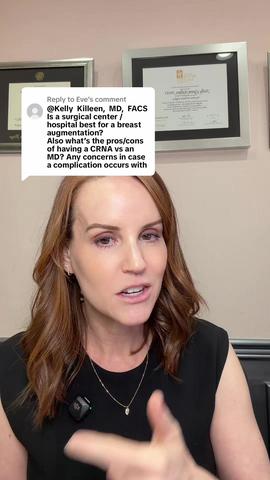
Outpatient Surgery Center vs Hospital: Which Is Safer for Cosmetic Surgery?
March 30, 2026
Dr. Killeen explains why freestanding ambulatory surgery centers have better outcomes and lower costs than hospital-based centers for cosmetic procedures, plus her stance on anesthesiologist-led care.
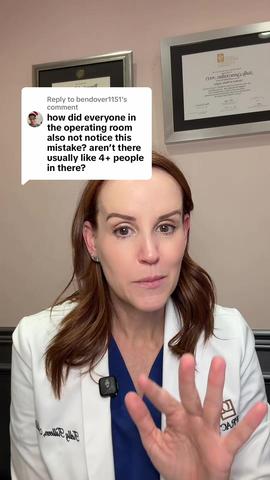
Why Didn't the OR Team Stop Surgeon Thomas Shaknovsky?
April 16, 2026
Dr. Killeen answers the most common follow-up question about the Shaknovsky case: why didn't the other staff in the operating room stop him? She breaks down who's in the OR, what they do, and why they often can't see what the surgeon is doing.
Plastic Surgery Price Quotes: Bundled vs. Line-Item Is Not a Scam
October 29, 2025
Dr. Killeen pushes back on viral TikTok content claiming plastic surgeons scam patients with line-item price quotes — and walks through what actually goes into a quote, from surgeon's fees and facility fees to anesthesia and single-use products like Exparel, Prevena, and Renuvion.